
ANKARA – The United Nations Educational, Scientific and Cultural Organization (UNESCO) 43rd General Conference was held in the historic city of Samarkand, Uzbekistan.
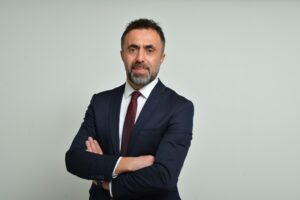
Ahmet SAĞLAM.
At the conference, the proposal by Azerbaijan, Kazakhstan, Kyrgyzstan, Türkiye, and Uzbekistan to declare Dec. 15 as the World Turkic Language Family Day was supported by 21 member states.
The date has a special meaning. In 1893, Danish scientist Vilhelm Thomsen announced that he had deciphered the alphabet of the Orkhon Inscriptions, one of the oldest written records of the Turkic language. This date is regarded as a milestone pointing to the deep past of the Turkic language family and its shared cultural heritage.
The basis for this important development was laid during the 12th Summit of the Organisation of Turkic States (formerly the Turkic Council) Heads of State Council on Oct. 7 in Azerbaijan.
At the summit, President of Türkiye Recep Tayyip Erdoğan suggested that Dec. 15 be declared as World Turkic Language Family Day at the UNESCO 43rd General Conference, which would begin in Uzbekistan on Oct. 30.
During his speech at the summit, Erdoğan underlined that the “development of a Turkish Large Language Model should be accelerated in order to keep up with global advances in artificial intelligence and to preserve cultural richness.” He also stated that Türkiye had taken the first step, presenting a work by Chingiz Aitmatov and the Oghuznames, both printed in a common alphabet, to the leaders of the Turkic states.
These developments are considered a very important step for the future of the OTS. At the same time, they directly support the development of the Turkic language in line with the requirements of the digital age and its emergence as a common means of communication across a large geography.
UNESCO’s declaration of World Turkic Language Family Day will increase the international visibility of the shared cultural and linguistic heritage of the Turkic world. It will contribute to the Turkic language reaching a broader sphere of influence as a cultural, scientific and digital force.
