
ASTANA – Religious leaders and international experts gathered in Astana on Oct. 7 to discuss how faith communities can contribute to addressing pressing challenges, with artificial intelligence, climate change and the rights of children with incurable diseases among the key issues on the agenda.
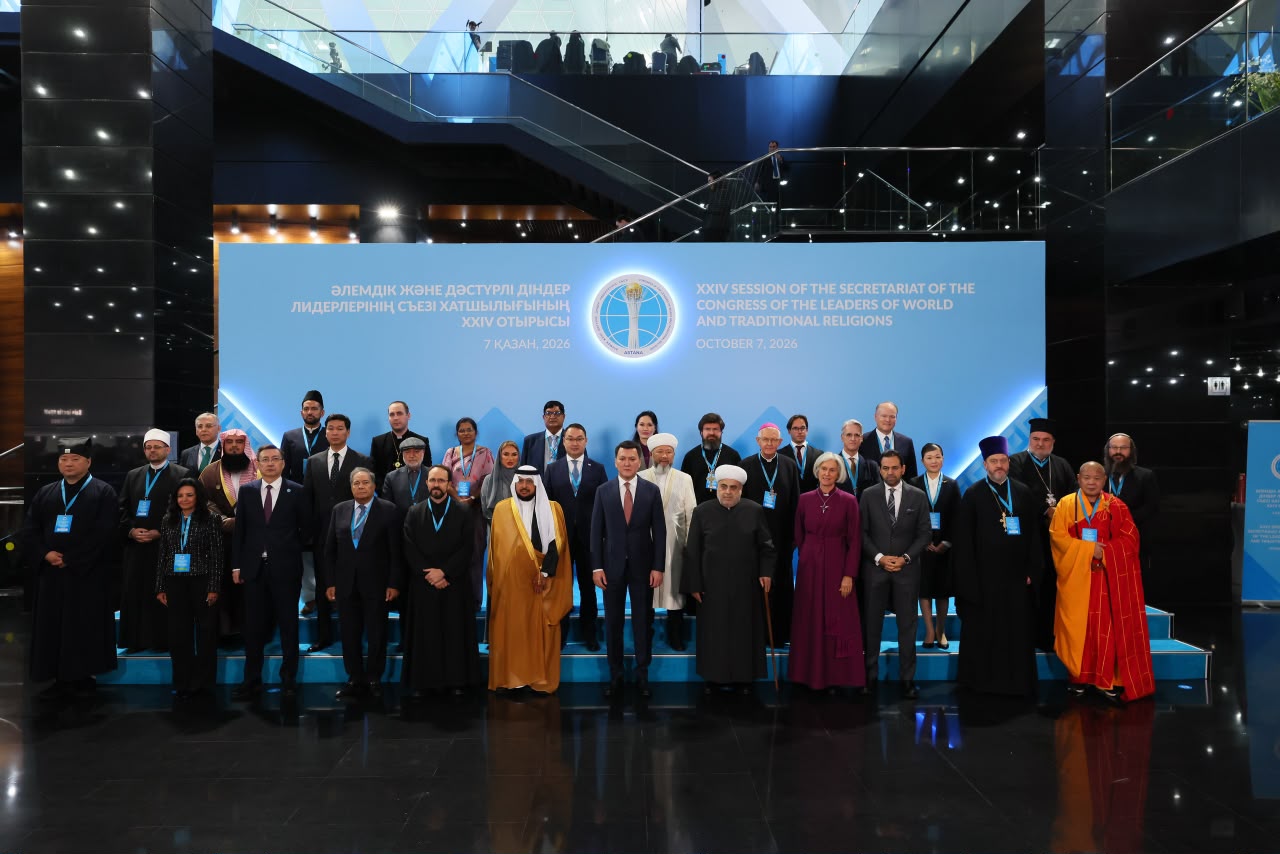
The meeting brought together representatives of Islam, Christianity, Judaism, Hinduism, Buddhism, Taoism, Shinto and the Baha’i Faith. Photo credit: The press service of the congress
The discussions took place at the 24th Meeting of the Secretariat of the Congress of Leaders of World and Traditional Religions, which brought together representatives of Islam, Christianity, Judaism, Hinduism, Buddhism, Taoism, Shinto and the Baha’i Faith, as well as government officials, international organizations and experts from 20 countries.
Participants considered two draft international documents: the Code of Ethics for the Use of Artificial Intelligence in the Religious Sphere and the Role of Religions in Combating Climate Change. The meeting also presented the Charter on the Rights of Children with Incurable Diseases as a separate agenda item.
Vice President of Kazakhstan and Head of the Secretariat of the Congress of Leaders of World and Traditional Religions Erlan Karin outlined several priorities for the congress. Photo credit: The press service of the congress
Vice President of Kazakhstan and Head of the Secretariat of the Congress of Leaders of World and Traditional Religions Erlan Karin said the documents reflect the need to strengthen the practical role of spiritual diplomacy amid growing global instability.
“Armed conflicts and humanitarian crises have weakened respect for international law. Radical ideas and hate speech are growing. This is also happening online. Climate and technology risks are deepening existing social inequalities, and the crisis of trust is becoming a systemic challenge,” Karin said.
“In this situation, spiritual diplomacy can play a special role. It does not replace political talks, but complements them and keeps communication channels open where diplomatic dialogue is difficult. It helps rebuild trust and reminds us of the value of every human life,” he added.
Karin noted that the Astana Peace Declaration, adopted at the eighth congress, provides a common framework for advancing peace, security and efforts to counter extremism.
“One of the first results of implementing the Astana Peace Declaration is the launch of the International Online Center for Spiritual Knowledge. It brings together the congress materials, expert research and studies, as well as educational resources about world religions and cultures,” he said.
Climate change as a moral responsibility
Speaking about the document on the role of religions in combating climate change, Karin described climate change as not only an environmental or economic issue but also a moral challenge.
“The document enshrines universal principles of environmental responsibility and encourages religious communities to promote education, solidarity and support for the most vulnerable groups and regions,” he said.
Karin noted that the document is aligned with Kazakhstan’s international initiatives on environmental and water security, including President Kassym-Jomart Tokayev’s proposal to establish an International Water Organization under the auspices of the United Nations.
“Human beings and nature are part of one whole. That is why the initiative seeks to foster an environmental culture, change daily habits and affirm personal responsibility for preserving nature,” Karin said.
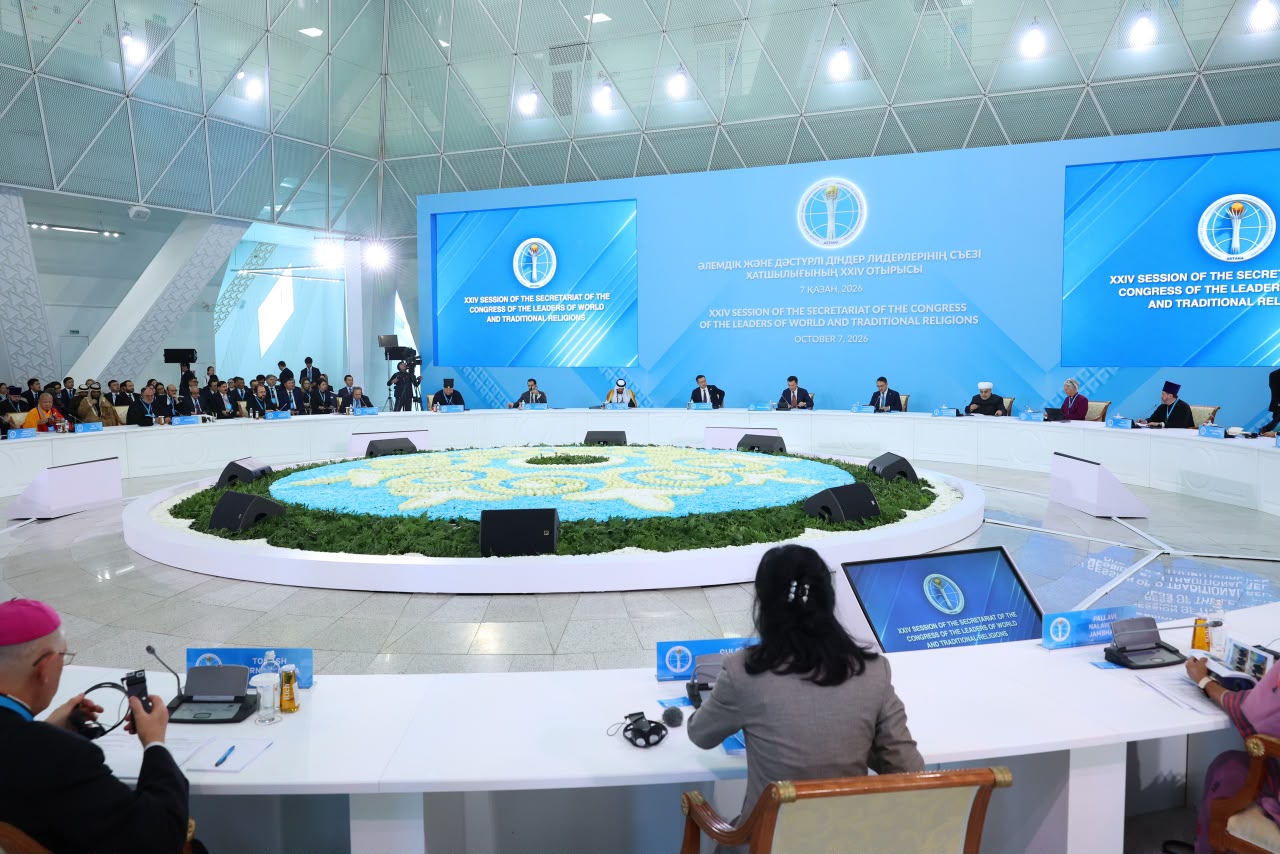
The 24th Meeting of the Secretariat of the Congress of Leaders of World and Traditional Religions began in Astana on Oct. 7. Photo credit: The press service of the congress
Fatih Mehmet Karaca, deputy president of the Presidency of Religious Affairs of Türkiye, emphasized the concept of stewardship and humanity’s responsibility toward nature.
“Waste is not merely an individual economic behavior. We see food and energy waste, a culture of fast consumption, and single-use products. Fighting waste means respecting nature’s rights. The values Islam calls us to are clear: gratitude, contentment, moderation, sharing and responsibility,” Karaca said.
Karaca also highlighted the issue of climate justice, noting that vulnerable communities often bear a disproportionate share of climate change consequences.
“It is not enough to see this as a matter of protecting nature. It is also a matter of justice and of the right of future generations to clean air, clean water and safe food,” he said.
Ethics of AI
The proposed code on AI seeks to establish ethical principles for the use of emerging technologies in religious contexts, including protecting spiritual heritage and preventing the distortion of religious texts.
Karin said Kazakhstan views AI as an important tool for development but highlighted that technological progress must be accompanied by greater ethical responsibility.
“Our country considers AI a powerful tool for progress. At the same time, technological development cannot outpace our moral responsibility. The broader the capabilities of algorithms, the greater the human responsibility,” he said.
Karin noted that AI could help preserve spiritual heritage and expand access to religious knowledge, while also creating new risks.
“It is really important to counter the distortion of religious texts and the creation of digital fakes on behalf of spiritual leaders. We have to avoid algorithmic discrimination and manipulation of people’s convictions,” he said.
Nihal Saad, director of the United Nations Alliance of Civilizations. Photo credit: The Astana Times
Director of the United Nations Alliance of Civilizations, Nihal Saad, said AI presents both opportunities and challenges for societies. Its responsible use requires keeping human dignity and ethical considerations at the center.
“Used wisely, AI could help transform education, improve health care, strengthen food security and support sustainable development. The challenge is ensuring that it advances in ways that uphold human dignity and ethics. We have to ensure that ethics are built into the design of AI systems rather than added as an afterthought,” Saad said.
She noted that although the two draft documents address different issues, they share an emphasis on responsibility, dialogue, cooperation and common values.
A call for unity
Jo Bailey Wells, deputy secretary general of the Anglican Communion and bishop for Episcopal Ministry in the Anglican Communion, said the three issues on the agenda, climate change, AI and the rights of children with incurable diseases, are not traditionally viewed as specifically religious matters. However, they are closely connected to values shared across faiths.
“Each expresses the values we have been talking about for many years. For example, human dignity, protecting family life, raising the role of women, combating radicalism, reducing poverty, valuing integrity in public life, countering corruption and defending human rights. They are all reflected here. We have come a long way with these shared declarations,” Wells said.
She highlighted that the challenges cannot be addressed by individual governments, professions or religious communities alone.
“The opportunity is to walk together and not just talk together. To put our convictions into action as we serve causes beyond our individual interests,” Wells said.
“The crises described cannot be resolved by the specialists and technicians, whether in climate and the environment, in artificial and superhuman intelligence, or in medicine and palliative care. Nor can they be resolved by any single group, government, or nation. They require a level of cooperation that transcends our differences,” she added.
Karin outlined several priorities for the congress, including promoting the agreed documents and initiatives, establishing mechanisms for expert support and consolidating the results of discussions.
The upcoming 25th anniversary session of the Secretariat in 2027 and the ninth Congress in 2028 are expected to serve as important milestones in the organization’s development.
“We need to enter a new stage in the development of the congress with concrete results and a clear understanding of the steps required to address future challenges,” Karin said.
