
ASTANA – A dinner table can be many things: a place to share a meal, exchange stories or, sometimes, bring cultures closer together. In diplomacy, it can even become a meeting point where conversations flow more naturally than they might across a conference table. That idea was at the heart of an Italian gastronomic evening at Selfie Astana restaurant on Nov. 20, when Anthony Genovese, chef and owner of Rome’s two-Michelin-starred restaurant Il Pagliaccio, brought his interpretation of Italian cuisine to Kazakhstan’s capital.
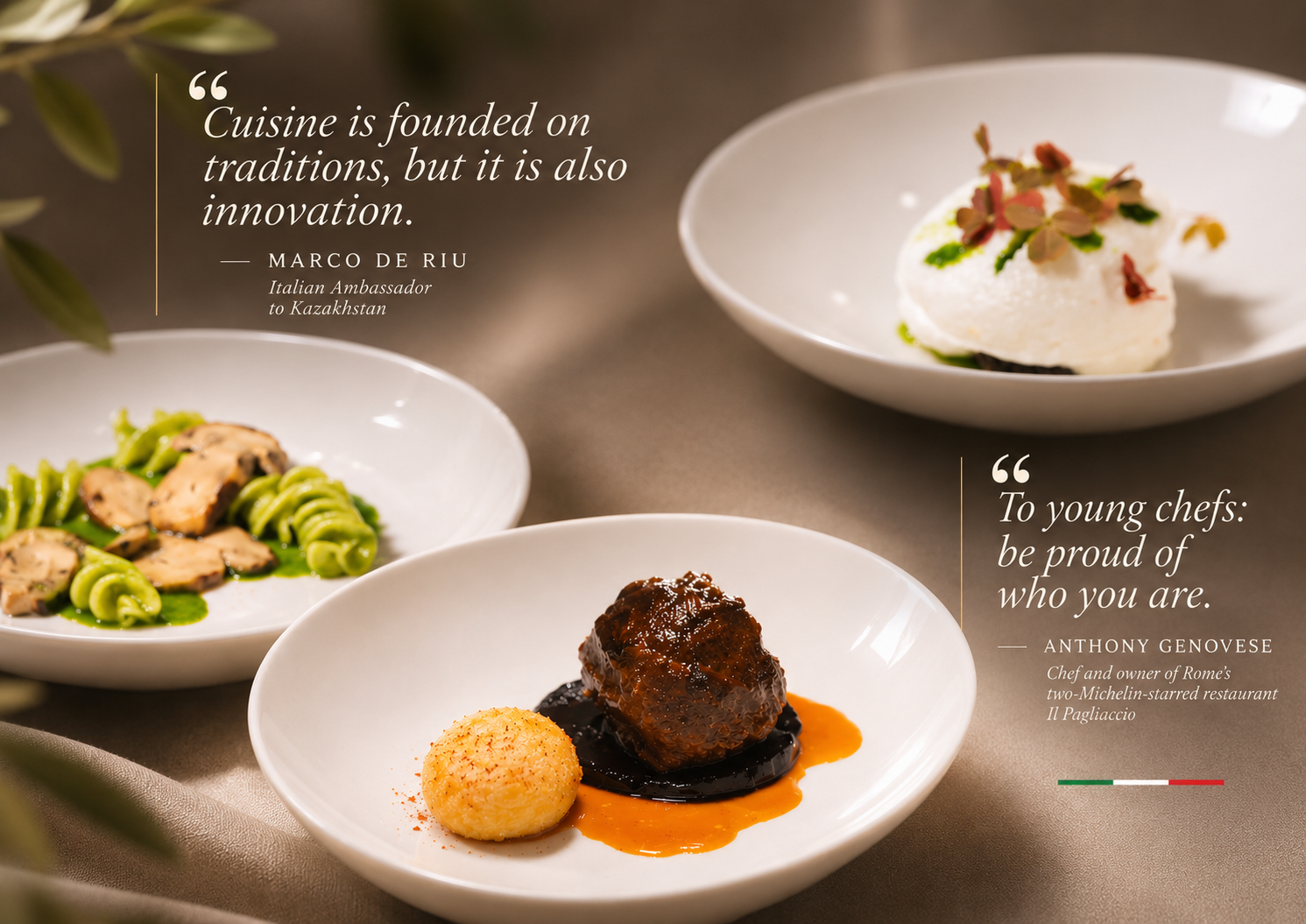
On Nov. 20, Rome’s two-Michelin-starred chef Anthony Genovese brought his signature interpretation of Italian cuisine to Selfie Astana for a gastronomic evening organized with the Italian Embassy as part of the 11th Week of Italian Cuisine in the World. Photo generated by The Astana Times via AI
Organized in cooperation with the Italian Embassy in Kazakhstan, the dinner was part of the 11th edition of the Week of Italian Cuisine in the World. But it also reflected a broader development: Astana’s growing role as a destination for international culinary experiences, where renowned chefs, local ingredients and different food traditions meet.
For Genovese, whose cooking combines Italian roots with French techniques and Asian influences, the invitation offered an opportunity to explore another culinary culture. Asked whether he had discovered anything from Kazakhstan that caught his attention, he mentioned camel and horse milk, as well as local cheese.
“I am very interested in using camel milk and horse milk,” he said, adding that he would like to explore the possibilities of working with Kazakh cheese.
It was a small exchange, but one that captured the spirit of the evening. International gastronomy is not simply about bringing familiar dishes to a new audience. It is also about discovering what another place has to offer.
A growing international table
Astana has been building this kind of culinary dialogue through Astana Global Gastro, an annual project launched in 2023 by Good Project. The initiative brings internationally recognized chefs to Kazakhstan’s capital for special gastronomic dinners.
By the end of 2024, the project had hosted 11 gala dinners, featuring chefs associated with Michelin stars and international restaurant rankings. Among its guests have been Spanish chef Paco Pérez, who has received four Michelin stars across his restaurants, and Italian chef Chiara Pavan, a two-Michelin-starred chef whose work also focuses on sustainable gastronomy. In 2024, the program welcomed French chef Vladimir Mukhin, among other international names.
The project has since continued to expand its international reach. In April 2026, it opened a new season with a dinner by Seoul-based chef Jun Lee, whose restaurant SOIGNÉ has two Michelin stars. The sequence of events suggests that Astana is becoming more than a place where international chefs make occasional guest appearances. It is developing a platform for culinary exchange, bringing different gastronomic traditions to an increasingly curious local audience.
Italy has become a particularly consistent partner in this effort. The Italian Embassy has collaborated with Astana Global Gastro on dinners during the annual Week of Italian Cuisine, including events with Chiara Pavan in 2023, Giuseppe Postorino, the Michelin-starred chef of L’Alchimia, a renowned Milanese restaurant ranked among the Top 50 Italy 2023, and Andrea Antonini in 2025. This year’s dinner with Genovese continued that tradition. For Italy’s Ambassador to Kazakhstan Antonello De Riu food offers a language that needs little translation.
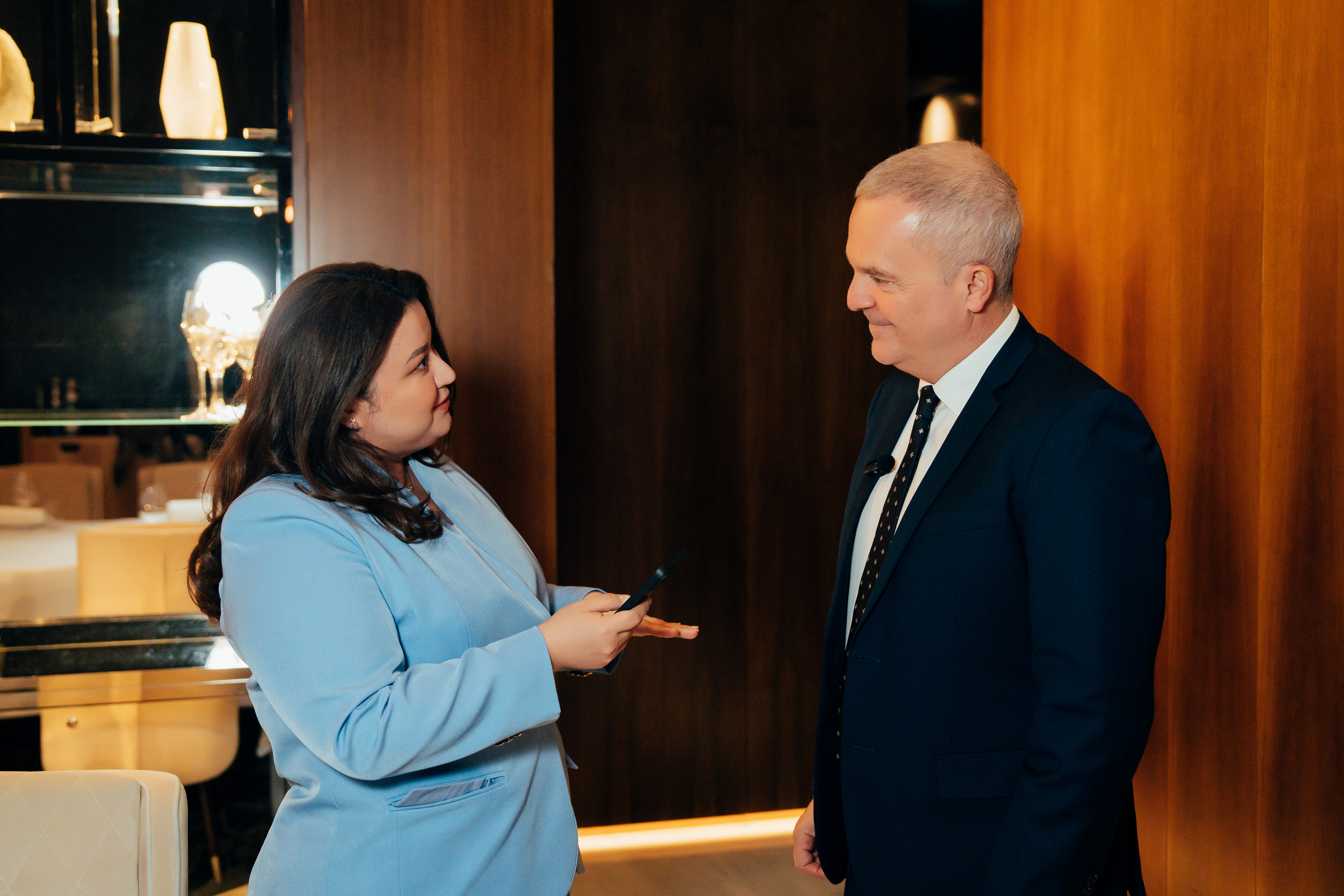
“The table is a perfect tool also for diplomats,” Italian Ambassador De Riu said to The Astana Times’ reporter Aida Haidar on Nov. 20. Photo by Roman Kopanev/Selfie Astana
“I think Italian cuisine has an international language, like Esperanto,” he said. Italy, he added, is already well loved by people in Kazakhstan for its culture, historic sites, shopping and, of course, food.
Bringing a Michelin-starred chef to Astana gives local audiences an opportunity to discover another side of Italian cuisine: one that respects tradition while exploring new techniques and interpretations.
In 2025, UNESCO recognized Italian cuisine as an Intangible Cultural Heritage of Humanity. The recognition, De Riu noted, was not about a single dish, but about a collective tradition shaped by biodiversity, craftsmanship, family practices and knowledge passed down through generations.
“Cuisine is founded on traditions, but it is also innovation,” he said.
The ambassador also sees the dinner table as a natural setting for cultural diplomacy. Whether the conversation concerns business, politics or culture, people often find it easier to connect when they sit down together.
“The table is a perfect tool also for diplomats,” he said.
Beyond imported flavors
Yet the appeal of such events lies not only in the opportunity to experience international cuisine. It also raises a question about what Kazakhstan itself can bring to the global table.
Genovese, who had previously visited Almaty, was impressed by the city’s emerging restaurant scene and young chefs working with local ingredients. He recalled seeing restaurants where chefs took pride in cooking with regional produce, including lamb and horse meat.
His advice to young Kazakh chefs was not to imitate established culinary traditions, but to embrace their own.
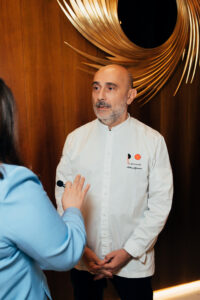
Genovese sees considerable potential in Kazakhstan’s food culture, particularly its distinctive ingredients and traditions. Photo by Roman Kopanev/Selfie Astana
“You have to be proud of who you are,” he said, encouraging young chefs from Kazakhstan to bring their ingredients and culinary traditions to Europe and introduce them to international audiences, rather than simply coming to Europe to learn how to cook European food.
He sees considerable potential in Kazakhstan’s food culture, particularly its distinctive ingredients and traditions. Camel and horse milk, local cheeses and other regional products, he said, offer possibilities worth exploring.
This is where Astana’s growing international gastronomy scene could become especially interesting. A city that invites the world to its table can also use that opportunity to introduce the world to its own.
The capital’s geographical position between Europe and Asia offers a natural backdrop for such encounters. But geography alone does not create a culinary destination. It takes restaurants willing to experiment, organizers prepared to build international partnerships, chefs interested in local traditions and an audience open to discovering something unfamiliar.
Astana Global Gastro and the Italian Embassy’s recurring culinary events are contributing to that process, one dinner at a time.
Perhaps the most meaningful measure of their success is not how many famous chefs have visited, or how many Michelin stars have appeared on a menu. It is whether these encounters leave something behind: a new collaboration, a curiosity about unfamiliar ingredients, or a greater appreciation of the culinary traditions that make each place distinct.
After all, a good meal may end in a few hours, but the conversations it inspires can last much longer. And perhaps that is what makes such encounters more important than the meal itself.
