
ASTANA – Falling water levels and shrinking ice cover in the Caspian Sea as well as human activity are putting pressure on the habitats seals depend on to rest and raise their pups. In an interview with The Astana Times, Assel Baimukanova, a researcher at the Institute of Hydrobiology and Ecology, said that protecting the species requires stronger regional cooperation and continued research.

Photo credit: Mirgaliy Baimukanov. Click to see the map in full size. The map is designed by The Astana Times.
She said changes in the sea are disrupting the animals’ natural habitat, particularly in the northern Caspian, where they rely on islands for resting and winter ice for breeding.

Assel Baimukanova with her photograph of Caspian seals. Photo credit: Fatima Kemelova
“The health of the Caspian Sea is the health of the Caspian seal. By observing the condition of the seals, we can understand the condition of the sea. And right now, the sea is not doing very well,” said Baimukanova, who has studied Caspian seals for 13 years.
Baimukanova has taken part in more than 30 field expeditions. With her family, she also makes documentary films about the species. Their team has produced nine films about the Caspian seal.
During regular expeditions, she has observed how the sea and the animals’ living conditions have changed over time.
“I first saw the seals in 2013, and I realized that I wanted to stay close to them, study them and work for their protection,” she said.
Shrinking habitat
The Caspian Sea, shared by Kazakhstan, Russia, Azerbaijan, Turkmenistan and Iran, is divided into northern, middle and southern sections. The Northern Caspian plays an important role in the seals’ seasonal cycle, as the animals use its islands and shallow waters as resting areas.
In spring, the seals gather to molt before moving to feeding grounds to build up energy for winter. In fall, they return to the islands to rest until ice forms. The ice is particularly important because Caspian seals give birth and raise their pups on it.
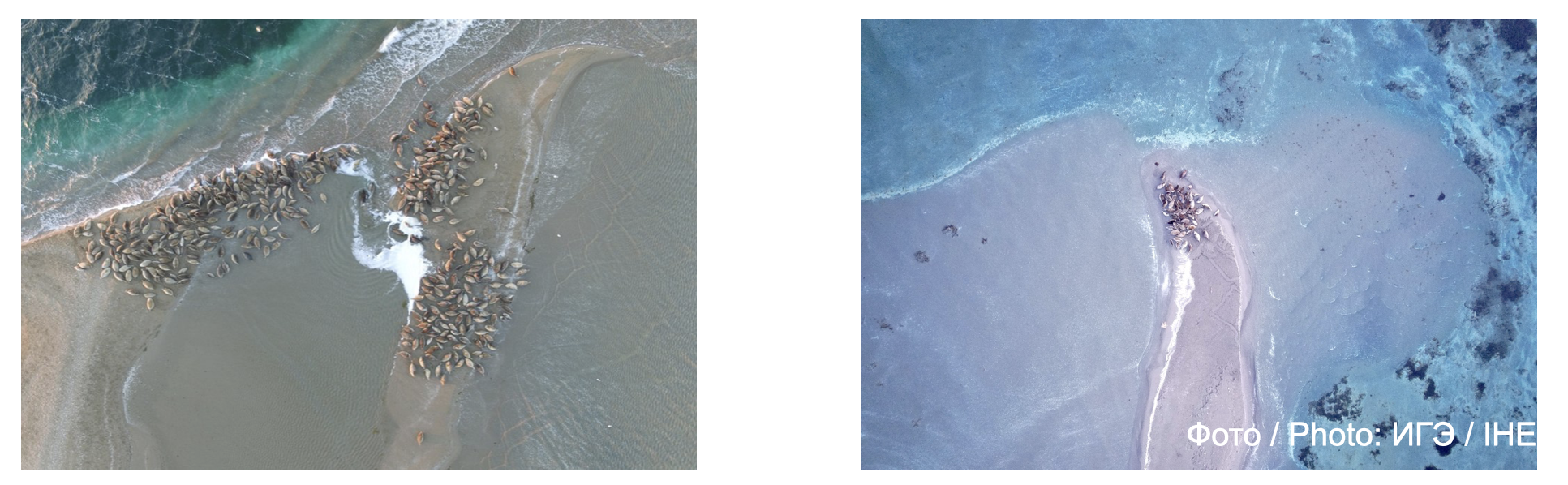
2016 (L): 481 seals at a rookery in Kendirli Bay. Autumn 2024 (R):Up to 65 seals at a rookery in Kazakh Bay. Photo credit: IHE
But falling water levels and shrinking water ice are disrupting this seasonal cycle.
“The current period of sea-level decline began in 1995. Since then, the level of the Northern Caspian has fallen by 2.28 meters. This affects coastal areas and gradually changes the islands and shallow waters that provide important habitats for the animals,” Baimukanova said.
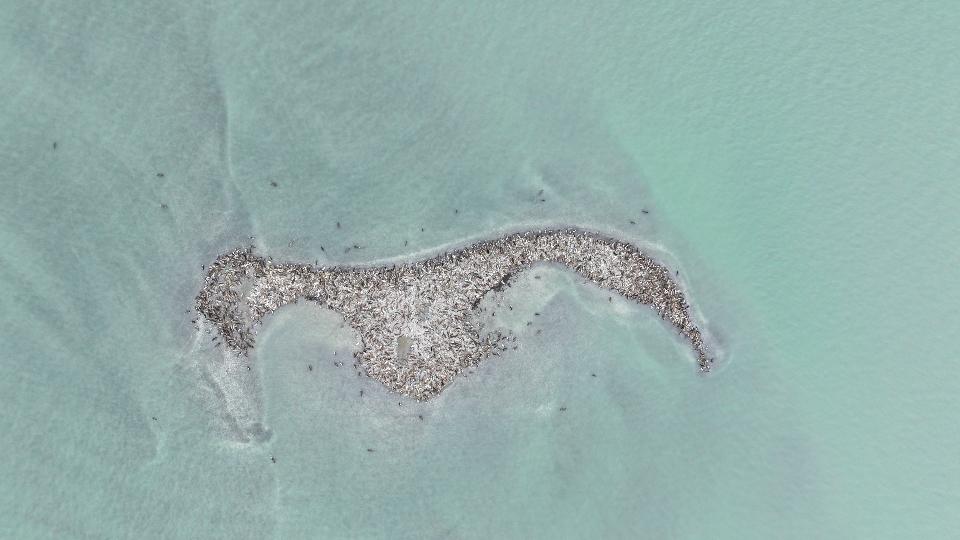
A seal rookery on the Tyuleniy Islands. Photo credit: Assel Baimukanova
Researchers counted approximately 25,000 seals at the Durnev Islands in Komsomolets Bay in the northeastern Caspian during a helicopter survey in April 2009. The count fell to 20,000 in April 2011. Photographs from those years show large groups resting along the shores.
When Kazakh researchers surveyed the same islands in 2016, they found only around 300 seals. By 2019, the number had dropped to 69. By 2021, the Durnev Islands had merged with the mainland and ceased to exist, and seals no longer haul out there.
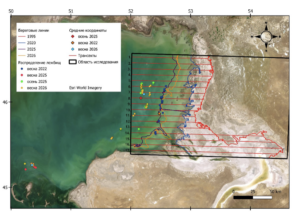
Seal haul-outs and shorelines, 1995–2026. Sources: IHE aerial surveys; Baimukanov et al., Frontiers in Marine Science.
“The islands where the seals used to gather are disappearing. They need these places to rest, molt and prepare for winter, but there are fewer suitable areas now,” Baimukanova said.
According to a satellite-imagery analysis published by the team in Frontiers in Marine Science in 2026, the northeastern coast of the Caspian Sea in Kazakhstan has been retreating westward. The study covered the area from the mouth of the Ural (Zhaiyk) River to the Buzachi Peninsula, including Kaydak and Komsomolets bays.
“The coastline retreated by an average of around 2.7 kilometers per year until 2020. Between spring 2022 and spring 2023, however, it shifted by 23 kilometers in a single year,” Baimukanova explained.
Over 1995–2023, the coastline moved by an average of 44 kilometers along most of this stretch and by up to 175 kilometers near Kaydak Bay, while the total area of islands shrank more than 15-fold. These changes make it increasingly difficult for researchers to monitor habitats and for seals to find suitable resting places.
Climate change and human activity
Falling sea levels are not the only concern. Climate change is also affecting the availability of ice, which is essential to the reproduction of Caspian seals.
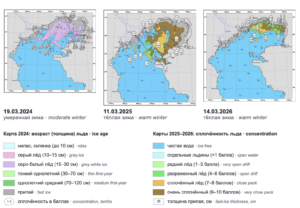
Seal pupping occurs only on the ice of the North Caspian, from mid-January to late February. In the last 11 years, there have been no severe winters, and five were mild. Sources: Kazhydromet; ESIMO; Institute of Hydrogeology and Environmental Geoscience (IHE) assessment.
“Where will Caspian seals reproduce if the ice disappears? This is one of the main questions we need to understand,” Baimukanova said.
Human activity is adding to the pressure. The Volga and Ural rivers are major sources of freshwater flowing into the Caspian Sea, but water regulation and withdrawals for economic activities affect how much reaches the sea.
Fishing nets, marine pollution, shipping, tourism and offshore oil and gas activities pose additional risks. Some seals become trapped in abandoned fishing gear, while human activity can disturb their resting areas.
Between 2019 and 2023, scientists examined 395 seal remains and found that 9.4% bore marks of entanglement in fishing nets.
Over five years of fieldwork, researchers also collected more than 36 tons of marine waste, including approximately 17 tons of abandoned fishing nets.
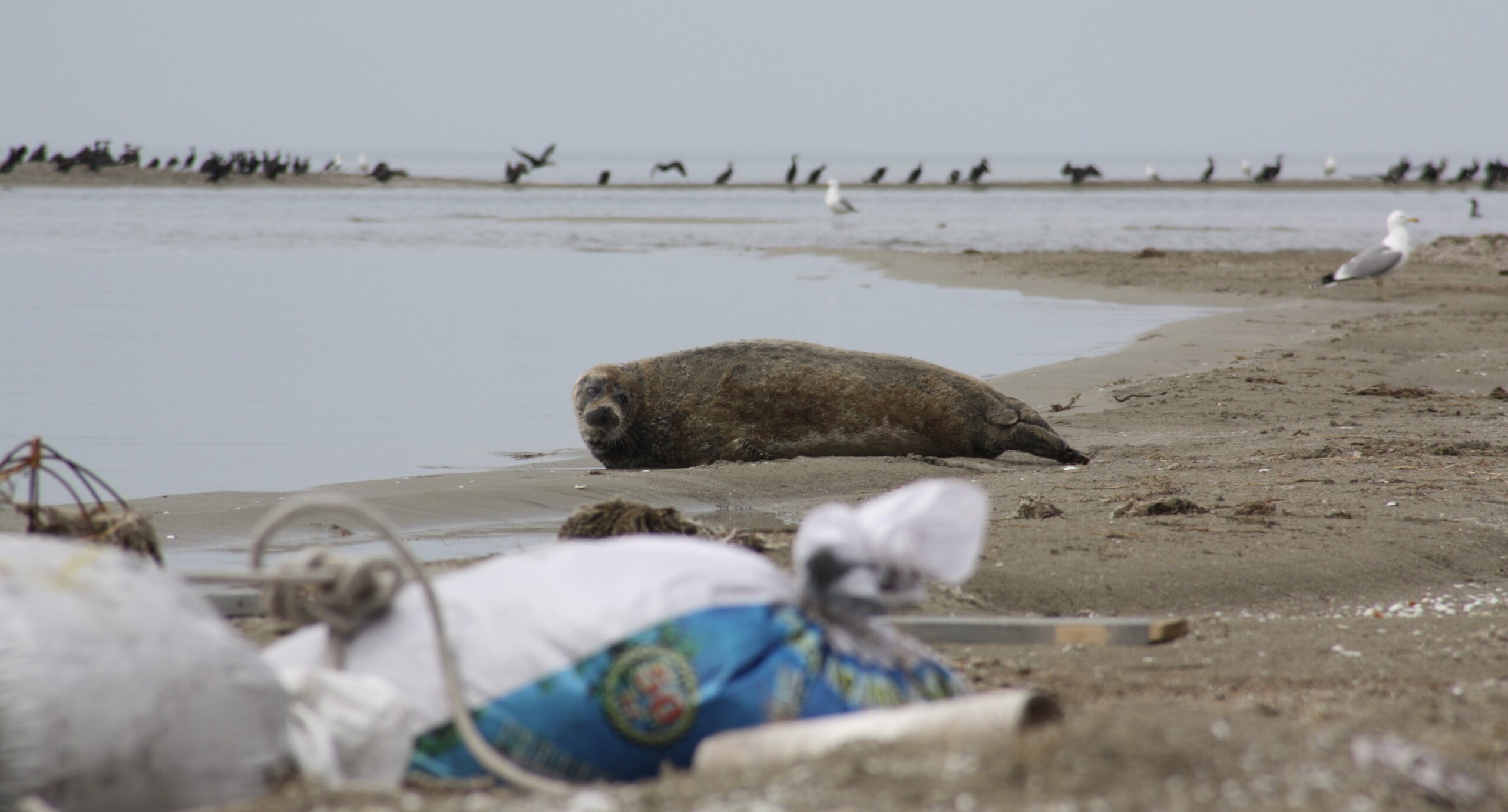
Photo credit: Timur Baimukanov
“During one of our visits to a coastal area on the Tyub-Karagan Peninsula in 2013, we recorded around eight tons of rubbish. When we returned five years later, the amount had increased to nine tons. This shows that waste remains a persistent problem along the Caspian coast,” she said.
What research reveals about the seals
Monitoring Caspian seals requires regular fieldwork and multiple research methods. Since 2016, Kazakh scientists have conducted state-commissioned studies, building on earlier research by international teams.
Scientists use drones, aircraft and satellite imagery to count seals, track their distribution and identify changes in their habitats. They also use satellite imagery to identify new islands and resting sites. Researchers also conduct boat-based surveys to monitor conditions in the Caspian Sea.
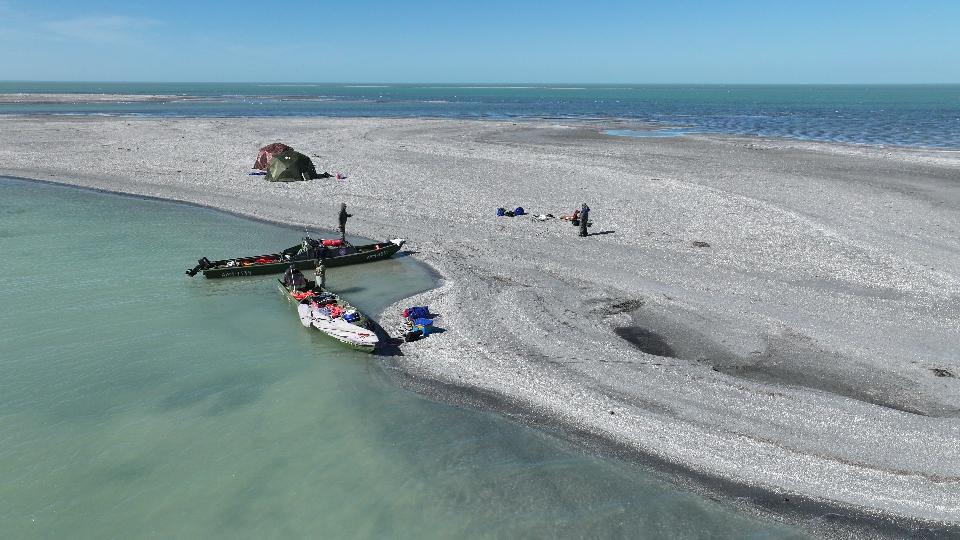
A camp on the Tyuleniy Islands in spring 2025. Photo credit: Assel Baimukanova.
“Recent aerial counts on island haul-outs in the north-eastern Caspian have raised further concerns about the animals’ numbers and distribution. Researchers counted 59,642 seals on the surveyed islands in spring 2020 and 62,105 in spring 2022. By autumn 2023, the number had fallen to 44,573. These figures refer to seals counted on the surveyed islands, not to the total population of the species,” Baimukanova said.
Researchers conduct field surveys using drones, aircraft and boats to monitor Caspian seals and their habitats, staying in field camps for up to 30 days. Photo credit: Asel Baimukanova
Researchers also study the seals’ diet and health. Their findings show that Caspian seals feed primarily on small fish, particularly gobies, rather than commercially valuable species.
“Researchers also examine the age of the animals by studying the teeth of dead seals found along the coast. This helps estimate how old they were when they died. In earlier observations, the oldest recorded seals were 50 years old. In more recent research, the oldest recorded animals were 32, while few individuals were found to have reached 20,” she said.
Determining the causes of death remains difficult because researchers need fresh carcasses to conduct detailed laboratory and toxicological examinations. However, available findings point to serious health problems among the animals.
Baimukanova said pollution can weaken the seals’ immune systems, making them more vulnerable to disease. When animals gather in large numbers, infections can also spread more easily.
Efforts to protect the species
Kazakhstan has taken several steps to strengthen the protection of the Caspian seal. The species was included in Kazakhstan’s list of rare and endangered animals in 2020. In 2024, a specially protected natural area dedicated to its conservation was established. Kazakhstan and Russia have also developed a joint action plan, while a seal rehabilitation center is planned within the protected area.
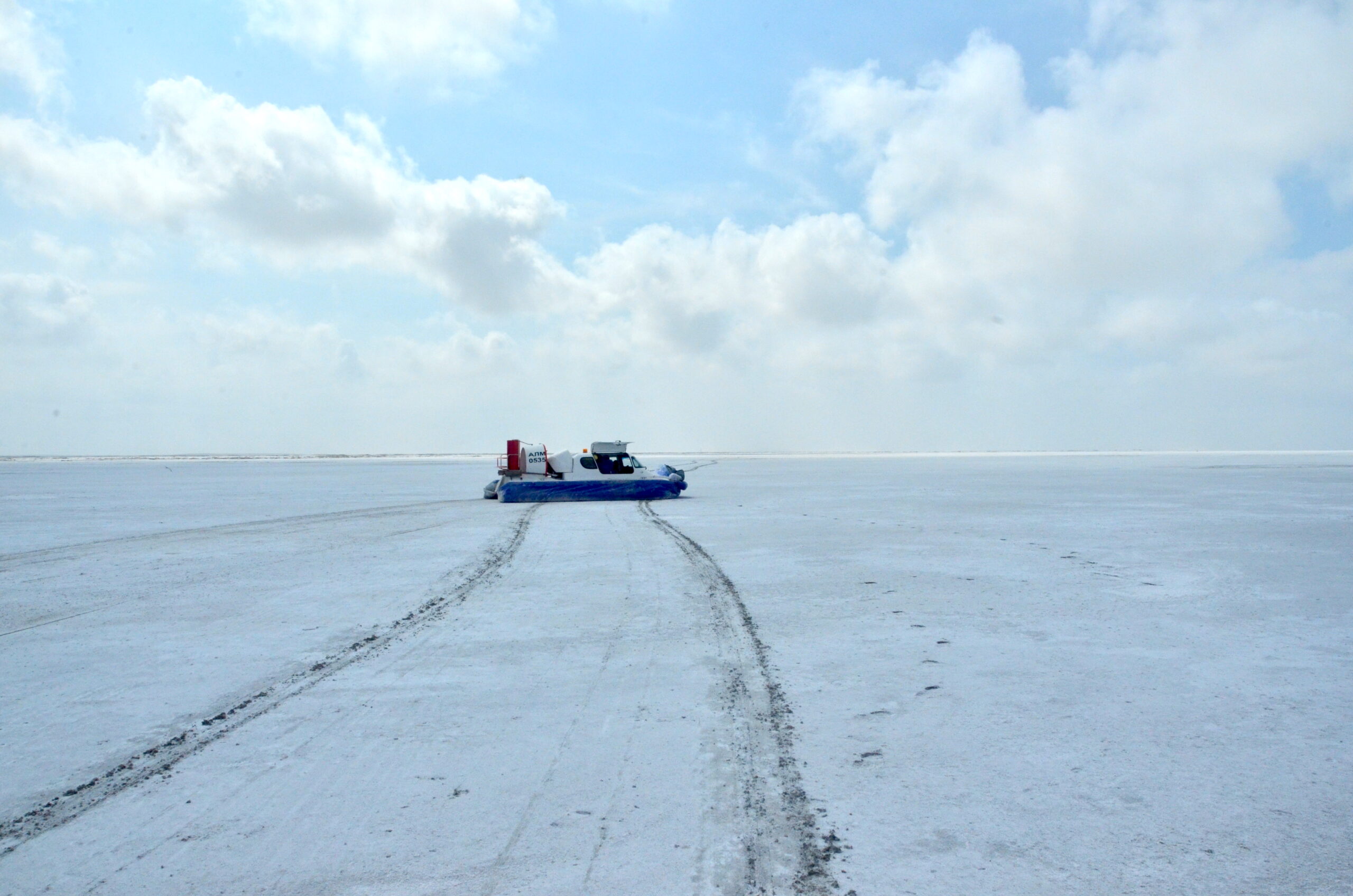
The salt desert, 2017. Photo credit: Mirgaliy Baimukanov.
“Further efforts should focus on reducing pollution, preventing illegal fishing and protecting the places where the animals gather. However, the conservation of the Caspian seal cannot be the responsibility of one country alone. Since the Caspian Sea is shared by five states, cooperation among all of them is essential to protecting the species and its habitat,” Baimukanova said.
For researchers, the work also means drawing attention to animals that cannot communicate their problems themselves.
“I think every zoologist considers themselves the voice of the animal they study. The Caspian seal cannot knock on our door and tell us that it is struggling or ask us to improve its living conditions. It cannot speak for itself, so we have to speak for it,” Baimukanova said.
Her words underline a broader point: the fate of the Caspian seal is closely tied to the health of the sea it inhabits. Protecting the species means protecting the ecosystem on which both wildlife and people depend.
