
ASTANA — The world has two years to assess whether countries are doing enough to meet the goals of the Paris Agreement, as governments face growing pressure to turn climate pledges into measurable progress.
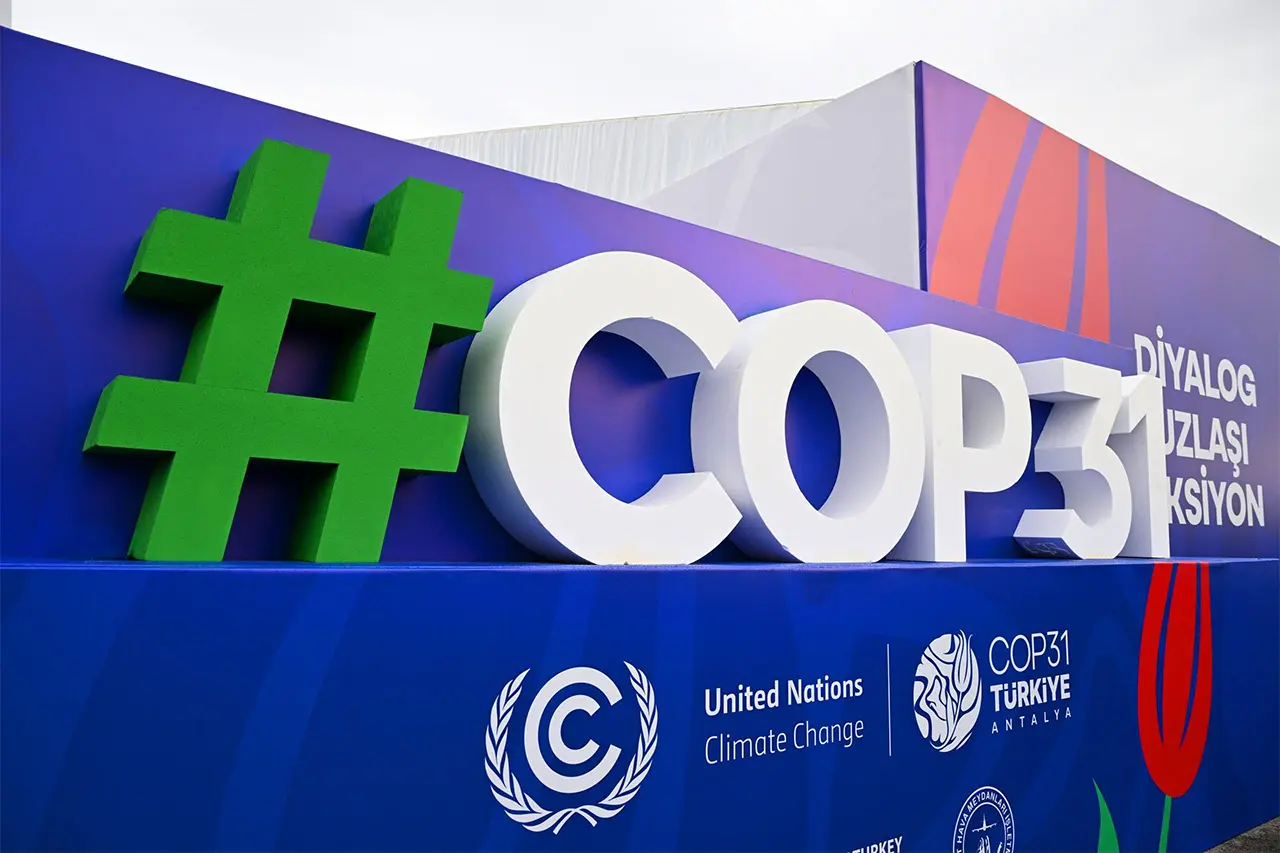
Photo credit: uzdaily.uz
The countdown began on Nov. 18 at the UN Climate Conference in Antalya, Türkiye, also known as COP31, which kicked off on Nov. 9. There, countries launched the second Global Stocktake, a review of collective efforts to cut greenhouse gas emissions, adapt to climate change and mobilize financing. The process will conclude in 2028, just two years before a 2030 deadline for global climate targets.

Simon Stiell. Photo credit: Kiara Worth, UN Climate Change
“This is a major moment in the international climate process. And a major opportunity,” said UN Climate Change Executive Secretary Simon Stiell at the high-level on the launch of global stocktake.
The first stocktake, completed in Dubai in 2023, helped establish global goals to triple renewable energy capacity, double the rate of energy efficiency improvements by 2030 and accelerate the transition away from fossil fuels in energy systems.
According to Stiell, nearly 90% of countries have incorporated the outcomes of the first global climate stocktake into their national climate plans.
Concrete projects and investments
For Kazakhstan, the challenge is of translating its own climate ambitions into concrete projects and investments. This effort has to go together with balancing the demands of economic growth, energy security and environmental protection.
In an interview with The Astana Times, Saule Sabiyeva, director of the Climate Policy Department at the Ministry of Ecology and Natural Resources, outlined three priorities emerging from COP31: mobilizing climate finance, strengthening regional cooperation on water security and accelerating the decarbonization of the economy.
Kazakhstan has also signed agreements worth approximately $1.2 billion for renewable energy and gas infrastructure projects at the climate summit in Antalya, as the country seeks to turn its emissions reduction commitments into investments and accelerate its transition to a lower-carbon economy.
According to Sabiyeva, among the projects are a 150-megawatt wind farm in the Turkistan Region and a one gigawatt wind farm in the Kostanai Region. Another agreement provides for the Aqyl Energy project, which aims to introduce 1.35 million smart gas meters with remote data transmission across Kazakhstan’s gasified regions.
The ministry also signed framework agreements on detecting and eliminating methane leaks in gas distribution networks and restoring degraded land in the Almaty Region. Both initiatives envisage cooperation under Article 6 of the Paris Agreement, which provides mechanisms for countries to cooperate on emissions reductions, including through carbon markets
Closing financing gap
One of the major development at COP31 was the presentation of Kazakhstan’s Country Climate Investment Platform (QCIP), designed to bring together government agencies, international financial institutions, climate funds and private investors around a pipeline of priority projects.
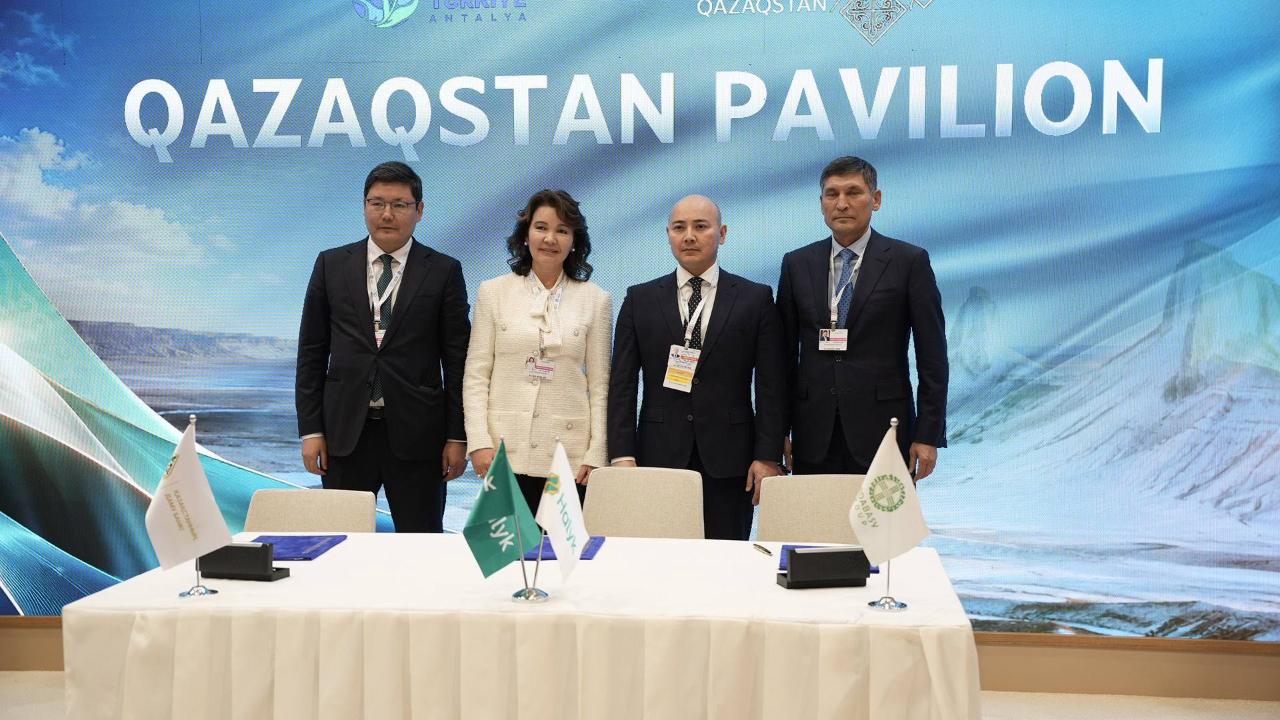
Five agreements aimed at reducing greenhouse gas emissions, advancing renewable energy, restoring natural ecosystems and digitalizing gas infrastructure. Photo: Ministry of Ecology and Natural Resources
Kazakhstan also advances the Qazaqstan Just Energy Transition investment platform (QaJET), developed with support from the European Bank for Reconstruction and Development.
QaJET aims to mobilize approximately $20 billion in investment to help deliver at least 10 gigawatts of new renewable energy capacity by 2035, alongside electricity grid upgrades, energy storage and electrification.
“The next step will be to translate our updated Nationally Determined Contribution [NDC 3.0] into a concrete investment program, identifying the required financial resources, implementation mechanisms and responsible stakeholders,” Sabiyeva explained.
Under its updated NDCs, which Kazakhstan submitted in October 2025, the nation aims to reduce greenhouse gas emissions by 17% below 1990 levels by 2035, with a conditional target of 25% if international support is available. Kazakhstan has also committed to achieving carbon neutrality by 2060.
Meeting those goals will require substantial changes to an energy system that remains heavily dependent on fossil fuels. Coal accounts for nearly 60% of Kazakhstan’s electricity generation, underscoring the challenge of expanding cleaner power while meeting growing electricity demand.
The scale of the financing challenge remains considerable. According to the United Nations Development Programme, Kazakhstan estimates that implementing its updated national climate plan will require $71.8 billion in investment.
“Priority areas include renewable energy development, electricity grid modernization, energy efficiency improvements and methane emissions reduction. We are also advancing the Just Energy Transition platform, QaJET, which aims to facilitate the development of at least 10 gigawatts of renewable energy capacity by 2035,” Sabiyeva said.
Water security and regional cooperation
Alongside emissions reductions, Kazakhstan is seeking stronger regional cooperation to address the growing impact of climate change on Central Asia’s water resources, agriculture and ecosystems.
UN Secretary-General addresses the COP31 Leaders’ Roundtable on Nov. 11. Photo credit: Kiara Worth, UN Climate Change
“For Kazakhstan, climate change is not merely a matter of reducing greenhouse gas emissions. It is also directly linked to water security, food security and ecosystem resilience,” said Sabiyeva.
“This is why cooperation among Central Asian countries is particularly important. We need closer coordination in monitoring glaciers, river flows and water consumption, as well as stronger cooperation on the management of transboundary water resources,” she explained.
The priorities include improving hydrological monitoring, strengthening agricultural resilience, restoring the Northern Aral Sea and protecting the Caspian Sea ecosystem.
At COP31. Kazakhstan also promoted its proposal for an international water organization within the United Nations system, seeking stronger coordination on water-related challenges.
Measurable progress
Sabiyeva also pointed to Kazakhstan’s submission of its second Biennial Transparency Report (BTR) under the Paris Agreement, making it one of the first three countries to complete the latest reporting cycle.
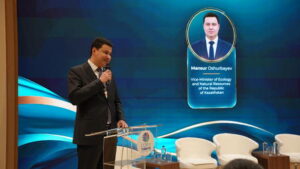
Mansur Oshurbayev, Vice Minister of Ecology and Natural Resources of Kazakhstan, at the BTR presentation. Photo credit: Ministry of Ecology and Natural Resources
The report, presented during COP31, showed that Kazakhstan’s net greenhouse gas emissions in 2024 were 10.06% below 1990 levels, according to UNDP. The findings provide a benchmark against which future progress toward the country’s climate targets can be measured.
“Kazakhstan has also been recognized as a BTR Champion since COP29 [in Baku]. This leadership provides additional momentum for projects in renewable energy, methane emissions reduction, afforestation, land restoration and the digitalization of environmental monitoring,” she said.
Sabiyeva said Kazakhstan seeks to improve its greenhouse gas monitoring, reporting and verification systems, while expanding cooperation under Article 6 to attract financing for emissions reduction projects.
“At the same time, we emphasized that climate commitments must be accompanied by access to international climate finance, modern technologies and appropriate mechanisms for a just energy transition,” Sabiyeva said.
“Ultimately, COP31 should help Kazakhstan move from climate commitments towards measurable results, supported by investment, technology and stronger international partnerships,” she said.
