
ASTANA — Growing instability around key Middle Eastern maritime chokepoints is increasing the strategic importance of the Trans-Caspian International Transport Route, also known as the Middle Corridor, said experts during a May 27 webinar hosted by the Edinburgh Business School at Heriot-Watt University in London.
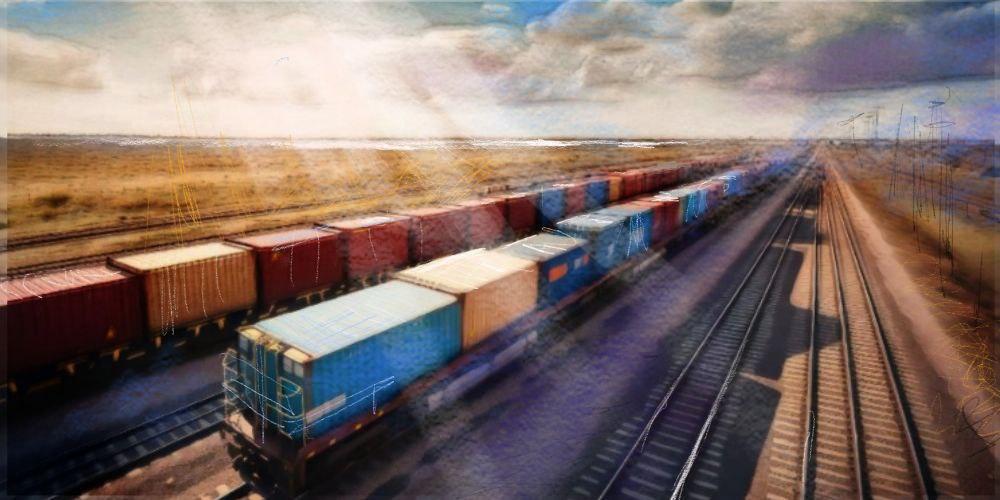
Photo credit: TCA/ Aleksandr Potolitsyn
The webinar, titled The Middle Corridor and the Future of U.K.-Central Asia Trade, brought together academics, policy analysts and business representatives to discuss the corridor’s geopolitical and economic significance amid rising global fragmentation.
Experts said disruptions affecting the Strait of Hormuz and the Red Sea are exposing vulnerabilities in global supply chains and strengthening the case for alternative trade and energy routes linking Europe and Asia through Kazakhstan, Azerbaijan, Georgia and Türkiye.
Energy risks and the Middle Corridor
Renewed tensions involving Iran, Israel and the United States and persistent security threats in the Red Sea have intensified concerns over dependence on traditional maritime chokepoints.
“The Strait of Hormuz crisis, while demonstrating the vulnerability of traditional routes, has brought renewed attention to the risks of chokepoint dependency and the need for more attention to alternative, emerging pathways like the Middle Corridor,” said Arzu Abbasova, a research analyst at the Center for Finance and Security at the Royal United Services Institute.
“Against a backdrop of growing geopolitical fragmentation, the Middle Corridor is emerging as a strategic space where trade, security, and influence intersect,” she added.
Abbasova noted that Azerbaijan considers the corridor a key component of its post-2020 regional connectivity strategy, using infrastructure investment and logistics partnerships to position itself as a central transport hub.
Partnership with Kazakhstan and Azerbaijan
The webinar spotlighted Kazakhstan and Azerbaijan as particularly important regional partners for the U.K. due to their strategic locations, energy resources and shared interest in regional stability and open trade.
Participants also highlighted the potential geopolitical benefits of improved regional relations in the South Caucasus, including prospects for additional transport links between Armenia and Azerbaijan that could strengthen east-west connectivity.
Persistent infrastructure bottlenecks
Beyond transport, experts emphasized Central Asia’s broader economic potential in agriculture, critical minerals and human capital. Professor John Easton of the Edinburgh Business School said infrastructure development along the corridor could significantly affect freight demand and regional logistics patterns.
“The pace of development of the rail infrastructure has the potential for huge impact on the demand for rail freight service. This talk touches on the differences between the rail systems to the east and west of the Middle Corridor, and asks how different approaches to the use of the railway might impact on viability,” said Easton.
Despite progress in customs harmonization and transport coordination, infrastructure constraints remain a major challenge. Discussions highlighted the need to expand pipeline capacity to transport oil and natural gas from Kazakhstan and Azerbaijan to European markets.
According to the World Bank modeling referenced during the webinar, freight transit times along the corridor could fall by up to 50%, and trade volumes could triple by 2030 if infrastructure development continues.
Professor Ismail Gölgeci of the University of Auckland Business School said the corridor’s long-term role in global trade would depend not only on infrastructure but also on institutional coordination and supply-chain resilience.
“Recent geopolitical tensions and supply chain disruptions are increasing the strategic importance of the Middle Corridor,” said Gölgeci.
U.K. interest in Central Asia’s trade routes
The European Union remains the largest external stakeholder in the corridor, backed by a 10 billion-euro (US$11.6 billion) investment commitment to improve regional connectivity. Experts noted that British interest in the route is also growing, particularly in areas such as infrastructure finance, regulatory standards and export finance.
Moderating the discussion, Assylbek Nurgabdeshov of the Heriot-Watt University described the corridor as a ‘strategic diversification mechanism in an increasingly fragmented global trading system.”
“In this context, Kazakhstan’s role as a regional anchor and the U.K.’s institutional contribution through governance, finance, and education become increasingly important,” he said.
