
ALMATY – Kazakhstan is expected to experience another warm summer in 2026, with temperatures reaching up to 45 degrees Celsius in some regions, according to a seasonal forecast released by the national weather service, Kazhydromet, on May 15.
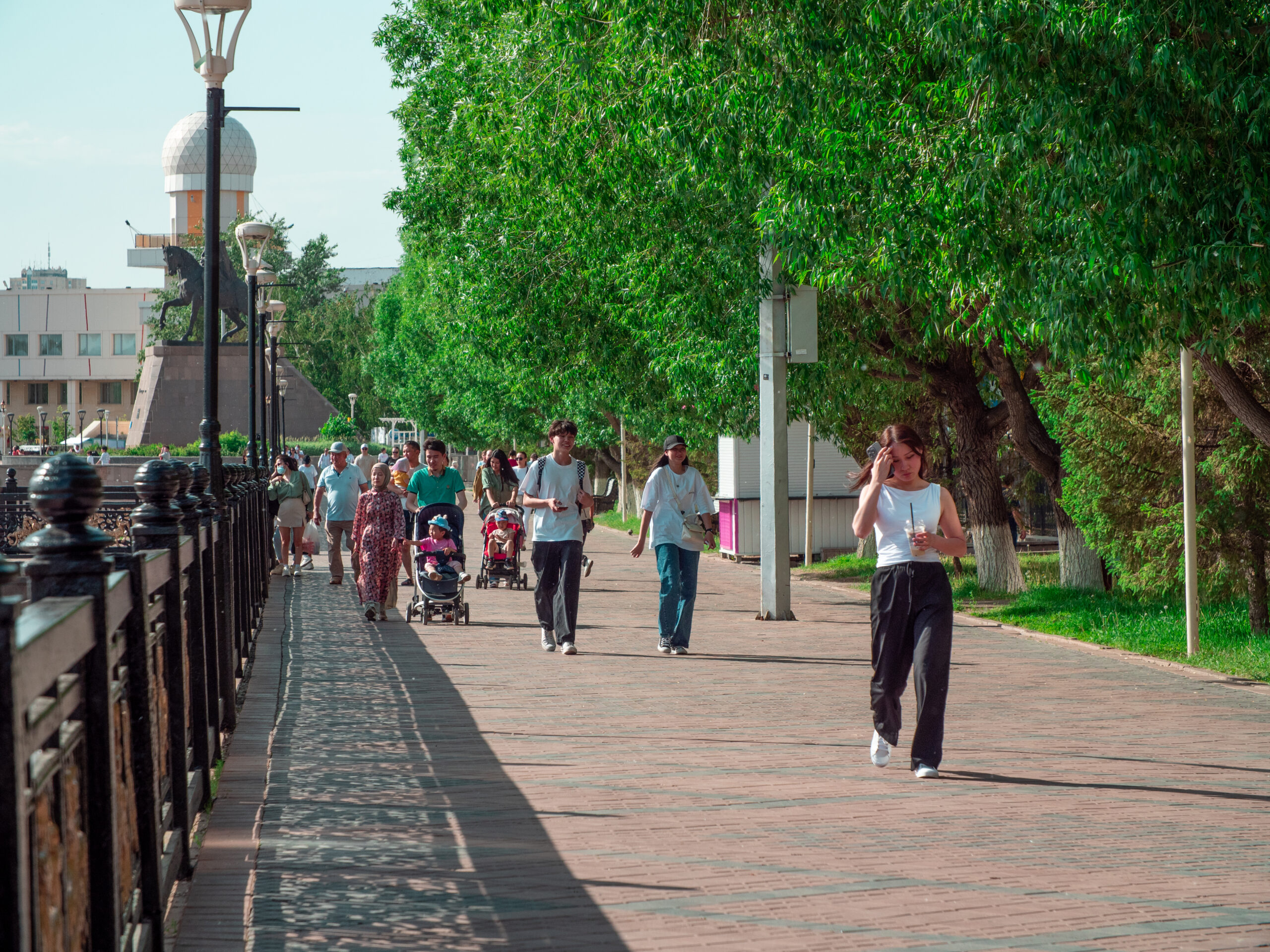
Photo credit: The Astana Times
The outlook comes just months after 2025 was officially recognized as the hottest year in Kazakhstan since meteorological observations began in 1941, underscoring the country’s accelerating trend of climate warming.
Forecasters predict a summer marked by alternating periods of intense heat, thunderstorms, heavy rain, hail and strong winds, while several regions are expected to face below-average precipitation and an increased risk of drought.
June could bring heat up to 45°C
According to Kazhydromet, average temperatures in June may exceed climate norms by 1–2 degrees Celsius across most of the country. Eastern and northwestern regions are likely to remain closer to historical averages.
Daytime temperatures are expected to range between 15–20 and 30–38 degrees Celsius, while southern regions could see temperatures soar to 40–45 degrees Celsius during particularly hot periods.
The month is also expected to bring sharp weather contrasts. Heavy rain, thunderstorms, hail and squally winds may accompany cooler spells. Nighttime frosts remain possible in northern, eastern and mountainous areas.
July is expected to be moderately hot
July is forecast to be generally consistent with long-term climate averages.
Average temperatures are expected to range between 18–24 degrees Celsius across much of Kazakhstan and between 25–30 degrees Celsius in southern regions. Mountainous areas in South and East Kazakhstan will remain cooler, with temperatures between 9–17 degrees Celsius.
Precipitation is expected to be unevenly distributed across the country, reflecting differences in terrain and atmospheric circulation patterns.
August to bring renewed heat
Forecasters expect temperatures in August to exceed seasonal norms by 1–2 degrees across most of Kazakhstan. Southeastern regions are likely to remain closer to average conditions.
The hottest conditions are expected in central and western Kazakhstan, where prolonged periods of heat may persist through the end of summer.
While overall summer precipitation is expected to remain near average nationwide, several regions could experience significant rainfall deficits.
In June, below-normal precipitation is forecast for southwestern Kazakhstan and parts of the northern and central parts of the country. Drier-than-usual conditions are expected in western, southern and southeastern regions in July.
By August, rainfall deficits are likely across southwestern and central Kazakhstan, as well as parts of eastern Kazakhstan, raising concerns about drought and water availability.
2025 becomes Kazakhstan’s hottest year on record
The summer forecast follows the release of Kazhydromet’s annual climate review, which found that 2025 was the warmest year recorded in Kazakhstan since systematic observations began more than eight decades ago.
According to the report, the country’s average temperature anomaly reached +2.11 degrees Celsius above the historical norm, surpassing the previous record set in 2023.
Extreme temperature readings were recorded at 176 meteorological stations across Kazakhstan, while 138 stations registered their hottest year since records began in 1941.
The most pronounced warming was observed in northwestern and central Kazakhstan, as well as parts of the Kyzylorda Region and several western and eastern areas, where temperatures exceeded long-term averages by more than 2.5 degrees Celsius.
Decades of warming
Kazhydromet’s analysis highlights a long-term warming trend that has accelerated over recent decades.
Since the 1960s, each successive decade has been warmer than the previous one. The average national temperature for 2016–2025 reached 7.11 degrees Celsius, nearly one degree above the historical norm. The five-year period from 2021 to 2025 became the warmest on record, with an average temperature of 7.55 degrees Celsius.
Nine of Kazakhstan’s ten warmest years have occurred in the 21st century, providing further evidence of accelerating climate change.
Meteorologists estimate that average annual temperatures in Kazakhstan have been rising by approximately 0.4 degrees Celsius per decade since the mid-1970s, with warming becoming particularly pronounced after 2010.
While annual precipitation in 2025 remained broadly within normal levels at 295.7 millimeters, rainfall patterns varied significantly across the country. The Zhambyl and Turkistan regions experienced notable precipitation deficits, while the Pavlodar Region recorded rainfall more than 23% above average.
