
ASTANA — Kazakhstan plans to commission 8.4 gigawatts of renewable energy capacity by 2035 as part of its low-carbon development strategy, Kazakh Energy Minister Yerlan Akkenzhenov said during the Baku Energy Week on June 2, the ministry’s press service reported. Speaking at a plenary session, Akkenzhenov said Kazakhstan is pursuing a dual-track energy strategy focused on maintaining its role as a key energy and transit hub in Eurasia while accelerating the development of renewable energy and low-carbon technologies.
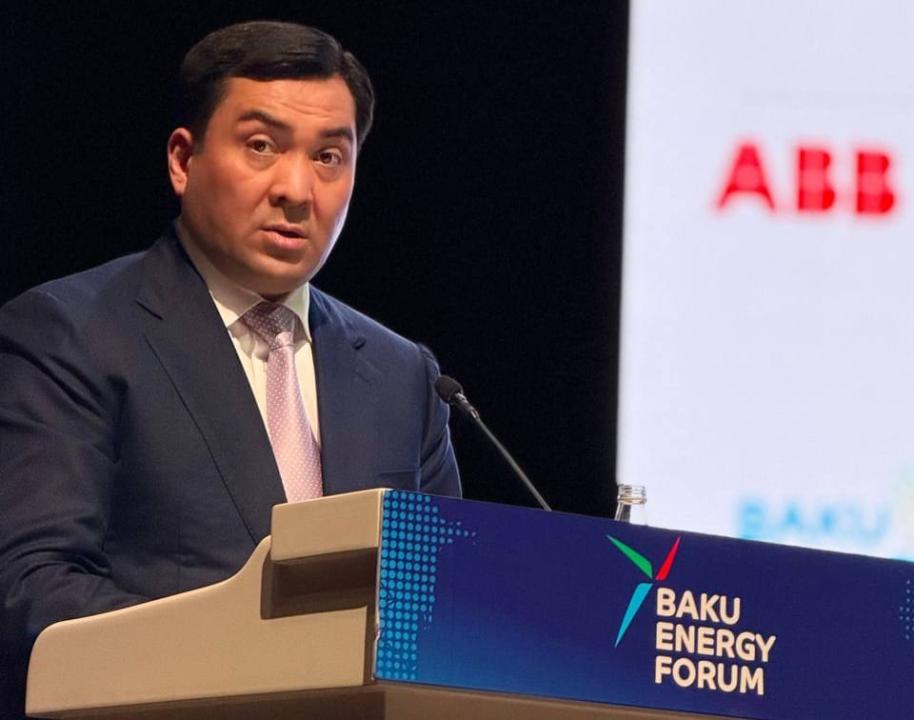
Kazakh Energy Minister Yerlan Akkenzhenov. Photo credit: gov..kz
According to him, renewable energy currently accounts for about 7% of Kazakhstan’s electricity generation. The country operates 169 renewable energy facilities with a combined installed capacity of approximately 3.7 gigawatts.
Under Kazakhstan’s Low-Carbon Development Concept, renewable energy capacity is expected to more than double over the next decade. International companies from China, the United Arab Emirates, France and Germany are participating in renewable energy projects across the country.
Akkenzhenov also highlighted the strategic importance of the Baku-Tbilisi-Ceyhan pipeline route for Kazakhstan’s oil exports.
“For Kazakhstan, the Baku-Tbilisi-Ceyhan route has strategic significance. It is not just a transport corridor but part of a new architecture of Eurasian energy security,” he said.
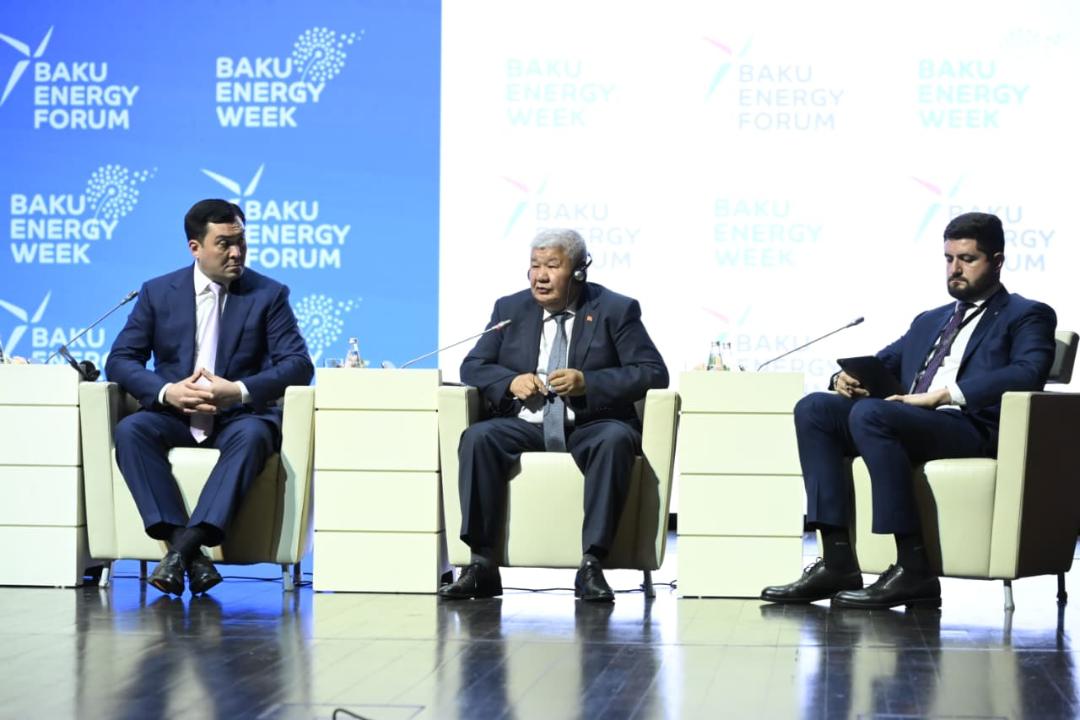
Photo credit: gov.kz
Kazakhstan plans to increase annual oil shipments through the Baku-Tbilisi-Ceyhan corridor from 1.5 million tons to 2.2 million tons, while the Caspian Pipeline Consortium (CPC) will remain the country’s primary export route. In 2025, oil transportation through the CPC reached 64.8 million tons.
The minister also emphasized the importance of the Caspian Green Energy Corridor, a joint initiative involving Kazakhstan, Azerbaijan and Uzbekistan aimed at exporting clean energy to European markets.
“We are creating a new energy bridge between Central Asia and Europe based on clean energy and modern technologies,” Akkenzhenov said.
In addition to renewable energy projects, Kazakhstan is advancing green hydrogen initiatives, including the Hyrasia One project in the Mangystau Region, and exploring clean coal technologies to reduce emissions and modernize the energy sector.
Baku Energy Week, taking place June 1-3, brings together government officials, energy companies and industry experts to discuss developments in oil, gas, renewable energy and regional energy cooperation.
