
ASTANA — For decades, Kazakhstan’s mining story has been defined by what lies beneath its soil. At the Astana Mining & Metallurgy Congress (AMM) 2026 on June 11, however, the conversation focused on a different question: what happens after the minerals are extracted?
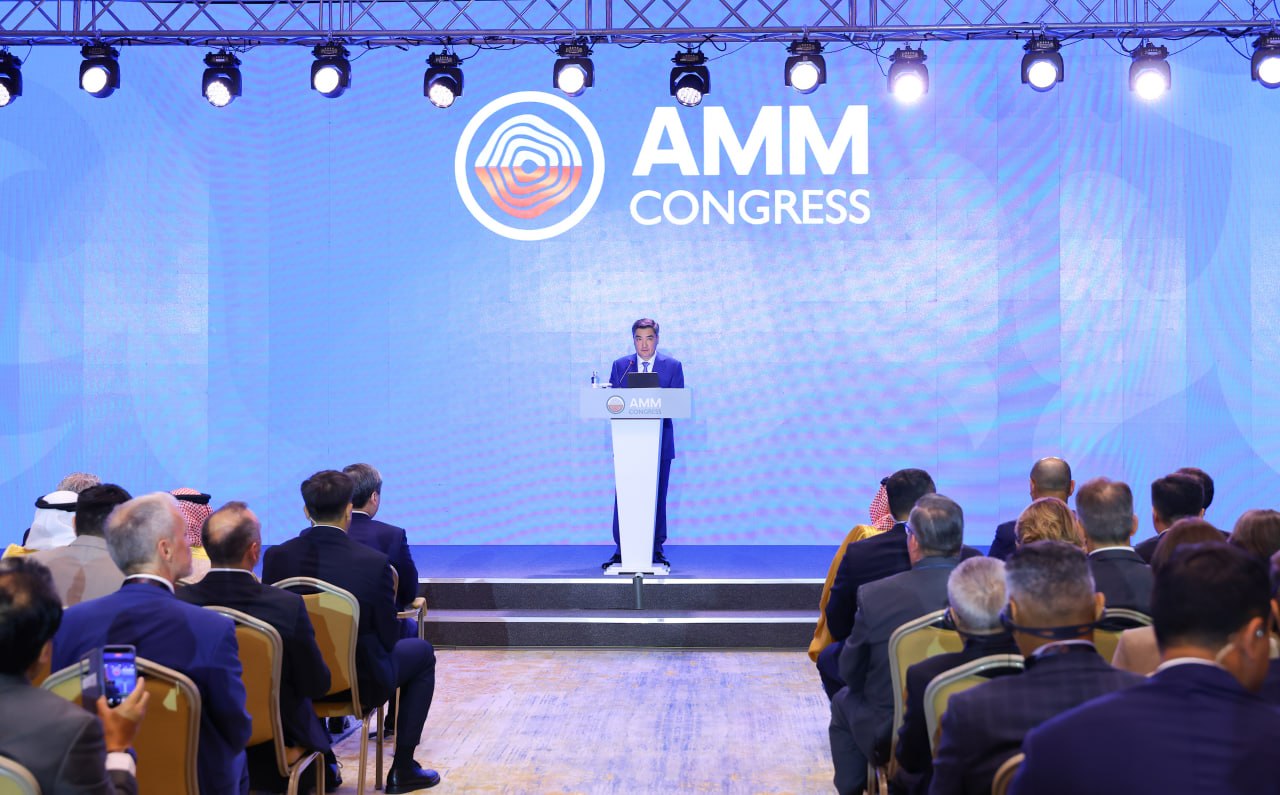
Bektenov said the country’s strategic goal is to create a new industrial model that will position Kazakhstan as a manufacturer of value-added products for global markets. Photo credit: Prime minister’s press service
As governments and companies race to secure supplies of critical minerals needed for AI, renewable energy and advanced manufacturing, speakers at the congress argued that resource wealth alone is no longer enough. The bigger prize lies in processing, technology, transnational collaboration and talent.
Prime Minister Olzhas Bektenov used the platform to outline Kazakhstan’s ambitions to move beyond its traditional role as a supplier of raw materials. According to him, the country’s strategic goal is to create a new industrial model that will position Kazakhstan not only as a supplier of raw materials, but also as a manufacturer of competitive, value-added products for global markets.
“President Kassym-Jomart Tokayev has set the task of a gradual transition from a predominantly raw-material model to an economy of deep processing and high added value,” Bektenov said.
The shift is already underway. Over the past two years, Kazakhstan has launched more than $1 billion worth of facilities producing cathode copper, ferrosilicon, ferroalloys and other higher-value products.
Among the largest projects is a copper smelter in the Abai Region, valued at more than $1.5 billion, that will enable Kazakhstan to process nearly all of the copper concentrate it currently exports. Other projects include a hydrometallurgical plant in the Pavlodar Region and modernization efforts at Qarmet aimed at producing higher-value steel products, including automotive steel.
Yet Bektenov’s message went beyond individual projects. The government’s goal, he said, is to create industrial ecosystems through technology transfer, localization and workforce development.
“We are interested not only in attracting capital, but also in developing long-term technological partnerships, localization of production, technology transfer and training qualified personnel,” he said.
The emphasis reflects a broader realization emerging across mineral-rich countries: owning resources is increasingly less important than controlling the stages of the supply chain where the greatest value is created.
Why one plus one can equal three
That theme resonated strongly with Saudi Arabia’s Minister of Industry and Mineral Resources Bandar Al-Khorayef, whose country has pursued an aggressive strategy to develop mining as a pillar of economic diversification. He pointed to a striking paradox. Africa, the Middle East and Central Asia collectively hold roughly one-third of global mineral reserves, yet account for only a fraction of global mining output.
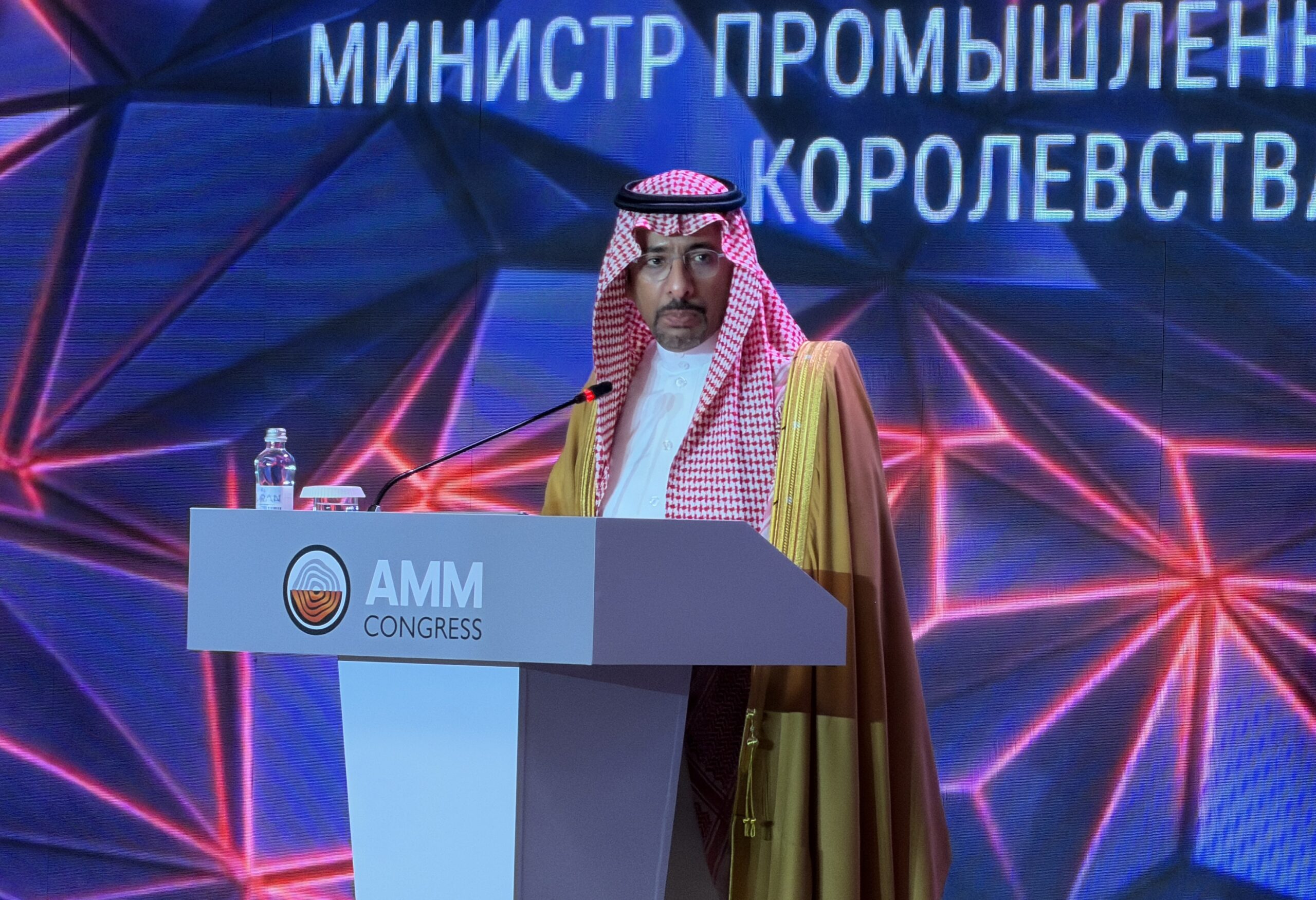
Saudi Arabia’s Minister of Industry and Mineral Resources Bandar Al-Khorayef said the beauty about mining is there is no competition and the collaboration is going to make one plus one equal three. Photo credit: The Astana Times
“33% of global mineral reserves are in this region, but the contribution of this region is only six percent,” Al-Khorayef said.
The problem, he said, is not a lack of resources but a lack of “investment, stability and infrastructure.” In many cases, mines struggle not because they lack demand but because transportation networks, logistics systems and processing capacity remain underdeveloped. As a result, governments must look beyond exploration and extraction toward what Al-Khorayef described as an end-to-end approach encompassing mining, processing, logistics and technology.
Technology, particularly artificial intelligence, is becoming a critical piece of that puzzle. AI can improve geological analysis, process massive volumes of data and make mines safer and more productive. But perhaps the Saudi minister’s most memorable observation came when discussing international cooperation.
“The beauty about mining is there is no competition between countries because the demand is so huge. The collaboration is going to make one plus one equal three,” he said.
The remark captured a recurring message throughout the plenary session: future mineral supply chains are unlikely to be built by countries acting alone.
That view was echoed by Assistant Secretary of Commerce and Director General of the United States and Foreign Commercial Service David Fogel, who emphasized Washington’s interest in expanding cooperation with Kazakhstan in critical minerals.
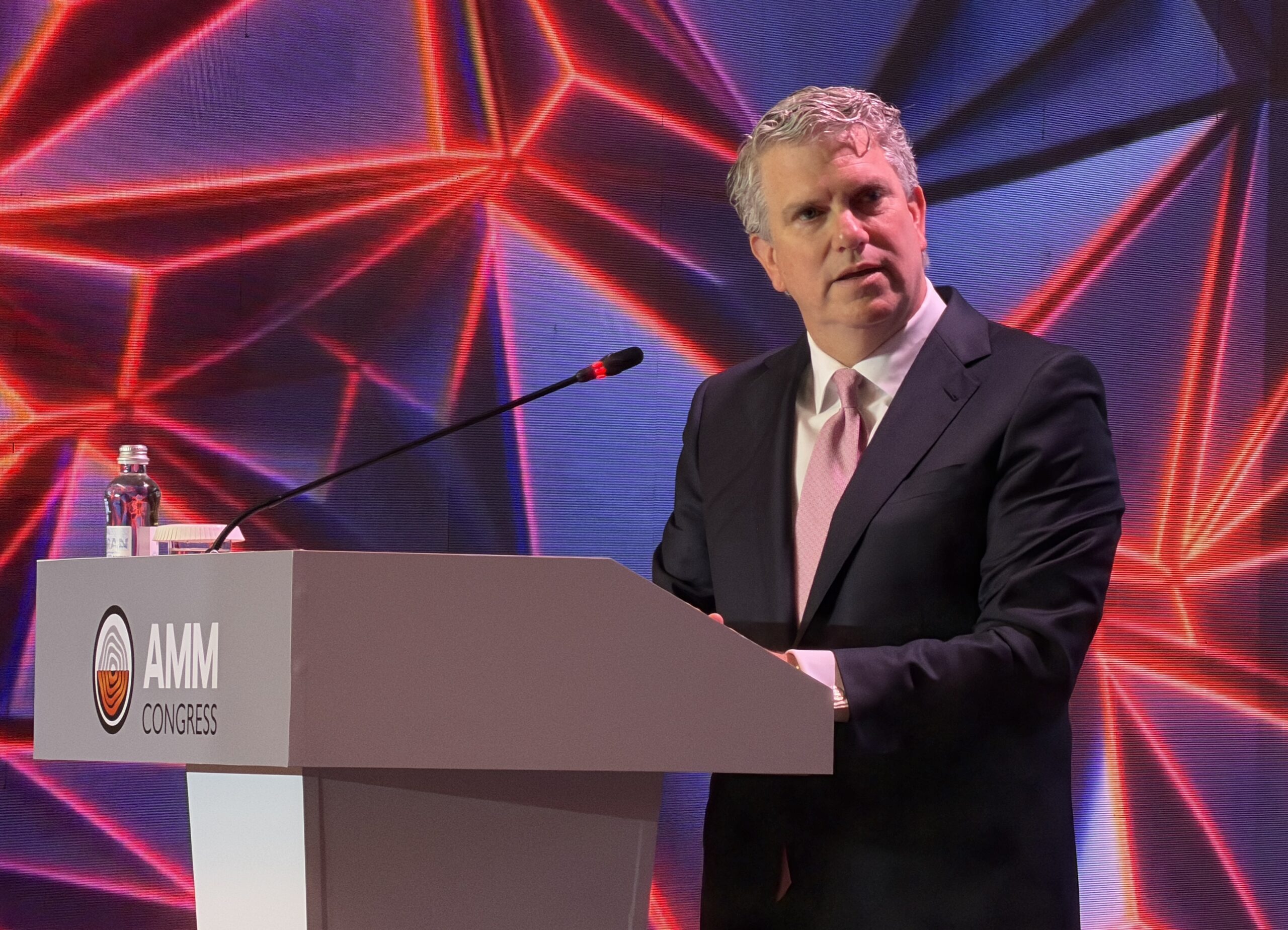
Assistant Secretary of Commerce and Director General of the U.S. and Foreign Commercial Service Fogel pointed to mapping and surveying as foundational steps for reducing uncertainty and attracting investors. Photo credit: The Astana Times
The United States, he noted, has already invested more than $100 billion in Kazakhstan over the past 35 years.
“We’ve been here since the beginning. We are here for the long term,” Fogel said.
For the United States, securing critical minerals means more than gaining access to deposits. It requires building reliable supply chains, developing processing capacity and creating the conditions necessary to attract large-scale investment. That starts with something less glamorous than new mines: data.
“Business is all about risk and where you allocate resources,” Fogel said.
He pointed to mapping and surveying as foundational steps for reducing uncertainty and attracting investors. AI, he added, is already transforming those processes.
“If you don’t map the resources and the geography properly, then you’re not going to be very efficient and you’re not going to be able to attract large-scale investment,” he said.
Kazakhstan’s overlooked advantage
While much of the discussion focused on resources, technology and capital, Kanat Sharlapayev, chairman of the Atameken National Chamber of Entrepreneurs, emphasized that Kazakhstan’s most underrated asset may be its workforce.
Using horse-racing terminology, he described the country as a “mining superfecta,” combining four advantages: mineral wealth, investor-friendly regulation, infrastructure and human capital. The last component, he suggested, deserves far more attention.
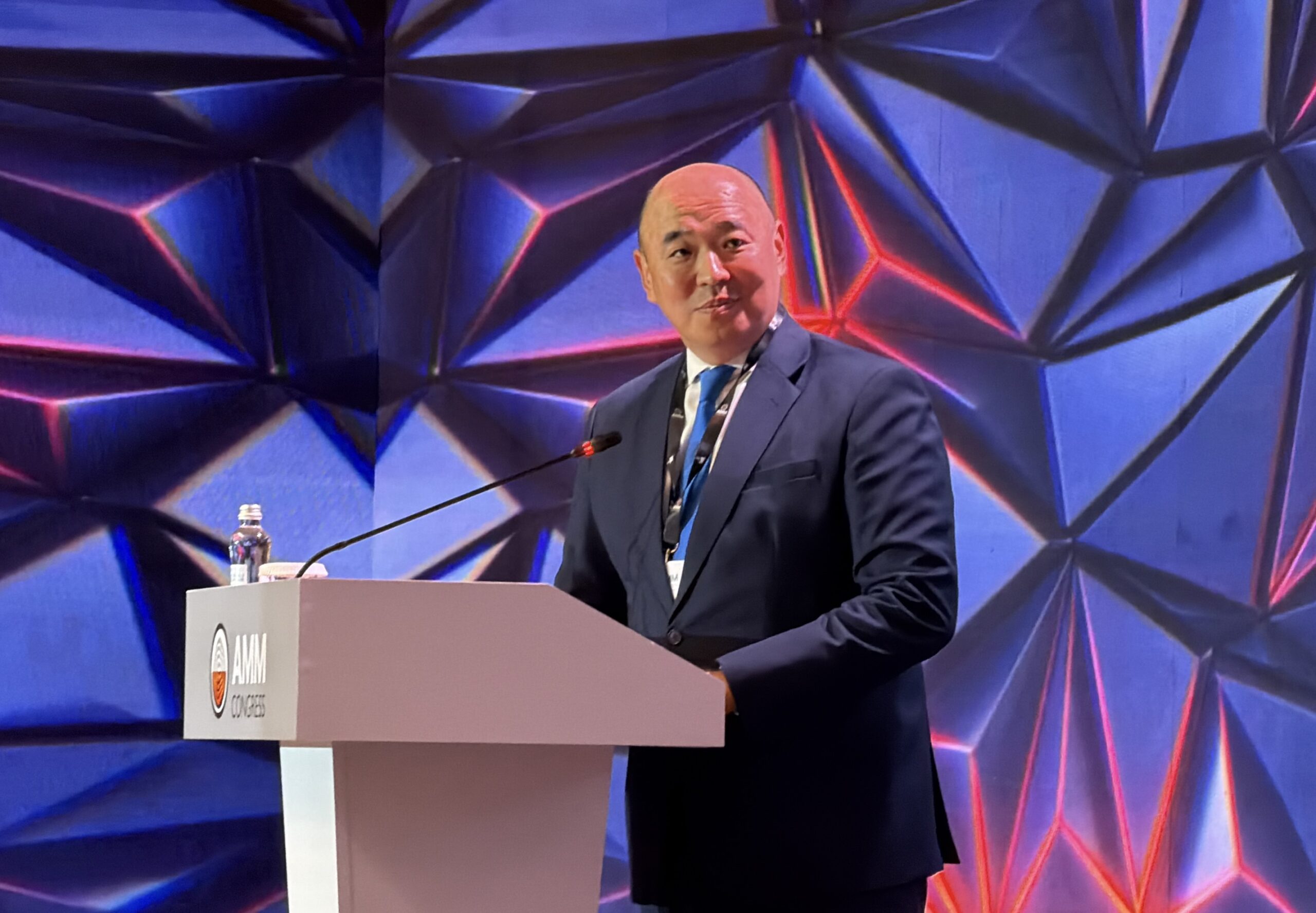
Sharlapayev, chairman of the Atameken National Chamber of Entrepreneurs, emphasized that Kazakhstan’s most underrated asset may be its workforce. Photo credit: The Astana Times
“In 2025, this country produced over 3,000 mining engineers and geologists,” Sharlapayev said.
What makes that figure particularly significant is that Kazakhstan’s mining sector relies overwhelmingly on local talent.
“When people come to our mining sites, the first question they ask is: where are the expatriates?” he said.
“We don’t have any,” he added.
He said that the engineers operating the country’s mines are graduates of local universities. Increasingly, the executives leading mining companies are as well.
“I’m extremely proud that we now have a new generation of leadership in our mining companies that are Kazakh people, Kazakh investors. They are homegrown,” he reiterated.
At a time when countries around the world are competing for talent as aggressively as they compete for resources, Sharlapayev’s argument highlighted a factor often missing from discussions about critical minerals.
Geology may determine where resources are located. But people determine whether those resources can be transformed into industries, technologies and economic growth. That reality may ultimately define the next phase of Kazakhstan’s mining development.
The country has long been known as a reliable supplier of raw materials. The message from this year’s AMM Congress 2026 was that Kazakhstan wants to be known for something more: turning those resources into higher-value products, building the industries around them and securing a larger place in the global supply chains of the future.
The AMM Congress 2026 is organized by the Kazakhstan Еxhibition company Iteca together with its international partner ICA Events Group. The state partner of the congress is the Ministry of Industry and Construction of Kazakhstan.
The congress is officially supported by the city administration of Astana, the Republican Association of Mining and Metallurgical Enterprises, the Republican Association of Precious Metals Producers, the Atameken National Chamber of Entrepreneurs, the National Geological Survey of Kazakhstan, Kazakh Invest, and Visit Astana.
The General Partner of AMM 2026 is Qarmet.
Gold Partners include Eurasian Resources Group, KAZ Minerals, and Kazzinc.
Silver Partners are Komatsu Central Asia and Aktobe Copper Company, while Bronze Partners include Dassault Systemes and TuranIndustrial.
