
I am delighted to be back in Astana this week. At the kind invitation of President Tokayev, I’m pleased to be joining leaders from across the region to discuss challenges that are critical to the people of Central Asia.
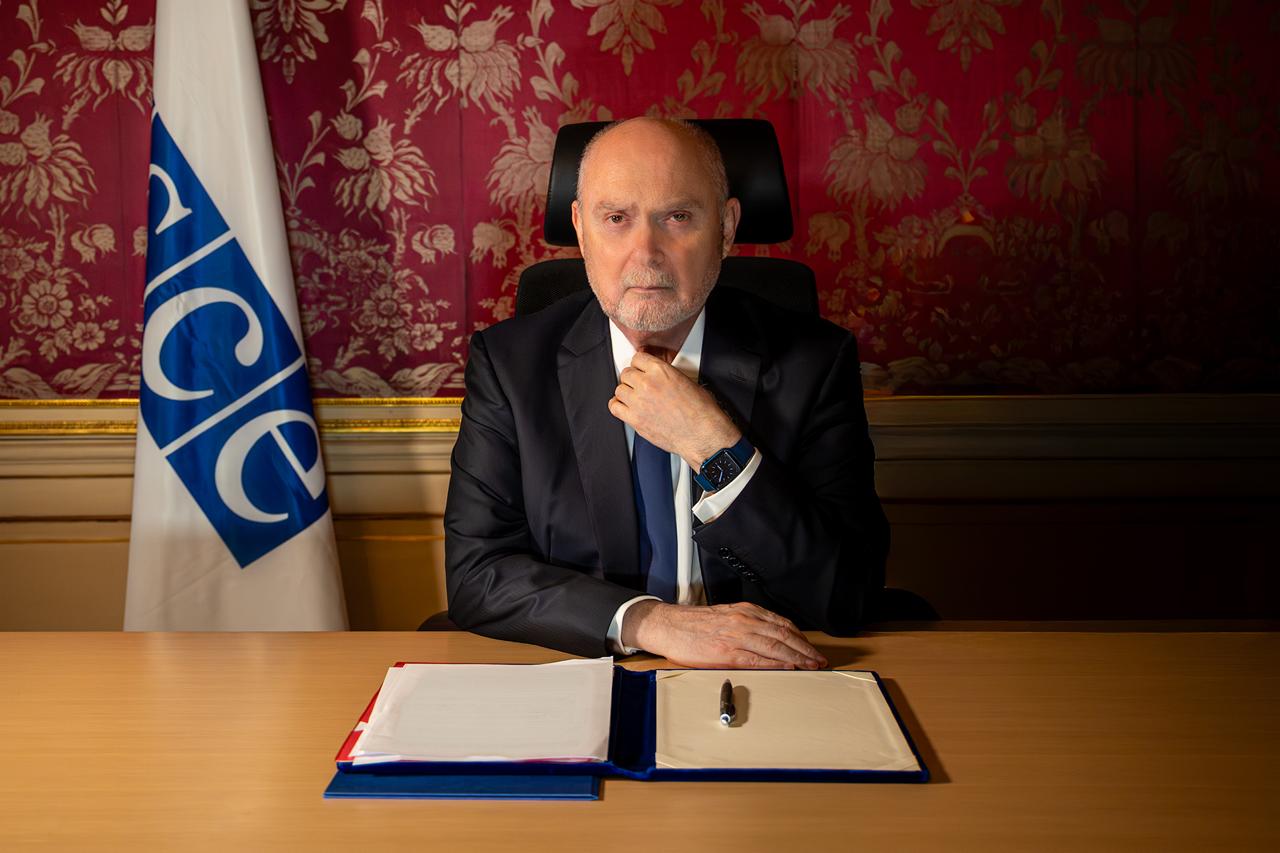
Feridun H. Sinirlioğlu.
Central Asia is rich in potential. But the region also faces formidable challenges driven by changing weather patterns. Since 1950, the region’s glaciers have retreated dramatically. Further loss is inevitable. This has implications for core drivers of stability and growth – water, energy and food systems. The livelihoods – indeed lives – of millions depend on states coming together to tackle this challenge.
When land and water resources come under strain,when extreme weather events intensify, and when ecosystems change, these pressures can affect relations between states and within societies. We face a collective security threat. This is not just an epochal environmental challenge.
How can we adapt to climate change, one of the greatest security threats of our time? And how, in so adapting, can countries best serve their citizens, ensuring that communities grow and prosper?
So I welcome this week’s Regional Ecological Summit hosted by President Tokayev. He is bringing leaders from across, and beyond, the region, together. Our task is to take stock, align priorities and forge a joint approach to a shared security challenge.
As the world’s largest regional security organization bringing together 57 participating States, the OSCE can play a unique role. Since 1992, all five of the states of Central Asia have been part of the Organization. Their arrival marked a momentous affirmation of their independence.
For over three decades, Kazakhstan has played a critical role in shaping the Organization. Astana hosted a landmark OSCE Summit in 2010. The Summit Declaration reaffirmed a shared vision of security-basedco-operation and mutual respect for all participating States. These ideas remain as essential today as together we build resilience in the face of climate change.
The OSCE takes a unique, three-pronged approach; we call it ‘the comprehensive approach’. Firstly, we work with governments on security issues, including arms control and risk reduction. Secondly, we develop economic and environmental co-operation between participating States, because we recognise that trade and competition can be both beneficial and lead to tension. And thirdly we emphasise the importance of human rights and how states treat their citizens. No other regional security organisation in the world takes such a comprehensive approach.
We also have officials and experts on the ground to deliver these goals, working hand in hand with host governments and civil society. I commend the comprehensive work across all three dimensions of security of the OSCE Programme Office in Astana and our other field operations in Central Asia. This field presence is one of the OSCE’s unique strengths, enabling tailored support to our hosts.
For example, through the OSCE Vienna Document we ensure that participating States can come together to reduce military risk and enhance transparency. We also work together on border management. Earlier this week in Istanbul I hosted a gathering of Central Asian Border Commanders. These were migration and law enforcement practitioners coming together to address a shared challenge, and helping to build trust between states. This is the hallmark of the OSCE.
The OSCE is also building economic links across the region. We implement programmes with partners on the ground to improve transport and trade links, alongside people-to-people contacts. We support countries in advancing greener and more resilient port operations around the Caspian Sea, including through obtaining EcoPorts certifications: here in Kazakhstan, the ports of Aktau and Kuryk; in Turkmenistan, port Turkmenbashi, and in Azerbaijan, the port of Baku. We are facilitating cross-border digitalization to help reduce bottlenecks to keep the flow of trade going.
As well as these initiatives, we are working with Kazakhstan and Central Asian countries to strengthen resilience to emerging risks. We are supporting efforts to counter cybercrime. This is a timely response to President Tokayev’s initiative declaring 2026 the Year of Digitalization and Artificial Intelligence.
Strengthening co-operation on societal resilience is another key focus. I will convene environment ministers on the margins of this week’s Summit to discuss this. As we look towards COP31, we need to strengthen regional approaches to climate adaptation and resilience. We want to protect critical infrastructure, support sustainable resource management, and ensuredevelopment gains are preserved. The OSCE can support Central Asia in these efforts.
The great Kazakh thinker Abai wrote of a “common home of humankind.” This common home today is threatened. Our response must be committed and co-ordinated between states. That is the signal we will be sending from this week’s Summit in Astana.
The author is Feridun H. Sinirlioğlu, OSCE Secretary General.
