
ASTANA – Kazakhstan is expanding coal production while advancing power generation and digital reforms, Minister of Energy Yerlan Akkenzhenov said at a government meeting on April 7.
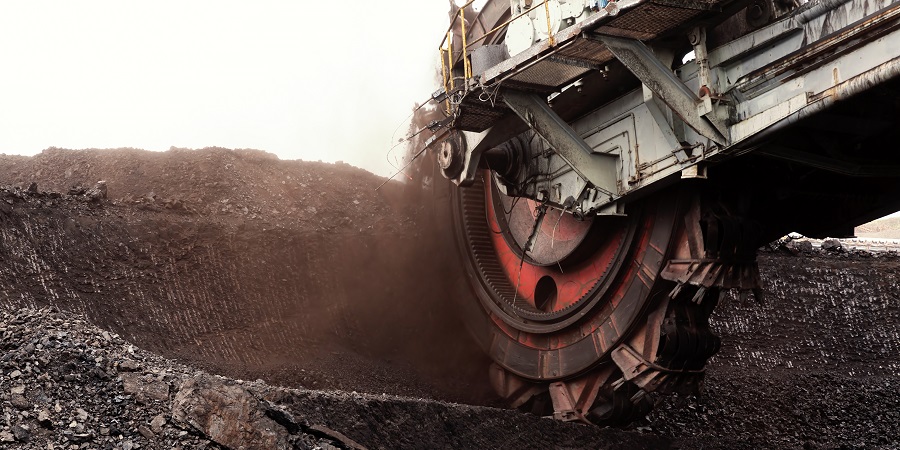
Photo credit: Depositphotos
Akkenzhenov noted that the coal sector remains a cornerstone of Kazakhstan’s energy security, continuing to expand while ensuring stable domestic supply and steady exports.
Coal production
Kazakhstan ranks 10th globally in coal reserves, estimated at 33.6 billion tons, enough to last more than 300 years at current production levels.
Most coal is consumed domestically in power generation, municipal services and industry, while export volumes remain stable.
“By the end of 2025, coal production totaled around 115.9 million tons, marking a 7% increase compared to 2024. Of this, 85.9 million tons were used domestically, while exports reached 30 million tons,” Akkenzhenov said.
Key export destinations include Russia, Poland, Uzbekistan, Türkiye, India and Malaysia, among others.
Akkenzhenov highlighted that the coal production is projected to reach 128.9 million tons in 2026.
Industry and investment
Currently, 40 subsoil users operate under 41 contracts in the coal sector.
Akkenzhenov said the government is actively working to attract investment into the sector. In 2025, coal industry investment totaled 305 billion tenge (US$645 million), with projections to reach 553.5 billion tenge (US$1.1 billion) in 2026. The industry currently employs around 32,000 people, with additional job creation expected as new projects are launched.
He noted that the government is also prioritizing geological exploration, with auctions planned for approximately ten coal sites by the end of the year.
National project
Under the national project Coal Power Development, approved on March 20, Kazakhstan plans to implement investment initiatives with a total installed capacity of about 7.8 gigawatts (GW).
The project takes a comprehensive approach, combining power generation, infrastructure development, investment attraction and workforce development.
“The project is not limited to coal generation alone but is aimed at comprehensive development of the entire industry. This balanced approach will create a multiplier effect and support sustainable economic growth,” Akkenzhenov said.
He noted that a central focus of the national project is the adoption of clean coal technologies, including high-efficiency power plants and advanced flue gas treatment systems to reduce emissions.
Coal gasification is also being explored as a more environmentally sustainable solution.
These measures aim to modernize the sector, improve competitiveness and balance economic growth with environmental requirements.
“The national project also includes construction of eight new coal-fired power plants with a total capacity of 5.3 GW, as well as modernization and expansion of 11 existing facilities with a combined capacity of 2.5 GW,” Akkenzhenov said.
Coal chemistry development
In parallel, Kazakhstan is expanding its coal chemistry sector as a new area of industrial growth. Three projects are underway, including a metallurgical coke plant in the Karagandy Region with an annual capacity of 1 million tons, valued at $132 million and expected to create up to 500 jobs. Two coal-to-diesel plants, each with a capacity of 100,000 tons, are being developed in the Pavlodar and Karagandy regions, with combined job creation exceeding 2,400.
“Three additional projects are under development, including a coke chemical facility in the Karagandy Region, ammonia and urea production in the Abai Region, and a coal-to-gas project with planned output of 2 billion cubic meters per year,” Akkenzhenov said.
Despite challenges such as high capital intensity, technological complexity and limited experience, coal chemistry is expected to reduce reliance on imported fuels, create high-tech industries, expand exports and increase value-added production.
Digitalization of the coal industry
Digitalization is another key focus area. The government is implementing digital tools to monitor the heating season, improve tariff regulation and use artificial intelligence to diagnose power and heat networks.
“Given coal’s central role in energy generation, we are developing a digital subsystem for coal distribution within a unified national energy management system,” Akkenzhenov said.
The system aims to address supply-demand imbalances, improve transparency and optimize logistics. Once implemented, it will enable real-time monitoring, forecasting and decision-making across the sector.
