
ALMATY – This year marks 38 years since Nauryz was revived in Kazakhstan, the ancient spring festival that had been banned for more than six decades under the Soviet regime. The holiday was celebrated again for the first time in the Kazakh Soviet Socialist Republic in 1988, restoring a tradition deeply rooted in the culture of Turkic peoples.
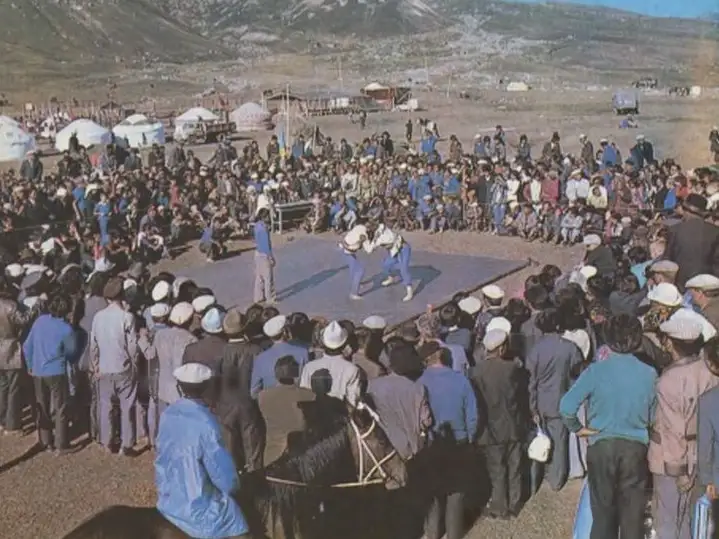
Organizers recreated elements of traditional nomadic culture, setting up yurts, swings known as altybakan, and spaces for national games. Photo credit: Zhanibekov’s book “Echo”
Ancient holiday banned during the Soviet era
Nauryz, celebrated for thousands of years across Central Asia and the Turkic world, marks the arrival of spring and the beginning of a new year. In 1926, Soviet authorities banned the holiday as part of a broader campaign against religious and traditional cultural practices.
Despite the prohibition, many families quietly continued observing the holiday in private. Public celebrations, however, were impossible for more than six decades.
The revival began in the late 1980s during the period of the perestroika (restructuring of the Soviet system), when public discussions about restoring national traditions became more common.
First celebration in Almaty in 1988
One of the organizers of the first modern Nauryz celebration in Almaty was Eleusiz Zhanpeisuly, who at the time headed the city’s culture department and served as the event’s artistic director.
According to him, the initiative to revive the holiday emerged from Kazakhstan’s intellectual community. The idea was first discussed at a meeting of the Writers’ Union, following public statements by poet Mukhtar Shakhanov and articles by ethnographer Toktasin Umirzakov advocating the return of the traditional holiday.
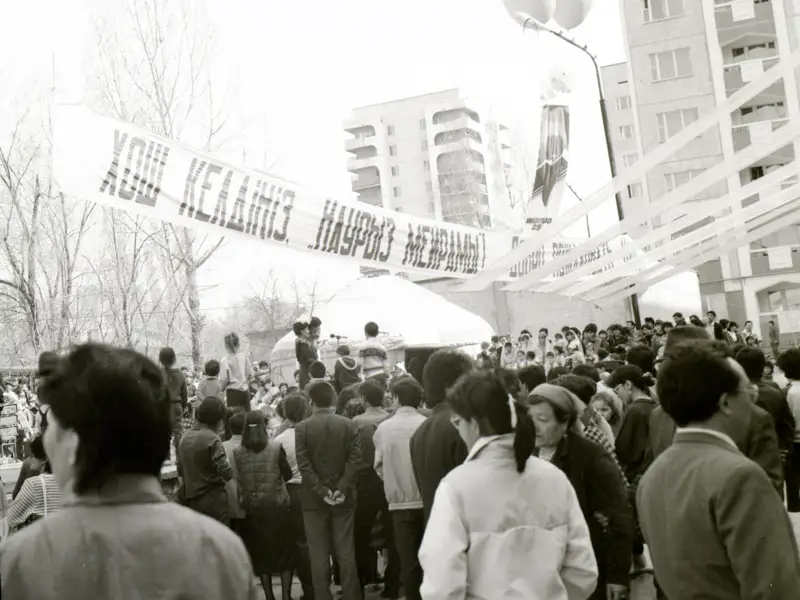
Nauryz on the central square of the youth housing cooperative Otrar, 1989. Photo credit: A. Sandybaev/Kazinfom.
“In 1988, our department received an official order from Zhibek Amirkhanova, deputy chairwoman of the Almaty Executive Committee, to organize the celebration of Nauryz within the Frunze [now Medeu] district,” said Zhanpeisuly.
Support from political leadership also played a crucial role. Uzbekali Zhanibekov, then ideological secretary of the Central Committee of Kazakhstan, explained the cultural significance of Nauryz to the first secretary Gennady Kolbin, who ultimately authorized the celebration.
However, authorities allowed the holiday to be celebrated only on a limited scale. In 1988, Nauryz events were permitted in one district of Almaty, the Zhambyl district of the Almaty Region, and the Shieli district of the Kyzylorda Region.
A festival organized by enthusiasts
The first Nauryz celebration in Almaty was held in the Gorky Park, now the Central Park of Culture and Leisure. Organizers recreated elements of traditional nomadic culture, setting up yurts, swings known as altybakan, and spaces for national games.
According to Zhanpeisuly, students and volunteers helped prepare the park for the event, planting trees and cleaning irrigation channels. Decorative banners featured traditional sayings such as “If you cut one tree, plant ten” and “If you see a spring, clear its source.”
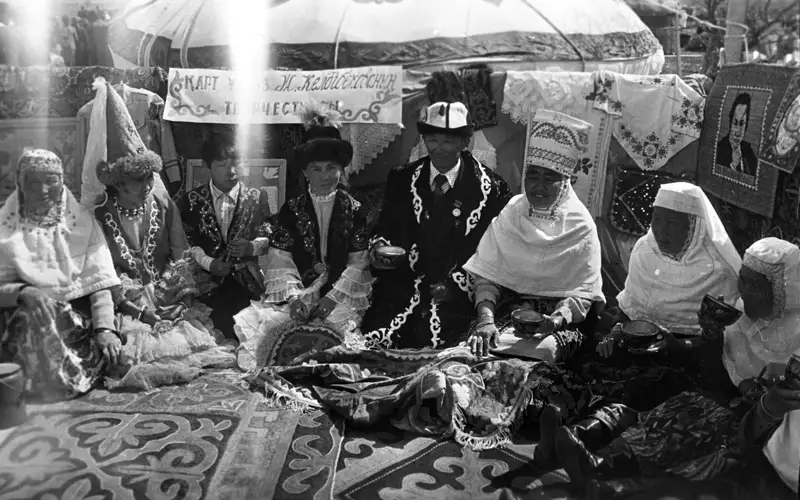
Participants and guests of the Nauryz holiday in the Almaty Region, 1988. Photo credit: Isubanov/Kazinform.
The public was offered Nauryz kozhe, a traditional festive dish. The initial 350 servings quickly ran out, and the turnout far exceeded expectations. Elders gave blessings, young people participated in traditional games, and performers presented folk music, poetry and theatrical scenes based on Kazakh legends.
Caravan procession and theatrical performances
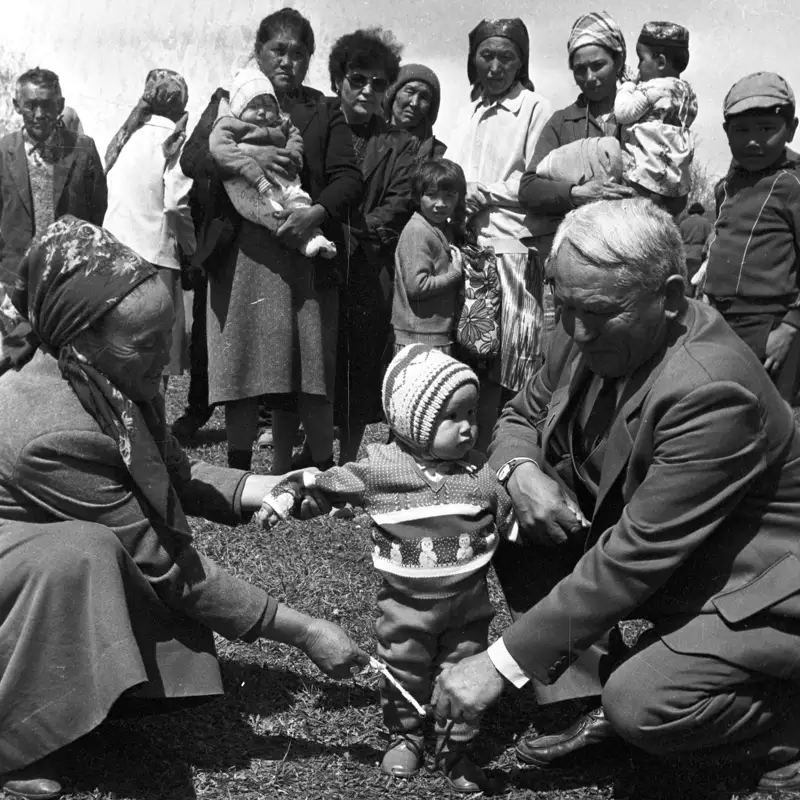
Performance of the Kazakh tradition tusau kesu at the Nauryz festival, 1988, the Almaty Region. The village of Narynkol. Photo credit: Kazinform.
The festival was organized as a symbolic nomadic caravan procession. The park was divided into several zones featuring traditional games, children’s activities, an aitys poetry competition and theatrical performances.
The celebration opened with a symbolic performance depicting the struggle between winter and spring, representing the arrival of a new season. Later, a festive caravan led by the snail symbol moved through the city toward the Abai monument, accompanied by traditional music and dancing as more residents joined the celebration.
For many participants, the moment carried deep emotional significance.
“I remember meeting Amirkhanova, the deputy chairwoman of the city executive committee. She had tears in her eyes and said, ‘Finally we have returned our Nauryz.’ At that moment we realized this was truly a historic day,” said event director Aubakir Rakhimov.
Expansion across the country
The celebration in Almaty was intended to serve as a model for other regions. In 1989, Nauryz celebrations spread across Kazakhstan, though authorities still imposed restrictions on locations and scale.
In 1991, the Kazakh Soviet Socialist Republic officially recognized March 22 as Nauryz Day, establishing it as a national holiday.
After Kazakhstan gained independence, the celebrations expanded significantly. By 2001, Nauryz was included in the official list of state holidays, and since 2009, it has been celebrated for three days.
International recognition
In 2010, the United Nations General Assembly declared March 21 the International Day of Nauryz, recognizing the holiday as part of the cultural heritage of many nations across Eurasia.
In 2021, President Kassym-Jomart Tokayev proposed expanding the celebration into a broader Nauryznama period from March 14 to 23 and introducing additional cultural traditions, such as Korisu (Amal Day) and a Day of National Clothing.
Today, Nauryz is celebrated across Kazakhstan with large public festivals, concerts, traditional games and cultural events. More than just a holiday, it has become a symbol of renewal, unity and the preservation of Kazakhstan’s cultural heritage.
The article was originally published by Kazinform.
