
ASTANA – For jeweler artist Serzhan Bashirov, a silver coin is rarely just currency. It carries memory and the weight of history. Decades ago, his grandmother sent him a small silver coin with a request to make her a ring. Bashirov carried it for a long time, unable to bring himself to melt it down. Instead, he bought new silver for the commission, preserving the original coin as a physical link to a disappearing world.
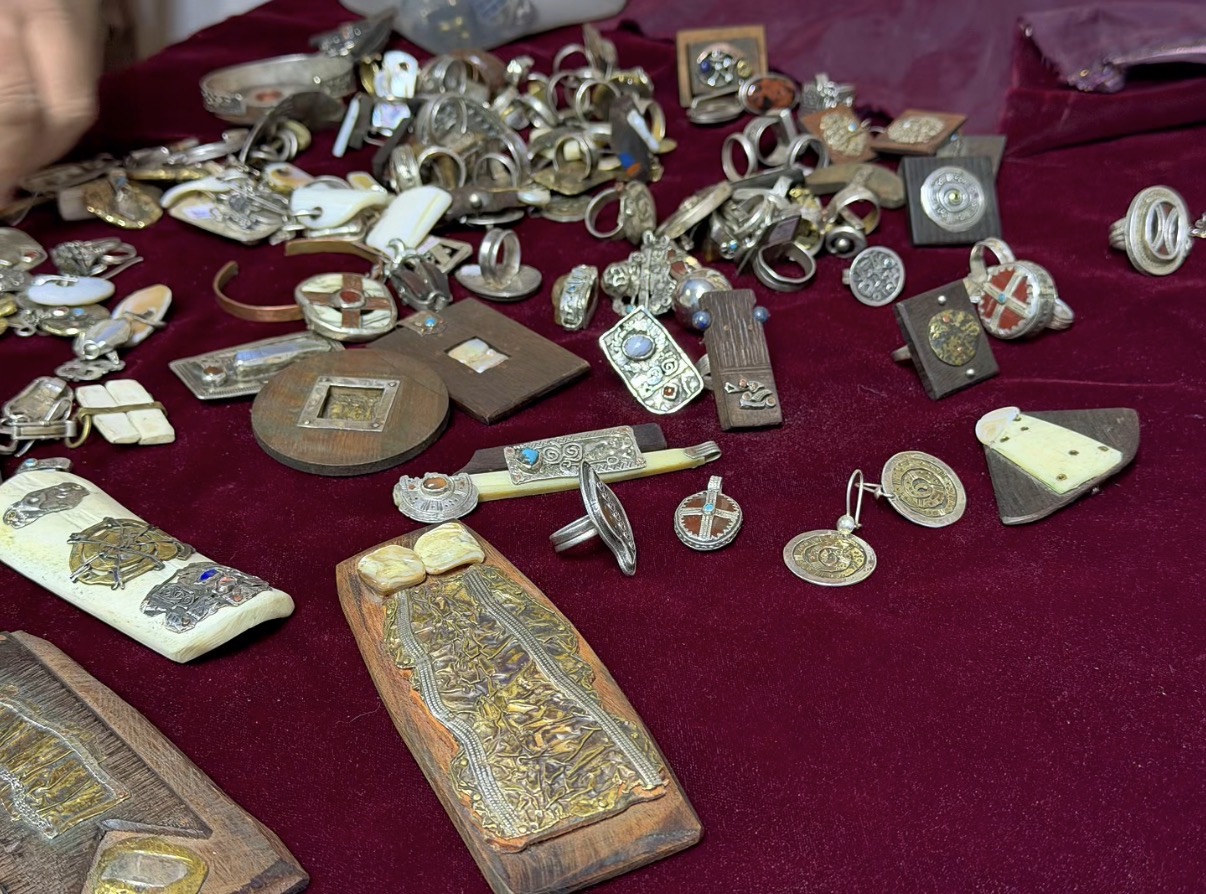
Photo credit: The Astana Times
That desire to protect the tangible fragments of Kazakh history has defined Bashirov’s artistic journey. As an artist and, in some sense, an ethnographer, Bashirov has spent decades collecting jewelry, textiles, and household objects from the nomadic past, and making his own works of art.
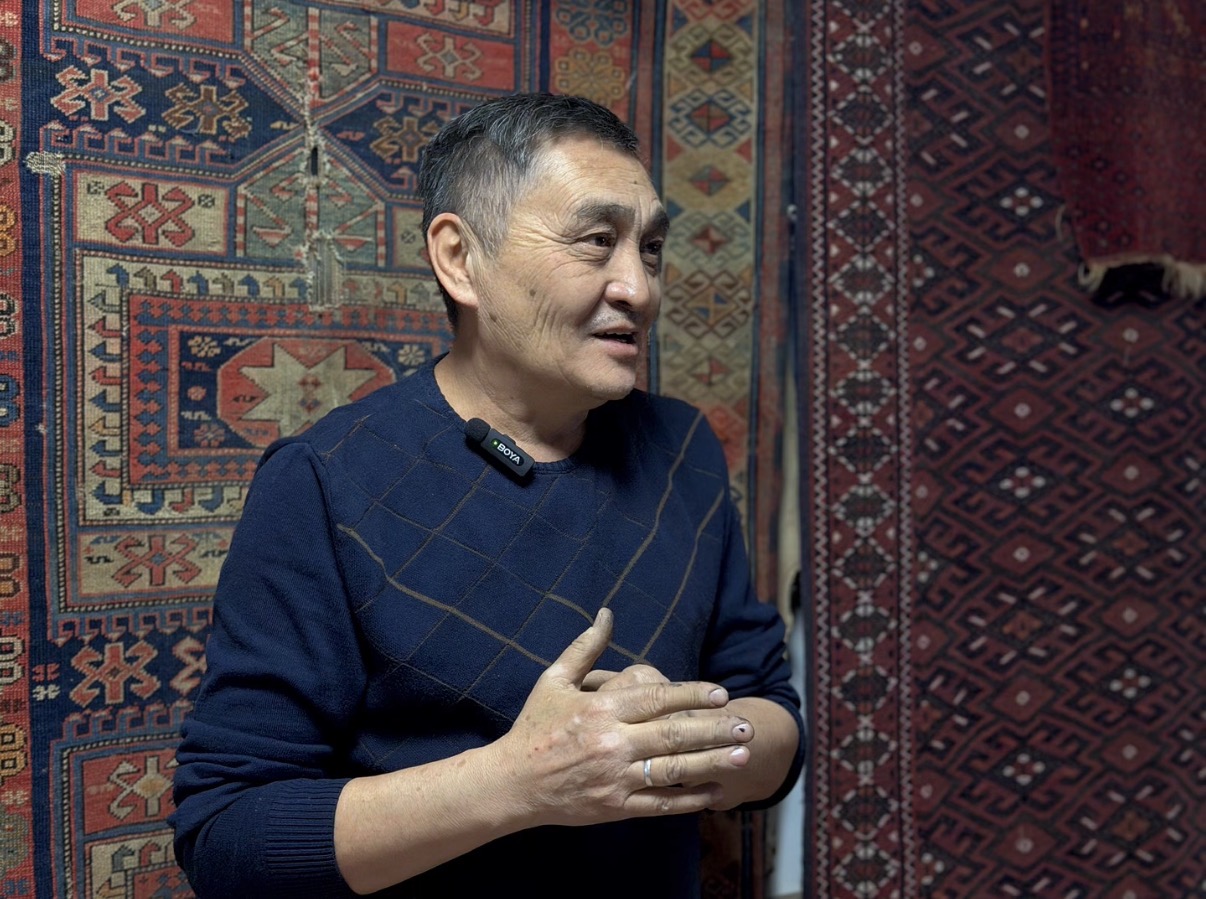
Jeweler artist Serzhan Bashirov. Photo credit: The Astana Times
The Astana Times visited his studio in the basement of the Astana International University, which carries the faint scent of old objects: aged wood, leather, and antique stones. Sitting in his spacious office, where he now passes his knowledge on to a new generation of students, he reflected on the journey of his collection.
Born in western Kazakhstan, Bashirov’s artistic path began in Almaty, the country’s cultural hub, where he received his education and first encountered the traditions that would shape his work.
“In the very first days of September, the college arranged a bus and took us first-year students to museums. At what was then the Kasteev Museum, it was still called the Shevchenko Museum, and there was a hall of decorative art on the ground floor. When I saw those pieces of jewelry, the kind our grandmothers used to wear in the auyl [village in Kazakh], I remember thinking: how is it that things like this are already kept in a museum?” Bashirov said in an interview with The Astana Times.
Since his student years, he has gathered jewelry and household objects from nomadic Kazakh culture. His creative process draws on silver, copper, bronze, wood, bone and stone, with each carrying symbolic meaning rooted in nomadic belief systems.
Bashirov noted Almaty’s Gorky Park was then a beloved spot and a weekend haunt for collectors trading stamps and coins. Bashirov started from coins and then moved on to the wider material world of the Kazakh life: household objects, interior items, carpets and elements of the yurt, a mobile nomadic house.
As he settled into life in Almaty, Bashirov began assisting senior masters, learning the craft from the inside.
“That was when I began slowly making jewelry, simple pieces, mostly rings,” he added.
A collection that is hard to quantify
Back in the 1990s, Bashirov said information circulated solely by word of mouth, and today technology has transformed how items are found. Bashirov explained that messaging apps and social networks allow users to send photographs of objects instantly, from anywhere in the country or abroad.
The corridor that leads to Bashirov’s studio is filled with objects that may seem unfamiliar to a younger generation. Most of them belong to the 19th century.
Carpets once hung on walls, but now faded, wooden sandyqs that once kept dowries and family treasuries, and several zhastyk agashs, which were used as a carved pillow stand.
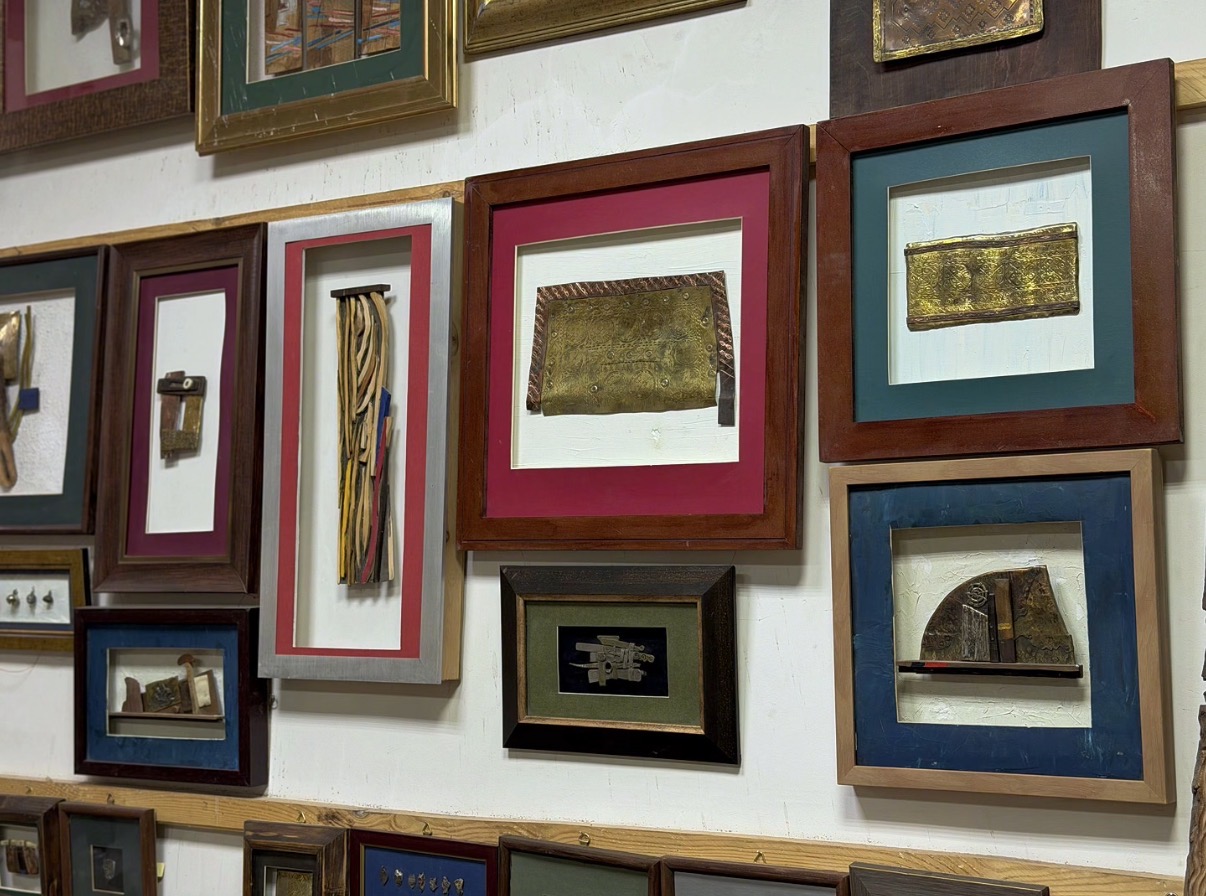
Photo credit: The Astana Times
There are also syqyrlauyq, the beautifully decorated yurt doors that once welcomed guests, ribbons tied to a shanyrak, the crown of the yurt, and horse saddles molded by years of riding across the steppe. The latter, Bashirov said, were damaged by moths.
Walking along the corridor, the air feels denser, as if carrying the accumulated weight of lives once lived.
“In general, the everyday life of Kazakhs was nomadic. Unlike people who had a sedentary lifestyle, many things were not meant to be preserved for long; they were difficult to keep. At the same time, some objects were made exceptionally strong, perfectly adapted to a nomadic way of life: their mechanisms, their construction. That, in itself, is remarkable,” said the artist.
That also applies to dozens of pieces of jewelry that Bashirov spread out for The Astana Times to see. Among the collection are heavy silver thimbles, rings with deep turquoise stones, and even an antique silver toothpick.
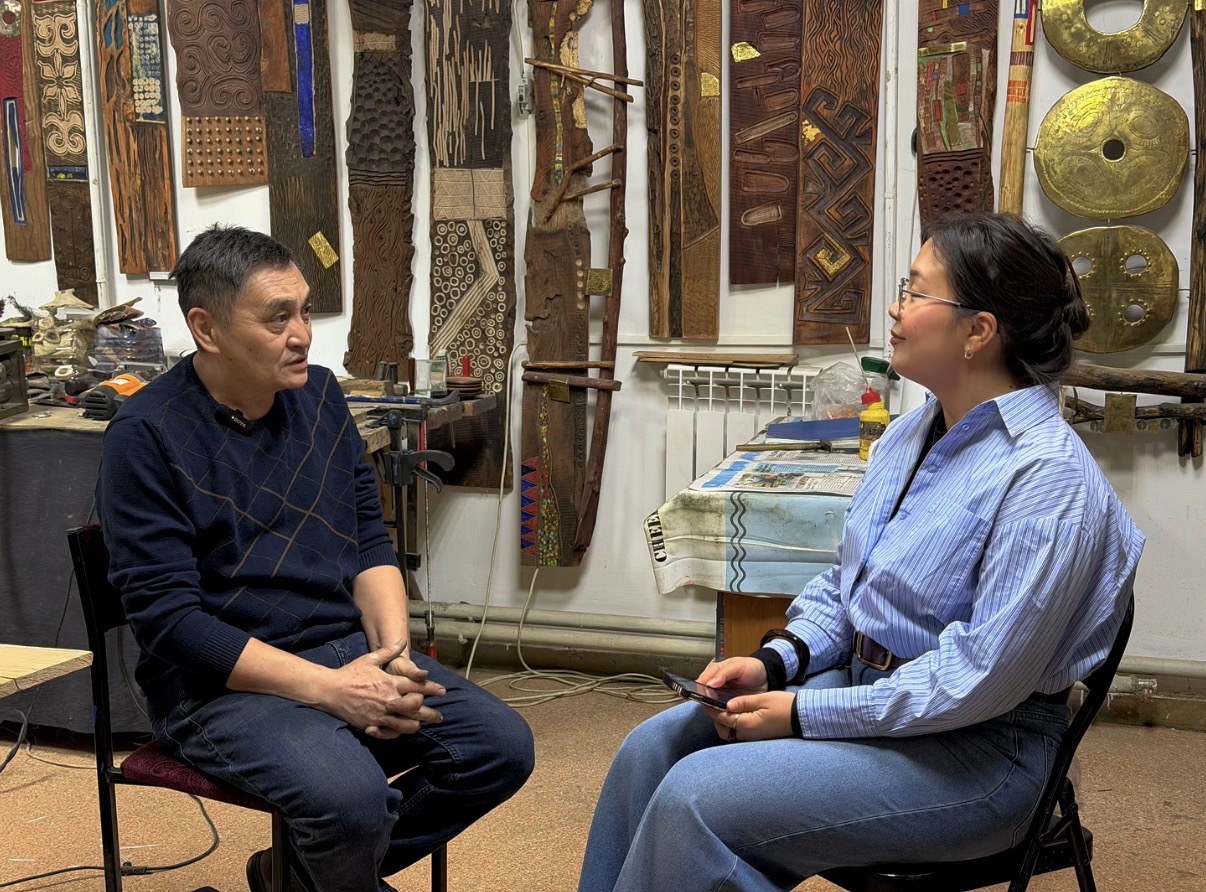
In an interview with The Astana Times, Serzhan Bashirov shared his thoughts with Assel Satubaldina. Photo credit: The Astana Times
“In real everyday life, all of these objects were adapted to how we lived. They had both an aesthetic and a practical function,” he said.
Carpets, which are also part of Bashirov’s collection, offer that example. Hanging carpets on walls, for instance, was not unique to Kazakhstan; it was common across the Soviet Union. But in Kazakh homes, Bashirov noted, there was still a clear distinction in use.
“We mainly laid felt carpets on the floor: syrmak [a traditional felt carpet], tekemet [a type of felt carpet where the ornament is pressed directly into the felt during felting]. Embroidered tus-kiiz [decorative embroidered wall hanging] were hung on the wall. Pile carpets were also used on the walls. They were not placed on the floor,” he explained.
He said that as demographic trends changed, carpets did too.
“I’ve observed that Kazakh carpets increased in size in the 1960s and 1970s,” he said, explaining that families were moving into larger homes and furniture styles were evolving.
“But the most authentic Kazakh carpets date back to before the 1930s,” he added, referring to the period when the nomadic way of life was still preserved.
Bashirov acknowledged that he stopped counting how many items he has. Part of his collection is now stored in museums.
Rediscovery of objects far from home
What is striking is how some items are being resurfaced, in places one would not expect. Some of them can be found at flea markets abroad. Bashirov has his own explanation for the upheavals of the 1930s, when collectivization and famine severely impacted the Kazakh society.
“Our people suffered greatly in the 1930s. With demand disappearing, many craftspeople stopped working. Collective and state farms were established, and they went there,” he said.
Economic hardships persisted for decades. Many families sold their heirlooms for very little to make ends meet, Bashirov said. As foreign oil workers, investors and diplomats began arriving in Kazakhstan, traditional carpets and handmade objects were frequently purchased as curious souvenirs to be taken abroad.
The cumulative effect is the erosion of many traditions. Entire lines of knowledge were interrupted. According to Bashirov, some traditions survived only partially, while others disappeared altogether.
“We almost lost all of it. Unfortunately, some techniques are now irretrievably gone,” he added. “Today, young people are trying to revive what remains. Wood carving, bone carving and traditional leatherwork were particularly hard hit. Those methods can be said to be nearly lost.”
