
ASTANA — The next chapter of the North Aral Sea’s recovery will be defined not only by engineering works on the ground, but by high-level negotiations in Astana. The Regional Ecological Summit (RES) 2026, scheduled for April 22–24, is set to elevate the restoration agenda to an international platform, gathering more than 1,500 participants, including Central Asian heads of state, UN representatives and environmental experts.
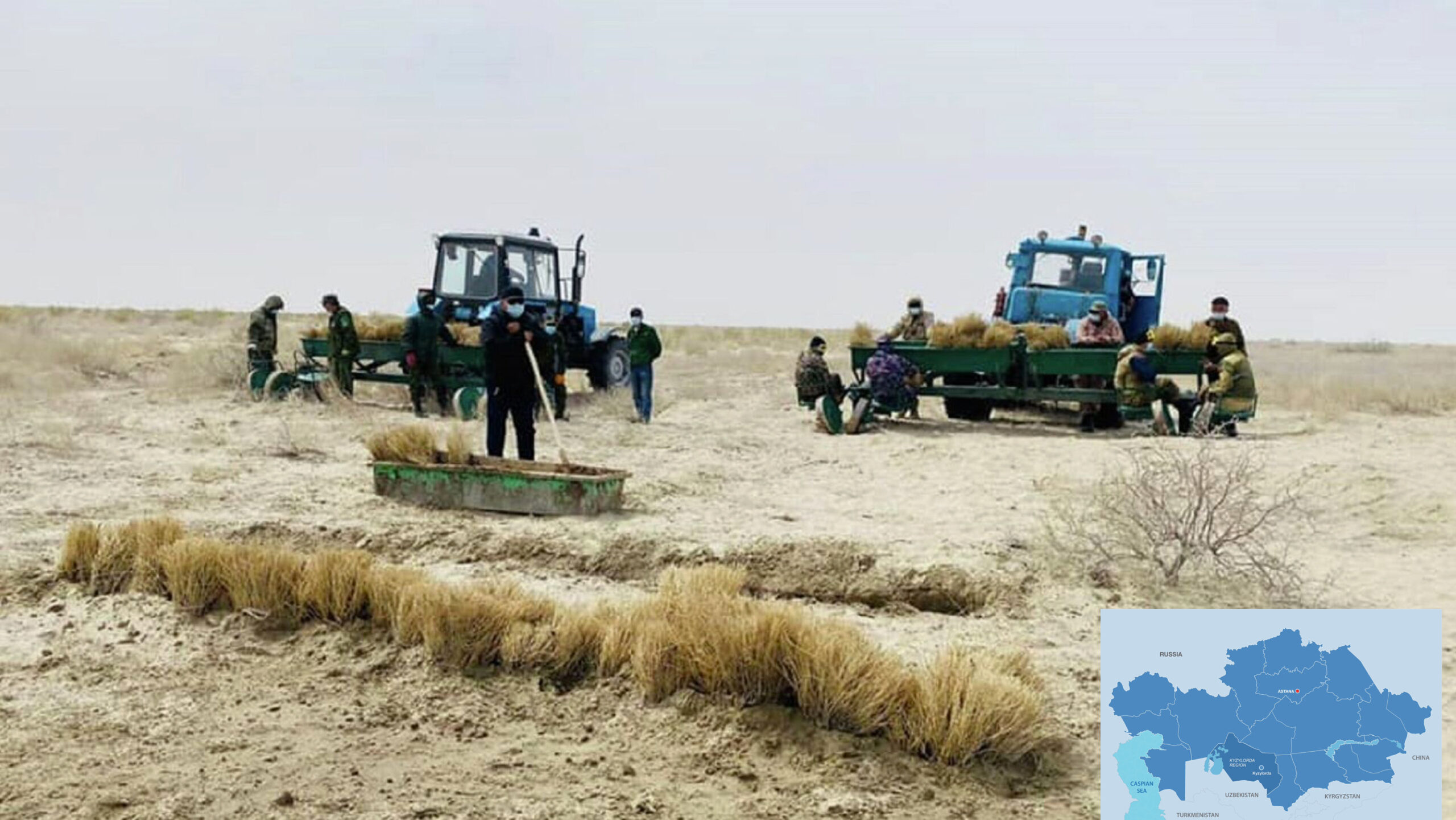
Photo credit: gov.kz Click to see the map in full size. The map is designed by The Astana Times.
At the center of discussions will be the second phase of the North Aral Sea preservation project. The new stage focuses on hydrotechnical solutions to increase water volume and consolidate the gains achieved in recent years. Officials view the summit as an opportunity to align political commitments with technical strategies — a necessary step if the recovery is to move beyond isolated successes toward long-term stability.
Beyond water management, the human cost of the Aral Sea disaster will also take priority. A dedicated panel will address public health challenges in the region, where salt storms have, for decades, contributed to anemia, respiratory illnesses, and other chronic conditions. Representatives of the World Health Organization are expected to outline both the scale of the impact and possible mitigation measures.
Parallel to diplomatic and scientific discussions, practical restoration efforts continue on the former seabed. More than one million saplings have been planted to combat desertification. These forest plantations help curb the spread of salt dust while gradually forming the foundation of a new ecosystem. Halophytic — salt-resistant — plant species are also being cultivated, serving as a food base for wildlife.
A wildlife nursery has been established in the area as part of broader biodiversity efforts. Goitered gazelles, kulans, tolai hares and corsac foxes are being reintroduced. To support these populations, three wells have been drilled, with a fourth under construction. The water supplies both animals and irrigated crops. Modular housing units have been installed to accommodate researchers and staff working on site. Plans are also underway to develop honey production.
According to Maksat Yelemessov, Deputy Chairman of the Forestry and Wildlife Committee, scientists are developing a forage crop project to strengthen the region’s ecological foundation.
“The goal of the research is to increase biodiversity and improve feed composition to ensure a sustainable forage base. Eight forage crop species have already been selected. Scientists also plan to explore the cultivation of honey plants, which could allow for the establishment of apiaries and honey production,” he said.
As RES 2026 approaches, the restoration of the North Aral Sea is increasingly framed not only as an environmental project, but as a test of regional cooperation — one that blends engineering, public health, biodiversity and long-term economic adaptation into a single, high-stakes agenda.
