
ASTANA — Five years after the establishment of the Kazakhstan Agency of International Development (KazAID), the country has shifted from ad hoc humanitarian assistance toward a structured system of official development assistance (ODA) aligned with international standards, said KazAID chairman Arken Arystanov in an interview with The Astana Times.
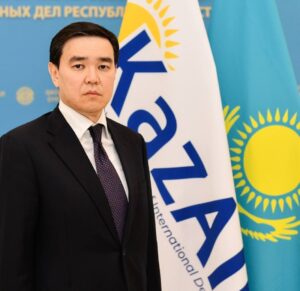
KazAID chairman Arken Arystanov. Photo credit: KazAID
Since its creation in 2020, Kazakhstan has provided approximately $200 million in ODA. Projects have covered Central Asia, Afghanistan, the South Caucasus, parts of Asia and Africa. Over time, the focus has moved from emergency relief toward human capital development, knowledge transfer and institutional capacity building.
Arystanov said the ODA system has been developed through engagement with the Organisation for Economic Co-operation and Development (OECD) development cooperation mechanisms and the gradual formalization of a national development cooperation policy.
“One of the country’s key competitive advantages has been the promotion of digital public governance and e-government solutions, including e-Gov and GovTech elements,” he said.
Building skills, institutions and regional networks
KazAID implements development cooperation through long-term programs, including Dostyk: Diplomacy, Dostyk: Digitalization and Avicenna: Healthcare. These initiatives focus on building professional networks among regional diplomatic services, supporting digital public administration and the adoption of e-government tools, and promoting academic mobility, professional exchange and capacity building for medical specialists across Central Asia.
The programs are complemented by scholarships for international students at Kazakh universities. According to Arystanov, this approach helps establish long-term professional ties and strengthens Kazakhstan’s role as an education and expertise provider.
“When doctors or diplomats from neighboring countries train under Kazakh experts and then apply that knowledge at home to save lives or strengthen regional stability – that is real transformation. Through such projects, we share more than just resources; we transfer the «intellectual code» of Kazakhstan’s successful reforms, empowering our partners to solve their internal challenges independently,” he said.
KazAID also works with international development agencies, including partners from Japan, South Korea, Türkiye and organizations within the United Nations (UN) system, implementing joint and trilateral projects to improve coordination and effectiveness.
“In this context, Kazakhstan is increasingly positioning itself as an emerging middle power in international development – a state that bridges the global development assistance architecture with real regional needs and offers partners practical, scalable, and future-oriented solutions,” said Arystanov.
From emergency aid to lasting impact
Among the projects highlighted by Arystanov is the construction of a school in Nurdağı, Türkiye, following the 2023 earthquake. The project was initiated by Kazakh President Kassym-Jomart Tokayev and is designed to serve 960 students. According to KazAID, construction is nearing completion.
“It is more than just a building – it is our investment in the future of children who have survived a tragedy, and a testament to the fact that Kazakhstan’s assistance is always tangible and long-term,” said Arystanov.
KazAID has also prioritized the transfer of digital governance solutions. In 2023, Kazakhstan transferred e-government software to Tajikistan. The system is now being integrated into public service delivery, helping optimize administrative processes and expand access to services.
“Kazakhstan has a very high level of digitalization, which is our pride. The transfer of experience in this field boosts Kazakhstan’s reputation on the world stage, strengthens ties with foreign states and, of course, helps to increase the level of digitalization in other countries,” said Arystanov.
A partnership-driven development model
According to Arystanov, Kazakhstan’s development cooperation model differs from traditional donor-recipient frameworks. KazAID operates on the principles of equal partnership, respect for national priorities, and non-directive cooperation, drawing on Kazakhstan’s experience in socio-economic reform, state-building, and regional integration.
“Kazakhstan views humanitarian assistance and development cooperation as complementary instruments for ensuring long-term stability, rather than as one-off crisis response measures. Even in emergency situations, humanitarian deliveries are accompanied by sustainability elements, including the development of human capital, institutional capacities, and regional cooperation,” said Arystanov.
“The country also concentrates its efforts where its contribution can be most effective – primarily in Central Asia and adjacent regions – acting not only as a donor, but also as a bridge between international partners, regional institutions, and national governments,” he added.
Aid as soft power and diplomacy
Arystanov described ODA as a strategic instrument of soft power focused on building long-term trust and professional ties rather than short-term political influence. He said projects in education, healthcare and public administration contribute to a stable and credible international perception of Kazakhstan.
“By implementing projects in education, healthcare, public administration, and experience exchange, we strengthen human and institutional ties, create a positive perception of Kazakhstan, and increase its international credibility. (…) Building trust at the level of professional communities, experts, and youth is also an essential element of soft power.”
KazAID’s work reflects Kazakhstan’s broader foreign policy principles of neutrality and constructive engagement. Rather than aligning with political blocs, the agency focuses on addressing practical needs in education, healthcare and post-emergency recovery.
Arystanov added that Kazakhstan’s multi-vector foreign policy allows KazAID to work with a wide range of partners without political constraints. All projects are aligned with the UN Sustainable Development Goals and are designed to deliver long-term institutional and human capital outcomes.
KazAID’s transition to international donor status
As part of its 2026–2030 plans, Arystanov said that KazAID plans to transition from an aid operator into a full-fledged international donor, in line with Kazakhstan’s ambitions as an emerging middle power.
“KazAID will become increasingly active in the Caucasus, Southeast Asia, and Africa. This is more than just a geographic expansion; it is about building transcontinental bridges of cooperation where Kazakhstan serves as a vital link,” said Arystanov.
Planned initiatives include expanding trilateral cooperation with international partners such as the Japan International Cooperation Agency (JICA), the Korea International Cooperation Agency (KOICA), and the Turkish Cooperation and Coordination Agency (TIKA), strengthening South-South cooperation and establishing a KazAID Endowment Fund to ensure long-term financial sustainability. The agency also plans to launch a KazAID Alumni program to maintain professional networks among program graduates.
