
ASTANA – Kazakhstan reaffirmed its commitment to human rights and the modernization of its penal system at a high-level conference on International Human Rights Day on Dec. 10. The event, marking the 77th anniversary of the Universal Declaration of Human Rights, focused on protecting the rights of persons in places of deprivation of liberty, improving rehabilitation and resocialization, and strengthening oversight through national and international mechanisms.
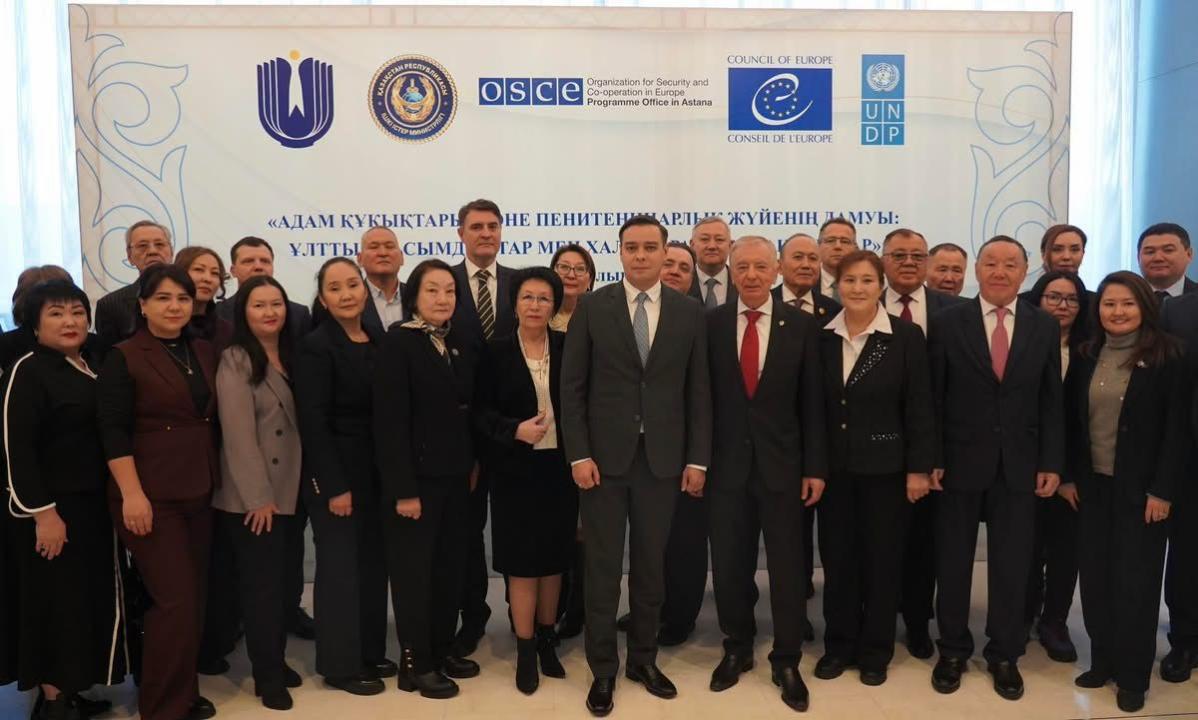
Photo credit: gov.kz
The scientific and practical conference, Human Rights and the Development of the Penitentiary System: National Priorities and International Standards, was organized by the Commissioner for Human Rights in cooperation with United Nations Development Program (UNDP) Kazakhstan, the Council of Europe, the OSCE Program Office in Astana, and the Ministry of Internal Affairs, reported the Foreign Ministry’s press service.
Artur Lastayev. Photo credit: gov.kz
In his welcoming remarks, Commissioner for Human Rights Artur Lastayev emphasized Kazakhstan’s ongoing efforts to humanize the penal system, noting that human rights protection must extend beyond prison walls. He highlighted that a rehabilitation-oriented penitentiary system is key to reducing recidivism, and that gradual reforms have significantly reduced the prison population while introducing international standards.
UNDP Deputy Resident Representative Sukhrob Khojimatov praised Kazakhstan’s accession to the Optional Protocol to the UN Convention against Torture and the establishment of a National Preventive Mechanism (NPM), stressing the importance of strengthening its independence and implementing recommendations.
EU Ambassador to Kazakhstan Aleška Simkić emphasized the importance of projects implemented with Kazakhstan in the areas of the rule of law and human rights, while highlighting the key role of international human rights mechanisms and standards in modernizing the national penitentiary system and strengthening guarantees of the rights of persons in places of deprivation of liberty.
Regional Representative of Office of UN High Commissioner for Human Rights for Central Asia Matilda Bogner noted the importance of the NPM and continued reforms of the penitentiary system in preventing torture.
Ambassador-at-Large Stanislav Vassilenko underlined the growing role of the institution of the Commissioner for Human Rights, the Coordinating Council, and the NPM. Their systematic monitoring, recommendations and expert work are an essential element of the national architecture for the protection of human rights. He recalled that Kazakhstan successfully presented its Fourth National Report under the Universal Periodic Review (UPR) and its Third Periodic Report on the implementation of the International Covenant on Civil and Political Rights (ICCPR) at the 144th session of the UN Human Rights Committee. UN experts highly commended the abolition of the death penalty, the strengthening of the Ombudsman institution and the NPM, as well as progress in promoting gender equality, political inclusion and steps to enhance the independence of the judiciary.
The event gathered representatives of state bodies, the judiciary, law enforcement, civil society, and international partners working in human rights protection and penitentiary reform.
Coordination Council presented Consolidated Report
During the conference, members of the Coordination Council presented a draft Consolidated Report based on preventive visits conducted by the NPM for 2025. The draft report was discussed with representatives of the Prosecutor General’s Office, the National Security Committee, the Ministries of Internal Affairs, Health, Education, Labor and Social Protection, Defense, and local executive bodies, and was preliminarily approved by the Coordination Council. Once translated into English, the report will be sent to the UN Subcommittee on Prevention of Torture and Other Cruel, Inhuman, or Degrading Treatment or Punishment, as well as to government agencies for implementation of the recommendations. The Consolidated Report provides an annual summary of violations identified during preventive visits to penal institutions, reception centers, pre-trial detention centers, temporary detention facilities, guardhouses, special reception centers, healthcare organizations, social assistance institutions, and children’s facilities.
