
ASTANA – Kazakhstan marked the International Day of People with Disabilities on Dec. 3, renewing attention to the everyday challenges families face in raising children with disabilities and to the growing demand for inclusive workplaces across the country.
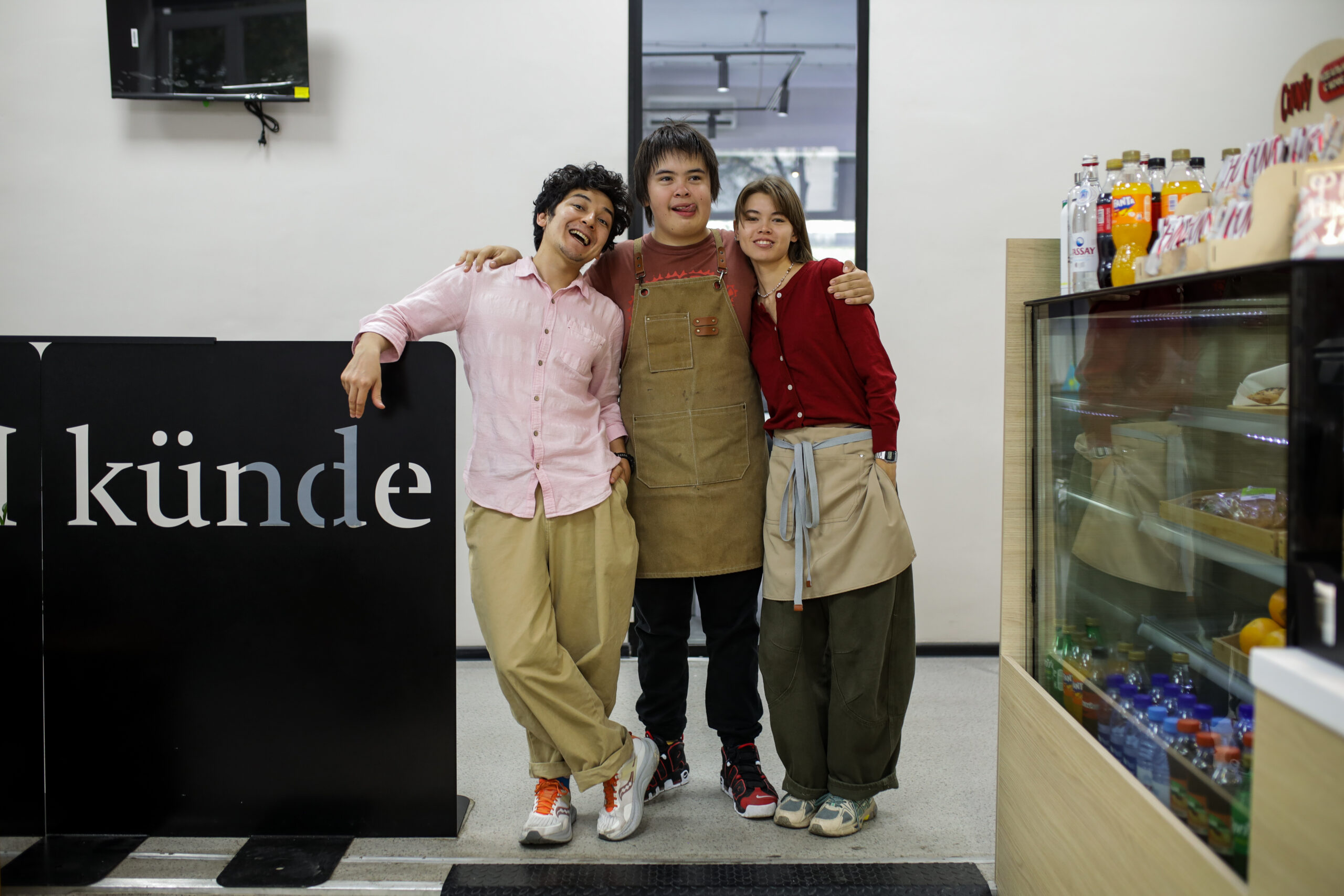
Kunde café operates in Astana and Almaty with about 50 staff, including around 35 employees with disabilities. Photo credit: Asemai Kalymbetova
According to the Kazakh Ministry of Labor and Social Protection, as of May 1, 2025, the country is home to 737,400 people with disabilities, or 3.7% of the population, including 376,700 of working age.
For many parents of children with disabilities, one of the most pressing concerns is what happens when their children reach adulthood. Boarding schools provide structure, care, and specialized support, giving families a sense of stability. However, once young people turn 16-18, parents often face a difficult reality: professional pathways for people with disabilities remain scarce.
A bold project changing big lives
Maulen Akhmetov, founder of the Kunde social café. Photo credit: Asemai Kalymbetova
Projects such as the Kunde (Everyday) social café are helping fill that gap. Speaking to The Astana Times, founder Maulen Akhmetov discussed the project’s evolution, the decision to expand to Almaty and what the initiative has meant for its employees.
Akhmetov noted that the café began as a volunteer project during his first year of university. He wanted to create a local club-like space where students could meet and interact with people with special needs, volunteer, or try working in the food service sector.
“Today we have a functioning Kunde café in Astana and two in Almaty with around 50 employees, including 25 people with special needs in Astana and 12 in Almaty – around 35 employees with disabilities,” he said.
He decided to open in Almaty after parents and guardians from Almaty, Shymkent, and Taraz repeatedly contacted him asking for employment opportunities for their children.
“One woman even moved from Shymkent to Astana with her son so that he could work with us. So, we realized opening in Almaty was necessary. However, we were always afraid, since it’s a different city and I don’t have my own money. The risk was huge,” Akhmetov said.
They secured space through the Atameken Regional Chamber of Entrepreneurs, which provided premises free of charge, and initially had a private investor. But ten days before opening, the investor withdrew.
“At that moment, I realized it was a great opportunity for crowdfunding. I had headed the UN Crowdfunding Academy in Kazakhstan and helped NGOs raise funds. We recorded a video, explained our goal, and raised four million tenge [US$8,000] on the first day. On the second day, we collected more than seven million tenge [US$13,930] on StartTime.kz,” he said.
Akhmetov noted that donations came from businesses, volunteers, friends, and strangers. The success attracted more attention, and soon potential investors began lining up.
“It was incredibly touching. I had gone through many challenges and started doubting whether social projects mattered to anyone. Seeing so many strangers support us made me cry,” he said.
Creating inclusive workplaces
The project recruits employees through partners such as the Astana Mental Health Center, Bolashak Foundation, Kun Bala Foundation for children with Down syndrome, Inclusive School Insight, and the Capernaum volunteer organization. Many also come on their own after learning about the project in the media.
In Almaty, the team built a small coffee island in the Atakent Mall designed specifically for wheelchair users.
“Right now, we have one employee who uses a wheelchair. We also have interns who are hard of hearing and a visually impaired trainee. Previously, our focus was on mental disabilities such as autism, schizophrenia, and intellectual disabilities, but now our range is expanding,” Akhmetov said.
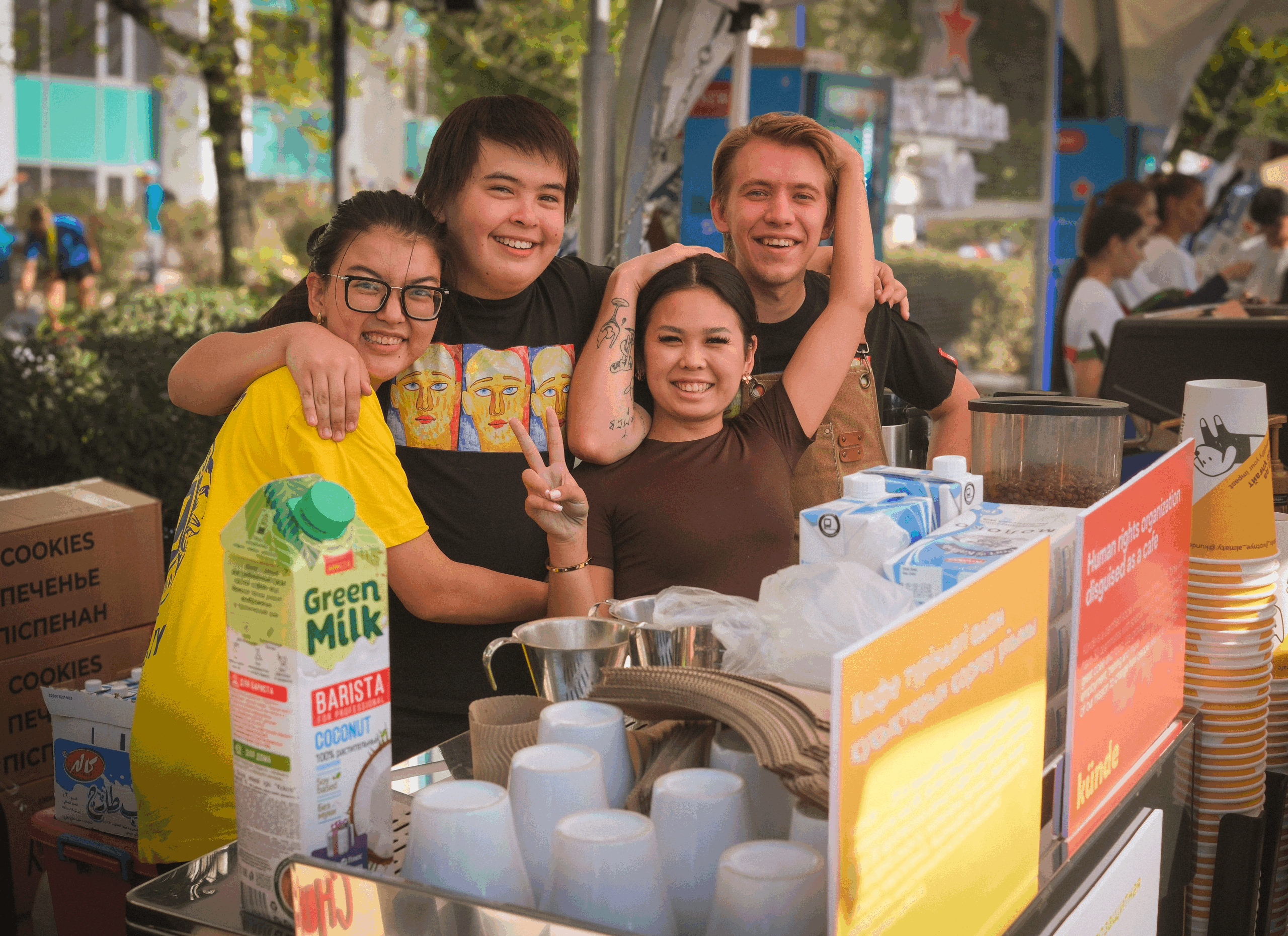
Photo credit: Maxim Anapyanov
He highlighted that the project also conducts surveys and small internal studies that show significant positive change among employees and their families.
“We see improvements not only in social skills, but also in independence, safety and overall well-being. Many begin contributing to household income and help more with chores,” Akhmetov said.
“Most guardians are single mothers, which is why our mission is to support both our employees and their families. When newcomers join, we start with basic household skills, including cleaning and washing dishes, to help ease the burden on their mothers. Over time, employees build friendships, go to theaters and cinemas, and celebrate birthdays together. Parents also stay connected, offering each other support and advice,” he said.
Akhmetov believes the greatest obstacle is the lack of inclusive cafés and workplaces.
“If neurotypical people had daily interaction with people with disabilities, society would change within months. That is why we name the project Kunde,” he said.
Growing network of inclusive spaces
The Bizben Birge Bol (Be with Us) integration center in Karagandy plans to open the first inclusive art café in the region. The center helps teenagers and adults with mental and physical disabilities develop skills, socialize, and find employment after leaving specialized boarding schools or colleges. The center helps families update documents, restore rights and navigate legal processes with support from an in-house lawyer.
“This issue comes up in every meeting with the local government. Parents of children over 16 often don’t know where to turn next. We pushed for the creation of this center so our kids could socialize, learn, and be in demand. Today, this has become a reality,” Assel Bekbayeva, the center’s head, told Kazinform.
The upcoming art café will offer real jobs with mentors, safe working conditions, and opportunities to prepare simple meals and baked goods, serve customers and join creative programs and events.
“When people come in and see young people with disabilities serving them, it changes attitudes. It’s a real bridge between people. From our experience, an hour of interaction with neurotypical peers is like an hour with a psychologist for our kids,” said Bekbayeva.
Comprehensive support and skills training
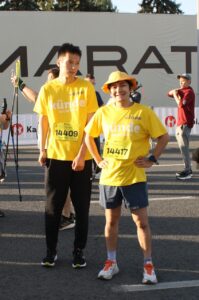
Akhmetov and the team participate in various activities, such as running the Almaty Marathon. Photo credit: Murat Bimamirov
The center operates under a state social program. Over the past year, it has created a comprehensive support system, including social passports, assessments, and individualized development plans.
It offers more than ten programs, including sewing, cooking, carpentry, sensory activities, theater, art studios and life-skills training. Around 100 teenagers and adults attend.
Games and logic instructor Naiman Zhaksygorin, who has a disability, joined through a government program supporting specially equipped workplaces. The center installed ramps, widened doorways, and furnished accessible spaces to enable him to work fully.
“We are developing a woodworking and creative workshop. Kids learn to make wooden items, kitchen utensils, and decorative pieces. Once trained, they can work here. The main thing is to give them the opportunity. We see how strong their desire is,” he said.
He also teaches games, logic, and sports table activities. Students vary in skill, from chess players to those practicing fine motor skills or active European games like kulbuta and cornhole.
Parents as mentors
The center also promotes parental involvement. Many mothers become instructors and workshop leaders.
“We know that if we do not work with children constantly, their development can regress. These spaces are essential,” said Indira Koibagarova, a labor instructor and mother of a 13-year-old girl with disabilities.
“Here they sculpt, knit, attend masterclasses, and prepare for fairs. Our kids make everything with their own hands. With a center like this, I am confident in my child’s future,” she said.
While their children are engaged, parents can work or handle daily responsibilities without worry.
