
ASTANA – Kazakh ornament has always been more than decoration. For centuries, the swirling motifs etched into leather, stitched onto felt, or woven into textiles carried the stories, beliefs, and identity of a nomadic people. Among the traditional crafts, keste, a type of ornamental embroidery, holds a special place as one of the most distinctive forms of Kazakh applied folk art.
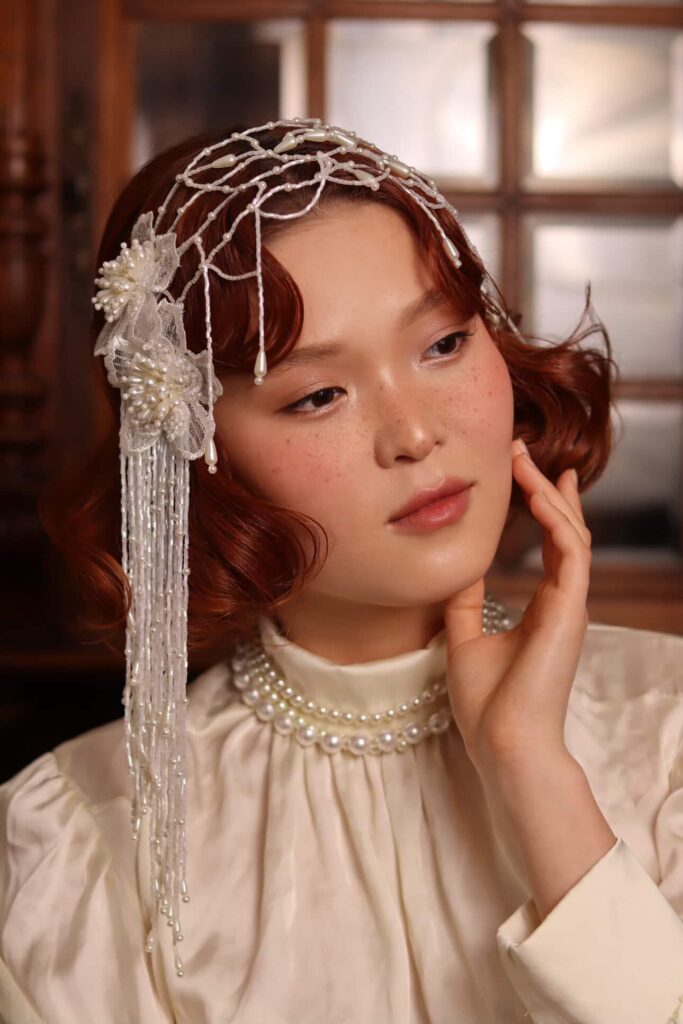
Nazym Omirzak, a hair stylist and artist. Photo credit: Omirzak’s personal archieve
Today, this time-honored technique is undergoing a surprising transformation. Hair stylist and artist Nazym Omirzak has adapted the centuries-old technique and begun applying embroidery directly onto hair.
A new canvas for an ancient art
Omirzak explained that historically, keste adorned both homes and clothing, with each garment acting as a symbolic canvas.
“These patterns reflected important events, natural elements, and wishes for prosperity. They sometimes served as protective charms, visual talismans carrying a sense of safety,” Omirzak told The Astana Times.
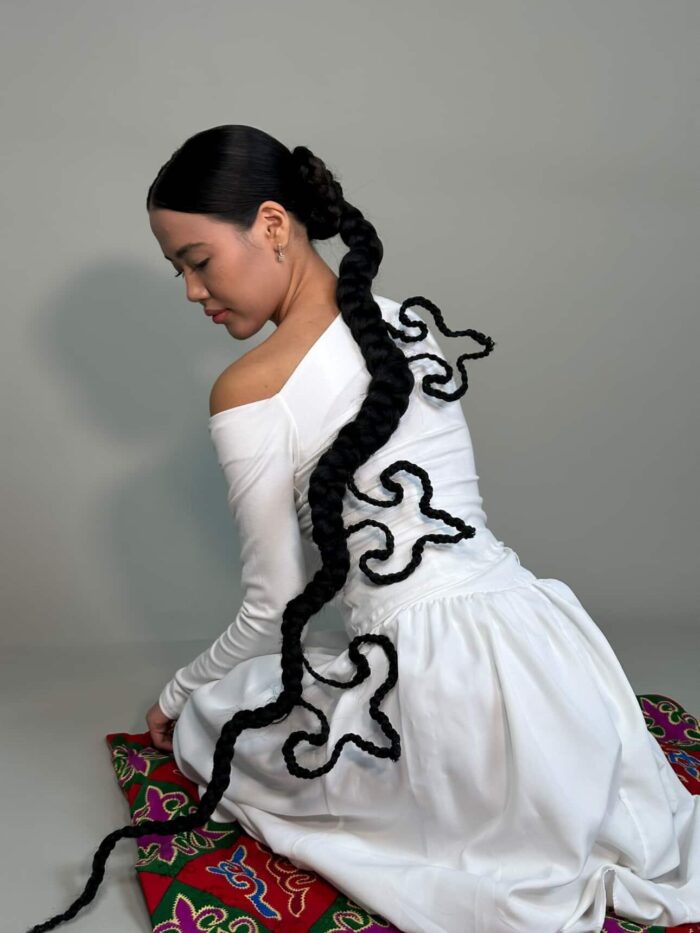
Omirzak loves creating unusual hairstyles featuring Kazakh ornamental motifs. Photo credit: Omirzak’s personal archieve
Now she is channeling that cultural code into something boldly contemporary. Her “canvas” is hair.
“Hair embroidery is individuality. People choose patterns that transform a hairstyle into something meaningful. Ornament is a cultural code. It doesn’t just decorate, it communicates,” said Omirzak.
She is self-taught. Although she has no formal training in embroidery, she has been working as a hair stylist since 2018.
“I saw the embroidery technique only once in school. I remembered it, even though I never worked with textiles professionally. So, I started experimenting directly on hair,” she said.
Her artistic journey began with an unexpected find – an old wig she discovered at home. That was where she first tried to embroider a design.
Omirzak turns hair into her canvas, embroidering it with the traditional keste technique. Photo credit: Aruzhan Batyrkhan
“I could not stop thinking about creating something unusual. When I found that wig, I realized it was my chance to try. The first attempts were difficult, but the style turned out so unique that I immediately became passionate about it,” Omirzak said.
Her technique begins with creating tresses, long rows of synthetic or natural hair used in hairstyling, which she then embellishes with meticulously stitched patterns.
“Tresses are convenient because they can be reused many times, and the process is much faster. Currently, I work with synthetic hair, but I plan to switch to natural hair in the future, ensuring a perfect match for each client’s shade. Everything can be customized – color, length, pattern,” she said.
Modern vision, cultural roots
Her pieces often feature Kazakh ornamental motifs, translated into lighter, modern forms that resonate with younger audiences.
“I grew up in a traditional Kazakh family. I love our culture deeply. It naturally finds its way into my work,” said Omirzak.
She draws inspiration from nature, ethnic motifs, and everyday impressions. Often, ideas appear spontaneously and linger until they take shape.
“Sometimes ideas come suddenly, so I write them down right away. Some stay in my mind for months. That’s when I know I have to create them,” said Omirzak.
One of her most ambitious works features quotes from Abai, the Kazakh most revered poet and philosopher. Translating literary wisdom into embroidered lines on hair became both an artistic experiment and a cultural homage.
“I hesitated at first. I wasn’t sure people would understand. I hadn’t seen anything similar in Kazakhstan. However, once I decided to try, I received incredible support from photographers, models and designers. It changed everything,” Omirzak said.

The hair embroidery technique demands precision and endurance. Photo credit: Aruzhan Batyrkhan
Although hair embroidery looks delicate, the technique demands precision and endurance.
“The hardest moments come when the threads tangle and I have to redo everything. The design also needs to be instantly readable, which isn’t always easy. But with time, it becomes more manageable,” she said.
Hair as art, identity and heritage
Omirzak has received invitations to competitions and international projects but has yet to participate, as her slow, detailed method is unsuited for speed-based contests.
“I was invited to a tournament in Sochi, but they needed fast work. My pieces take weeks. Still, I dream of representing Kazakhstan on major international stages,” she said.
Working daily as a hair stylist, she sees how a hairstyle can become a medium for art and identity.
“As a hair artist, I want people not to fear bold looks. I want them to express themselves not only through clothing or accessories but also through their hair. For Kazakhs, hair is more than appearance. It is a symbol of strength, happiness, and well-being. And women’s braids have always represented femininity, status, and lineage,” Omirzak said.
