
ALMATY — Work on the preservation and reintroduction of Amur tigers continues, said Chairman of the Committee for Forestry and Wildlife of the Ministry of Ecology and Natural Resources Daniyar Turgambayev at a briefing on Nov. 5.
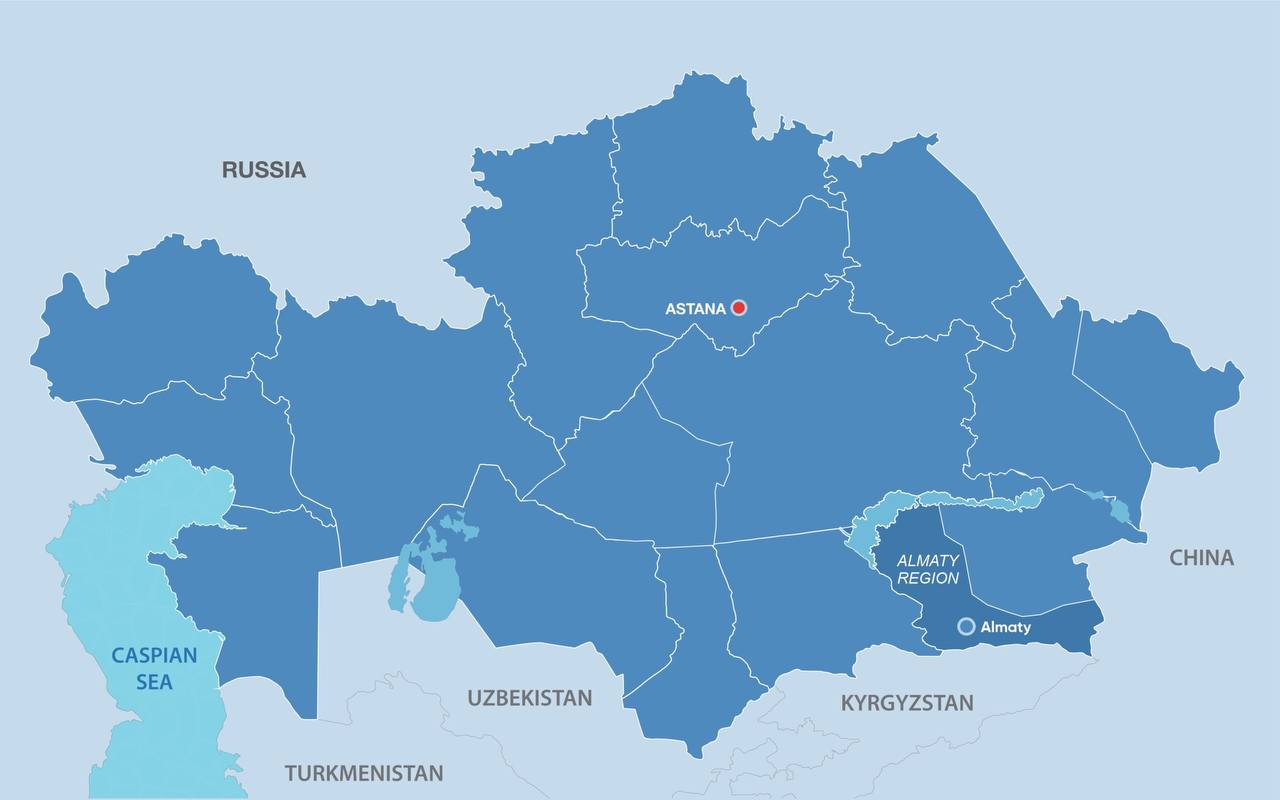
Photo credit: http://worldwildlife.org/ Theo Allofs Click to see the map in full size. The map is designed by The Astana Times.
According to him, the first group of Amur tigers will arrive in Kazakhstan in the first half of 2026 as part of a joint conservation effort with Russia, the World Wildlife Fund (WWF), and the United Nations Development Programme (UNDP).
Turgambayev highlighted that this preservation program is one of the country’s key environmental projects, reported the ministry’s press service.
“As part of the project, the Ile-Balkhash State Nature Reserve was established in 2018, covering 415,200 hectares. Since then, infrastructure has been developed to restore riparian forests, protect the reserve’s territory, and conduct environmental monitoring,” he said.
To strengthen the prey base, over 200 Bukhara deer and 119 kulans have been reintroduced between 2018 and 2023. Each released animal was fitted with a satellite tracker to monitor its movements.
In autumn 2024, two tigers were transported from the Hoenderdaell Zoo in the Netherlands to Kazakhstan, where they are currently kept under constant observation by specialists.
“Once the pair produces offspring and the young tigers learn to hunt, they will be released into the wild. The parent tigers will remain in the enclosure at the visitor center for research and educational purposes,” Turgambayev said.
To prepare for the tigers’ reintroduction, Kazakhstan and Russia have held two meetings of a bilateral working group in 2025 under a memorandum of cooperation on the project.
“The Russian side will train Kazakh specialists to manage conflicts between humans and predators,” Turgambayev noted.
According to the plan, three to four tigers will be transported from Russia to Kazakhstan in the January-June 2026 period, marking the next major step in restoring the species to Central Asia for the first time in 70 years.
