
ASTANA – Marton Krasznai, scientific director of the Center for Central Asia Research at the Corvinus University of Budapest, highlighted water diplomacy as a strategic imperative for Central Asia in his remarks to an Oct. 16 panel session at the Astana Think Tank Forum.
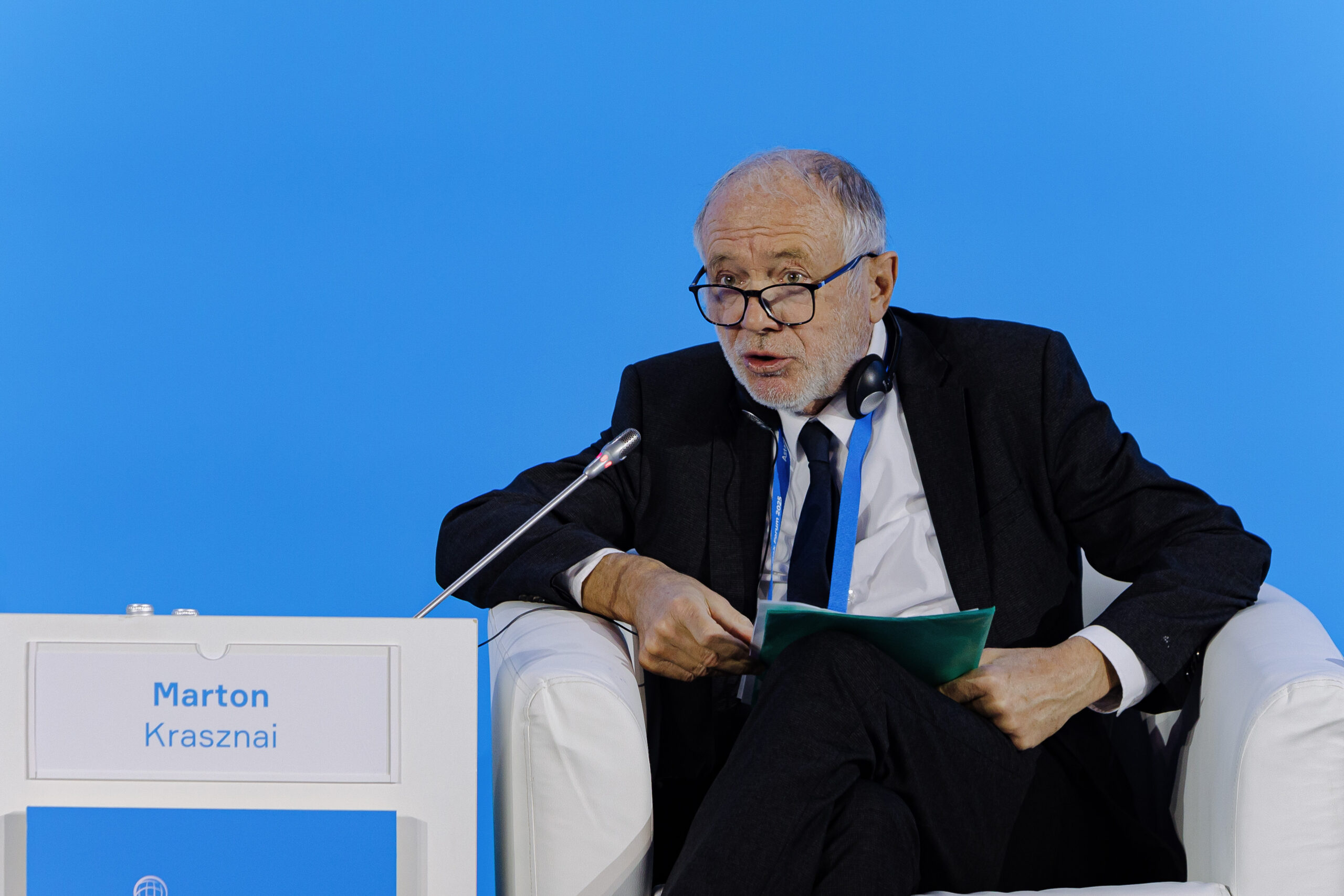
Marton Krasznai, scientific director of the Center for Central Asia Research at the Corvinus University of Budapest. Photo credit: KazISS
He reiterated that around 54–56% of Kazakhstan’s water flows originate outside its borders, making the country deeply dependent on transboundary water cooperation. Krasznai said this is a moment that should be seized by political leaders “guided by evidence and strategic foresight,” as climate change accelerates pressure on regional water systems.
“Climate change is hitting Central Asia especially hard. Average temperatures are rising twice as fast as the global average and the rapid melting of glaciers, for the time being, increases water flows. But after peak water is reached, there is expected to be a big drop in water availability,” Krasznai said.
The professor urged Central Asian countries, bound together by two great rivers, to act simultaneously at three levels: national, regional, and global. At the national level, innovative and pragmatic solutions must come from the region’s own scientific and policy communities.
“Effective water governance requires, among other things, sound macroeconomic policies. If a government embraces an economic theory that considers combating climate change and water scarcity a vital priority, it is likely to implement socially and environmentally responsible macroeconomic policies, which in turn provide powerful support to sectoral policies that mitigate climate change, effectively manage water, and protect biodiversity,” he said.
The balance of power in the region, he noted, is reversed compared to other regions: downstream economies such as Kazakhstan are far larger, in Kazakhstan’s case, 50 times the size of Kyrgyzstan’s or Tajikistan’s, yet upstream countries possess the region’s richest water and hydropower resources.
“The approximate equilibrium of relative bargaining power of upstream and downstream countries provides a solid basis for water diplomats to combine strengths and to work out cooperative solutions. But the engineering approach that has for decades dominated Central Asian water diplomacy, focusing mainly on physical water, cannot produce such outcomes,” he said.
What is needed is a broader political, economic, and social approach, one that emphasizes shared prosperity rather than control.
Central Asia also needs international support and partnerships to meet the twin challenges of climate change and water scarcity, he added.
“While they [Central Asian countries] might have different priorities, they have shared interests in effective climate action, sustainable water management, and preservation of biodiversity. They are keenly aware that when our house is burning, it is not very wise to quarrel about the furniture,” said the professor.
Krasznai stressed the need to involve young people in this effort via a second track diplomacy.
“In the series ‘The Lord of the Rings,’ humans and elves call upon their long-dead ancestors to come to help defeat the evil orcs. We need to bring to that negotiating table future generations, our children, grandchildren, and their children, because they could help achieve a hegemony of norms, of environmentally and socially responsible policymaking,” he explained.
According to him, human capacity building is “extremely important” for advancing efforts on the three levels. Krasznai underscored his university’s effort with Swedish, Chinese, Kazakh, and Uzbek universities on modeling the interrelationship between economic theory, macroeconomic policy, and sectoral policies.
“At the regional level, we have just launched in September this year a double degree with the Kazakh National University of Water Management and Irrigation, which is in our hope to train a new generation of experts with a good understanding of economic, social, environmental, and political aspects of water management and water diplomacy, who will be able to conduct comprehensive conflict analysis and develop out-of-the-water solutions based on a broad concept of benefit sharing,” he explained.
“Kazakhstan and other Central Asian countries should actively support efforts to place water, climate change, and biodiversity in the center of international cooperation,” he added.
According to Krasznai, after the Soviet Union collapsed in 1991, Central Asian countries were flooded with economic advice shaped by the Washington Consensus, a market-first model that, in retrospect, often failed to reflect the region’s realities. He noted the water sector was among the most exposed to these “misguided policies,” and only due to the expertise of Central Asian water experts, further damage to regional water management was prevented.
The Astana Think Tank Forum was launched last year under the aegis of the Astana International Forum (AIF) and organized by the Kazakhstan Institute for Strategic Studies under the President of Kazakhstan. The forum reflects a growing ambition to turn expert debate into actionable policy blueprints.
