
Much of the discussion surrounding nuclear energy in Central Asia has focused on Russia’s dominance of the sector and Rosatom’s ability to offer integrated packages combining technology, fuel-cycle services, construction expertise and financing. By most conventional measures, Russia remains the global leader and the leading external actor in the region’s nuclear development. Yet focusing exclusively on market share risks missing a much broader Eurasian transformation already underway.
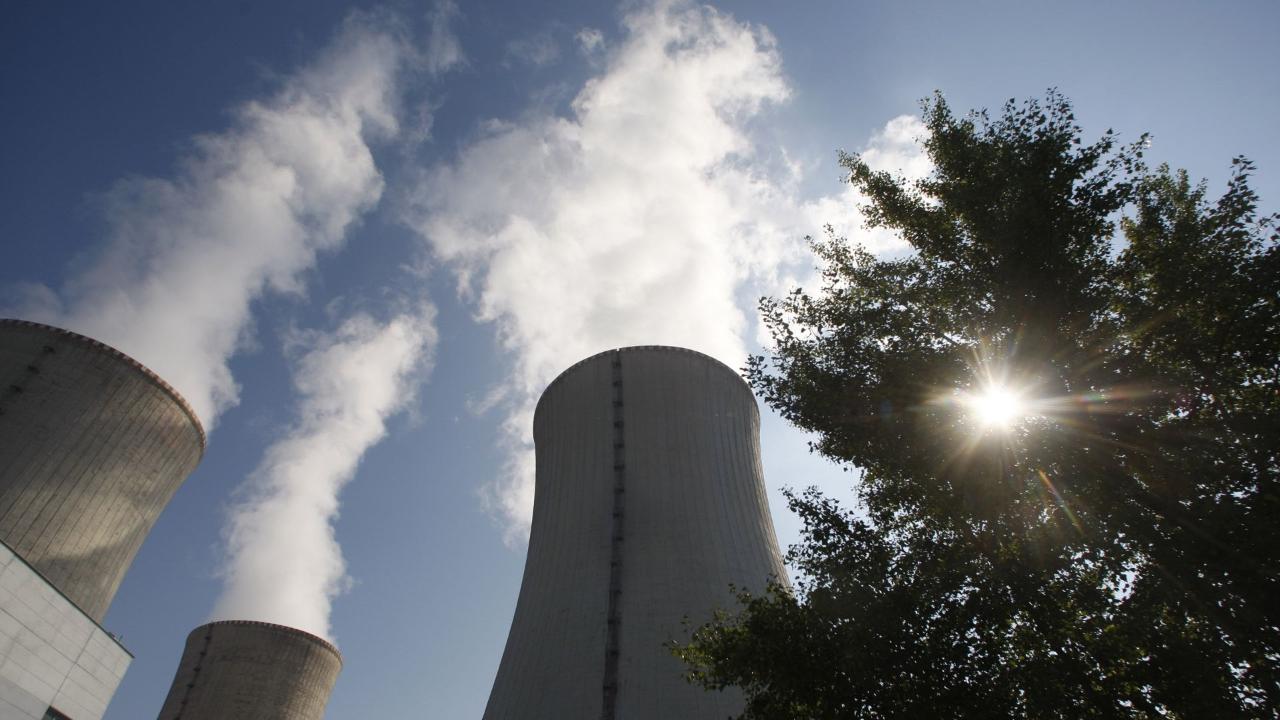
Located at the Ulba Metallurgical Plant in Oskemen, the IAEA Low-Enriched Uranium Bank is an international reserve of nuclear material established to ensure the reliability of fuel supplies for nuclear power plants in exceptional circumstances. Photo credit: Gov.kz.
Across Central Asia, nuclear projects are increasingly conceived as anchors for wider industrial ecosystems encompassing mining, logistics, advanced manufacturing, urban development, data centers, hydrogen production and new transport corridors. In this view, nuclear power matters not just for the reactors themselves, but for its ability to reshape patterns of economic integration across Eurasia.
As Henry Tillman notes in this interview, nuclear energy should not be viewed solely through the lens of electricity generation. Tillman is the founder of Asia Investment Research Global (Asia Nuclear) and Ayana Research, a London-based advisory specializing in energy transition and emerging-market energy investment.
In his view, the conversation extends beyond questions of Russian and Chinese competition. It raises broader issues concerning industrial policy, technological development, infrastructure connectivity and the emergence of alternative supply chains linking Central Asia with all of Eurasia and ultimately the Global South. Whether Russia retains its current advantage or new competitors gain ground, the more consequential story may be the role nuclear energy is beginning to play in a wider reconfiguration of Eurasian economic geography.
Below is the Q&A with Henry Tillman.
Both Uzbekistan and Kazakhstan have chosen to engage simultaneously with Rosatom and China National Nuclear Corporation (CNNC) rather than rely on a single supplier. What explains this outcome?
Both Russia and China lead in their respective fields.
Russia leads the world in nuclear power as it has a more complete value proposition. By the end of 2025, Rosatom was constructing 22 large-capacity power units across seven countries, accounting for about 88% to 90% of the global market for nuclear power plant exports; its international order book included 35 large-capacity power units and six small modular reactors (SMRs) across 11 countries, representing approximately $200 billion.
Over the past two weeks of October, Rosatom agreed with Iran to build eight nuclear power plants (NPPs) and two floating NPPs in Indonesia. The Iran announcement aligns with Iran’s long-term goal of reaching 20 GWs of nuclear power capacity by 2041. Rosatom said it expects to supply electricity to consumers within five years.
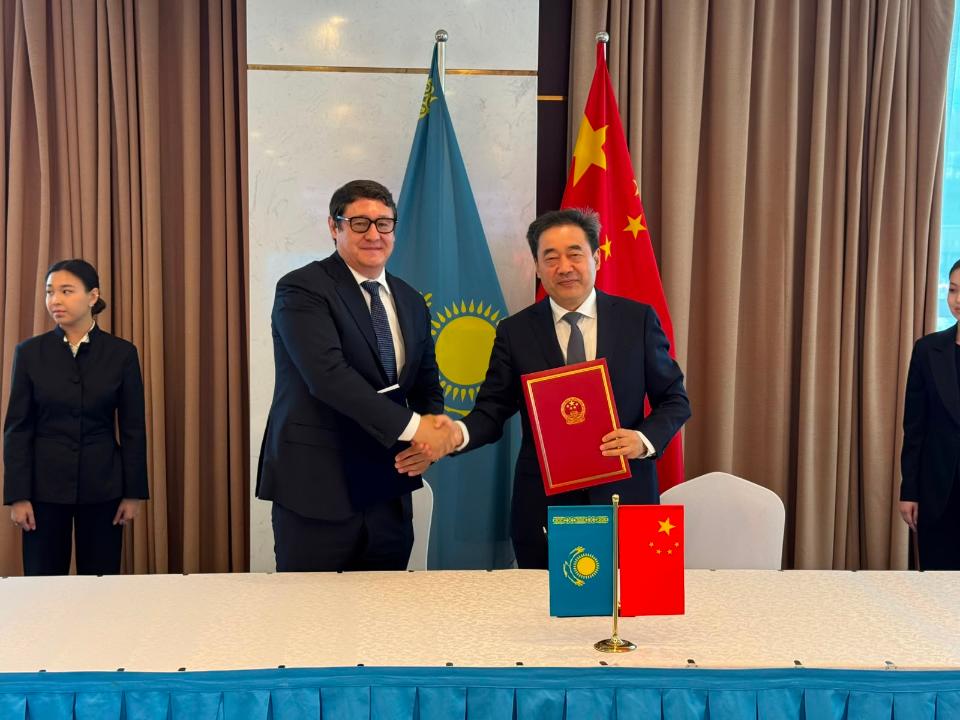
L-R: Almasadam Satkaliyev, the Chairman of the Atomic Energy Agency of Kazakhstan and Wang Hongzhi, the Head of the National Energy Administration (NEA) of China China, at the first meeting of the Kazakhstan-China Joint Working Group on Cooperation in the Field of Civil Nuclear Energy, held on June 16, 2026, in Astana. Photo credit: the Agency of Atomic Energy.
Rosatom continues to lead across Central Asia, based on its historical relationship and nuclear energy track record. In Tajikistan, Russia has been negotiating for over two years to build a small (40-50 MW) reactor and, in 2026, began liquidating the legacy of the USSR’s uranium projects to reclaim mining and enrichment facilities. Kyrgyzstan is exploring the possibility of building its first nuclear power plant using Russian SMRs, according to President Vladimir Putin.
China leads the technological race in both Generation IV (Gen IV) reactors and thorium-fueled molten salt reactors (TMSRs).
In March, Haulong One, a third-generation 1.17 GW pressurized water reactor (PWR) unit, connected to China’s electrical grid. These are designed with additional safety features to improve resilience against accidents. In July, China’s State Council approved the construction of eight new nuclear power units of this kind in four provinces.
Linglong One, with 125 MWe gross capacity and developed by CNNC, was originally intended to be the world’s first commercial land-based SMR. It was to launch commercially in mid-2026. In August, the “heart” of the core module of the Linglong One reactor, including the pressure vessel, evaporator and other key equipment, was installed as a next step towards commercialization.
Several countries are on the waiting list for both Hualong One (CGN) and its SMR cousin, Linglong One.
In thorium, China’s 2 MW experimental Molden Salt Reactors, operated by the Shanghai Institute of Applied Physics, remain on course for 2030/2031 commercial use. In November 2025, the facility achieved its first successful conversion of thorium-232 into fissile uranium-233, proving the complete thorium fuel cycle. Testing in early 2026 confirmed the fuel’s commercial application.
In this sense, this is not about choosing one contract over another, but about investing in technological pathways likely to change the industry.
What is the significance of the Uzbek investment in both Russian and Chinese-led nuclear programs in that respect?
Uzbekistan aims to become a Central Asian nuclear energy hub by combining large-scale reactors, SMRs and its domestic uranium reserves. Its $9.5 billion Jizzakh project is the world’s first integrated station combining two 55 MWe SMRs and two large VVER-1000 reactors.
Construction at the Jizzakh site began in July 2026 and is expected to generate 2,110 MW. The base slab is expected to finish by year’s end. The first reactor will be commissioned by 2029, and we should expect it to begin generation by 2033/34.
In October, President Mirziyoyev announced plans to develop a second and a third nuclear power plant, including six energy agreements worth $4.7 billion, and plans for further development to meet rising demand from industry and data centers.
The agreements cover 3,000 MW of new generating capacity and 400 MW of energy storage and include engagement with companies beyond Rosatom and CNNC. Companies named in a project list obtained by Euronews include two Saudi companies, ACWA Power and Saudi Tabreed; the UAE’s AMEA Power; Japan’s Toyota Tsusho and Sojitz; France’s EDF; Qatar’s Nebras Power; and StorEn and CRE International.
Also in October, Secretary of State Marco Rubio attended the C5+1 Ministerial Conference in Samarkand, attended by foreign ministers from all five Central Asian countries. Secretary Rubio offered cooperation in SMR technology, building upon the USA SMR 2025 marketing efforts.
Other regional partners are emerging beyond Russia and China. South Korea is making rapid advances through its very successful partnership in the Barakah Nuclear Energy Plant in Abu Dhabi, the Arab world’s first Nuclear Power Plant. In September, President Lee Jae Myung and President Kassym-Jomart Tokayev signed 13 agreements and memorandums. A major focus was cooperation on critical minerals, as well as nuclear energy.
Uzbekistan’s integrated nuclear project on a single site in Jizzakh differs from models currently emerging elsewhere in the region. In one city, Uzbekistan deploys two large and two smaller reactors. What strategic, industrial, and economic considerations frame the choice of location?
The top priority for selecting a location, in both Kazakhstan and Uzbekistan, has been access to water and room for industrial development that brings generation as close as possible to the end user. Therefore, urban development considerations also apply.
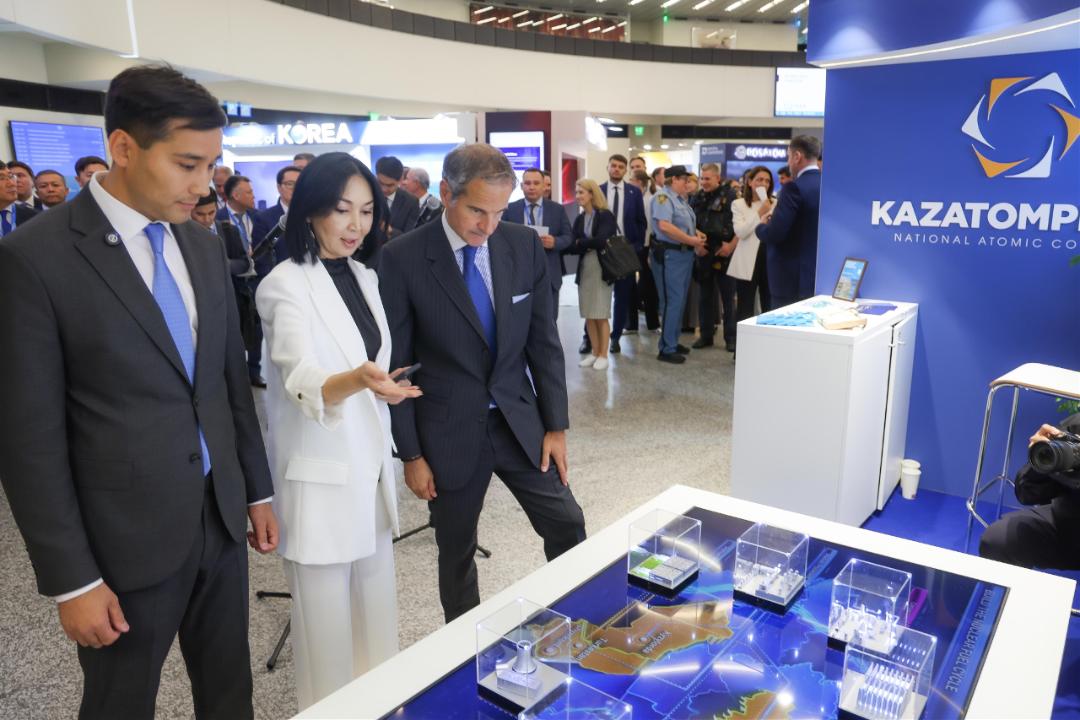
The national pavilion of Kazakhstan was officially unveiled in Vienna during the 70th session of the General Conference of the International Atomic Energy Agency (IAEA) on Sept. 15, 2026. Photo credit: Agency of Atomic Energy.
Kazakhstan has selected two adjacent sites near Lake Balkhash, designed to pivot Kazakhstan from a raw uranium exporter into a major regional energy producer, eventually generating a massive share of the country’s grid baseline capacity.
Uzbekistan has selected a site near Lake Tuzkan. They are building a “nuclear city” designed to house roughly 33,000 residents (primarily young nuclear specialists and their families) across a 200-hectare site. Planned infrastructure includes schools, kindergartens, healthcare facilities, sports and cultural centers, green spaces, and recreational areas.
To what extent should projects such as Jizzakh be viewed simply as power-generation facilities, and to what extent as anchors for broader industrial ecosystems involving manufacturing, logistics, mining, hydrogen production, or other energy-intensive industries?
Nuclear power can meet the rapidly growing needs of fast-growing economies across sectors, whether one speaks of data centers or urban development, mining or metallurgy. That is largely ignored in the West.
I recently attended a discussion at King’s College London on geopolitical power shifts that did not mention the role of nuclear power in industry among BRICS, SCO and ASEAN member states.
The role of nuclear power in Central Asia is increasingly apparent in a wider range of sectors. The Kyrgyz Ministry of Health and Rosatom have been working together on a new nuclear medicine diagnostic center at the National Center for Oncology and Hematology in Bishkek, with the latest stage being the delivery of a technetium-99m GT-4K generator.
Rosatom and CNNC have secured several contracts across Central Asia. Should this be seen primarily as competition for market share, or a division of labor?
This is about buying into specific technological pathways.
Russia is far ahead in mature nuclear technologies. Russia’s first floating nuclear power plant (FNPP) – the Akademik Lomonosov – located in the Arctic, was launched in 2010, connected to the grid in December 2019, and reached full commercial operation in May 2020.
In May 2014, the China Atomic Energy Authority (CAEA) signed an agreement with Rosatom to cooperate on building floating nuclear cogeneration plants for China’s offshore islands. These would be built in China, based on Russian technology and possibly using Russian KLT-40S reactors.
China’s 13th Five-Year Plan (2016–2020) set major targets and policy goals for rapidly expanding civilian nuclear power.
Currently, Rosatom and CNNC are developing at least eight nuclear plants. The initial units were commissioned in 2006/07, and construction began in 2010. One of those reactors, Unit Seven, in Tianwan, is a third-generation VVER-1200 reactor that was connected to the grid on Oct. 8. Once all reactors go online, the plant will be the biggest in the world.
This cooperation lays the foundation for collaboration and technology sharing in building Gen 3 and Gen 4 reactors between CNNC and Rosatom in Central Asia and beyond. Only China has a Gen 4 reactor; however, it is widely thought that Russia and India are also developing these – and India has the largest deposits of Thorium. That is attractive for Central Asia and other countries around the world.
This cooperation is just one component of increasing Sino-Russian cooperation that is ignored, as Western media are transfixed with South Korea joining Russia’s Northern Sea Route this year, and on developments around Hormuz.
Russia and China are partners in the Northern Sea Route and in laying the foundations of a new Eurasian transport route, the Trans Arctic Transport Corridor (TATC). TATC is designed to provide inland interconnectivity, changing the nature of the economy in the Eurasian landmass by cutting across Siberia and the Urals to reach Central Asia and South Asia (with later links into West Asia).
To facilitate transportation within TATC, Russia is piloting driverless lorries and hydrogen trains, which can make overland connectivity cheaper and, therefore, more viable.
TATC is a fully self-contained Eurasia Loop with no Western ties that connects Russia and China. At the Arctic Circle Assembly, attended by numerous countries, I introduced the TATC concept on Saturday morning, and Chinese Foreign Minister Wang Yi announced it on Tuesday afternoon, framing it as part of China’s Global Governance Initiative. I believe that nuclear energy will play a key role in Eurasian transportation.
Rosatom provides its partners a turn-key solution that includes financing. Where does the money come from to deliver on all these projects with CNNC or without?
Rosatom finances both its domestic and international projects primarily through Russian state loans, intergovernmental agreements, and Build-Own-Operate (BOO) models. In the case of the Kazakhstan-Balkhash NPP, under the financing structure outlined by Kazakhstan’s Atomic Energy Agency, a Russian loan is expected to cover 85% of the Balkhash nuclear power plant project cost, with Kazakhstan covering the remaining 15%.
However, in July, Rosatom’s CEO announced plans to cut its internal investment program by nearly 50% due to broader fiscal strains and economic pressures. One external financing option might be panda bonds – which are renminbi (RMB)-denominated bonds issued in mainland China’s onshore market by foreign and offshore entities. Panda bonds, first introduced in 2005, had record growth in 2023 and 2024.
According to Standard and Poor’s, in the first half of 2026, Panda bond issuance amounted to approximately RMB 160 billion, up 68% year-on-year, with outstanding volume surpassing RMB 500 billion for the first time in July.
The share of foreign issuers rose to 50%, with sovereigns, foreign banks and multinational corporations accelerating their entry and diversifying the issuer base. Recent issuers include UBS and the New Development Bank. In October, Indonesia secured Chinese regulatory clearance to issue up to 30 billion yuan of panda bonds from 2026 through 2028.
Russian energy firms and China have been actively discussing possible panda bond issuance for at least the past year.
Focusing on Chinese-Russian cooperation, could we sum up emerging strategic complementarities: financing, engineering, manufacturing localization, fuel-cycle services, spent-fuel management, project governance, legal and compliance support, or supporting infrastructure?
There is a global race for the nuclear energy market in Central Asia.
There have been so many developments in this fast-changing industry:
In January 2026, the IAEA revised its plan for cleaning up Central Asian uranium legacy sites and published a new strategic master plan to continue its cooperation with the Kyrgyz Republic, Tajikistan and Uzbekistan on remediating uranium legacy sites until 2030.
Meanwhile, while there has not yet been a competitive alternative to Rosatom’s value proposition, in October Japan, the US and South Korea forged an international consortium to export jointly developed next-generation nuclear reactors, initially to Indonesia. At a series of workshops in Iceland in October, the US Department of Energy was very clear that it is fast-tracking a number of small/mini nuclear projects.
On Small Modular Reactors, Copenhagen Atomics (Denmark) prices its commercial Thorium Modular Salt Reactor units at $50 million upfront per 100 MW thermal (approx. 42 MW electric) unit, which would solve the spent-fuel problem.
The world is in serious need of safe, clean power, with safeguards monitored by the International Atomic Energy Agency. The race is on, and although Russia maintains its leadership position, regional, multi-level competitors are emerging.
The interview was conducted by Ilya Roubanis, an area analyst, journalist and fellow at Nightingale Int.
