
ASTANA – As global apple exports decline and major producers strengthen their domestic industries, Kazakhstan is expanding state support for orchards in an effort to boost production and reduce import dependence. Kazakhstan produced 205,200 tonnes of apples in 2025, covering 74% of domestic demand, according to the Bureau of National Statistics.
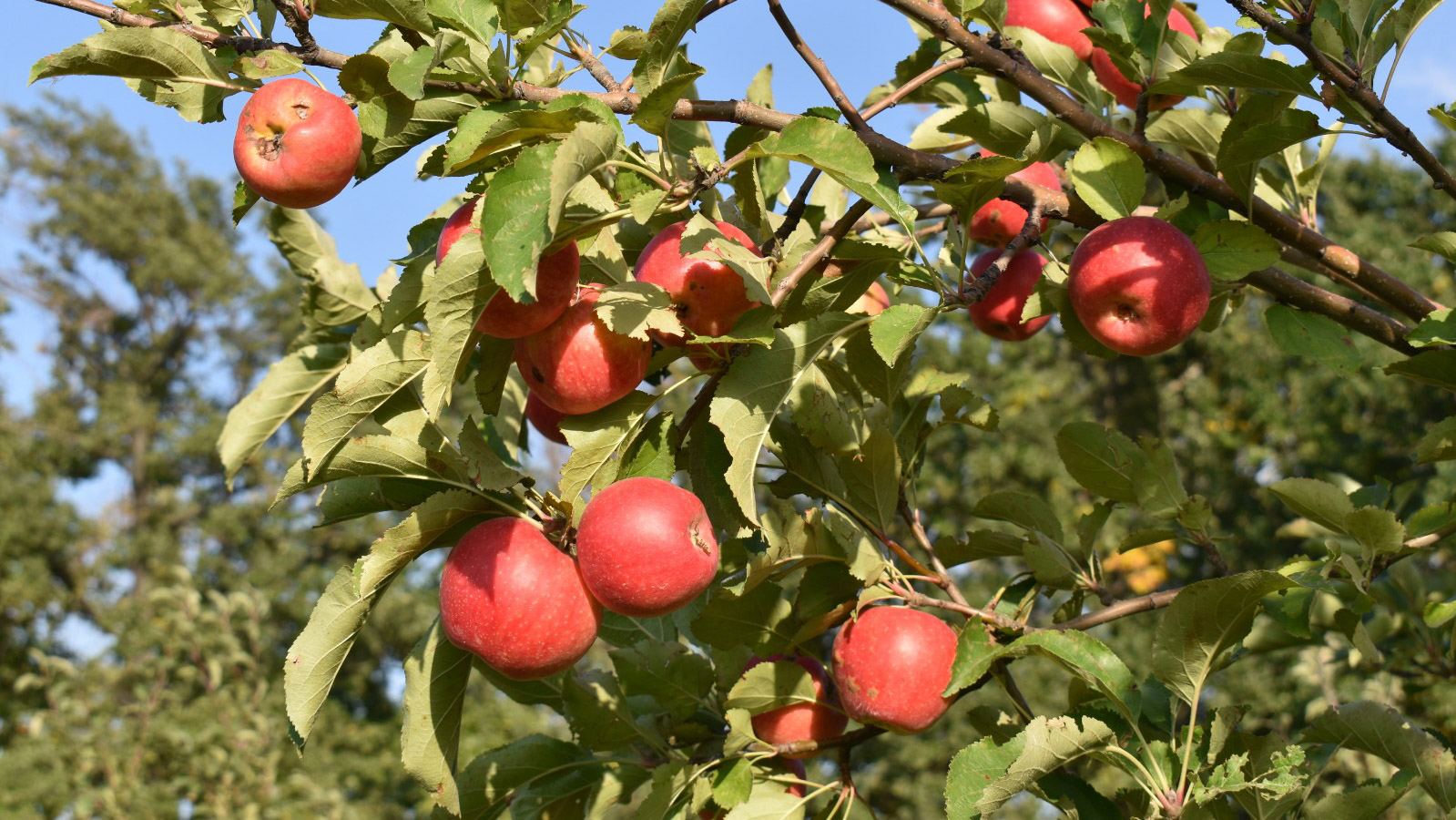
Photo credit: Press Service of the Government of the Republic of Kazakhstan.
The wild ancestor of the modern fruit, Malus sieversii, still grows in the foothills of the Tian Shan, and the city of Almaty takes its name from the Kazakh word for apple. Yet the country still buys a large share of the apples from abroad. As the global apple trade shrinks and major producers turn inward, Kazakhstan is trying to close that gap with import restrictions, orchard subsidies, a heritage-variety revival and a push into processing.
A changing global market
Kazakhstan is a modest player by world standards. According to the U.S. Department of Agriculture (USDA), world apple production is expected to fall 5% to 81.7 million tons in the 2025/26 season. China’s harvest is projected to drop to 47 million tons because of bad weather and smaller orchard areas, but the country will still grow about 57.5% of the world’s apples. The European Union accounts for just over 14% and the United States for 6.2%. Russia and Ukraine are the only post-Soviet countries in the top 10.
Neighboring Uzbekistan is also expanding its apple trade. According to its National Statistics Committee, Uzbekistan exported 22,600 tons of apples in January–August 2025, and Kazakhstan was one of its two largest buyers, along with Russia.Russian Agriculture Minister Oksana Lut has said the country aims to fully meet its own demand for apples by 2028.
Uneven growth at home
Kazakhstan’s production has grown over the past decade, but harvests vary from year to year. Deputy Minister of Agriculture Yerbol Taszhurekov said that since 2014, state support has increased gross apple harvests by 43% and yields by 27%.
The country still depends heavily on imports. According to the Bureau of National Statistics, Kazakhstan imported 94,400 tons of apples in 2025 and exported 20,700 tons, so imports supplied roughly a third of domestic consumption. Poland, China and Iran were the main suppliers.
A seasonal import ban
The government responded with a temporary trade barrier. Under an order of the Minister of Agriculture, apple imports by all modes of transport are banned from Sept. 3 to Dec. 31, 2026. The ban covers both third countries and fellow Eurasian Economic Union members, with transit shipments exempt. The ministry said the measure would protect local farmers and guarantee them a steady market. A similar four-month ban on road imports was introduced in 2024.
The ban comes on top of state subsidies. According to the Ministry of Agriculture, the state reimburses up to 30% of the cost of farm machinery, up to 80% of the cost of irrigation systems and up to 40% of the cost of establishing intensive apple orchards of at least five hectares.
The Almaty region remains the center of the industry. Its apple orchards cover 9,900 hectares, including 2,200 hectares of intensive orchards, according to the ministry. One local company, Baimene LLP, harvests 45 to 50 tons per hectare, several times the national average.
Reviving the Aport
The most symbolic part of the effort is the revival of the Aport, the large, fragrant apple that made Almaty famous across the Soviet Union. Following an instruction from President Kassym-Jomart Tokayev, the Ministry of Agriculture launched a 2024–2028 program with research institutes, private investors and specialized nurseries.
The variety is difficult to bring back. It grows well only on high foothill slopes, much of which around Almaty has been taken for housing, and the trees take years to bear fruit. Scientists planted the first 10 hectares of a new Aport orchard near Almaty in 2025 and plan to expand it to 110 hectares within three years, with the first harvest expected in seven to eight years, according to the ministry.
Producers see the Aport as a premium niche, not a mass-market crop. Roman Safarov, president of the Association of Almaty Aport Producers, estimates it could take 10 to 15 years before the variety saturates the domestic market and moves into steady exports. First steps abroad have already been taken. According to the Ministry of Trade and Integration, QazTrade and the Aport producers’ association signed a memorandum at the Grüne Woche fair in Berlin earlier this year to promote the apples abroad.
