
ASTANA – The centuries-old Kazakh tradition of betashar, the ceremonial unveiling of a bride’s face, takes center stage in an exhibition of works by renowned Kazakh artist Issatay Issabayev, which opened in Astana on Oct. 8. The exhibition continues a nationwide series of events marking the 90th anniversary of Issabayev’s birth.
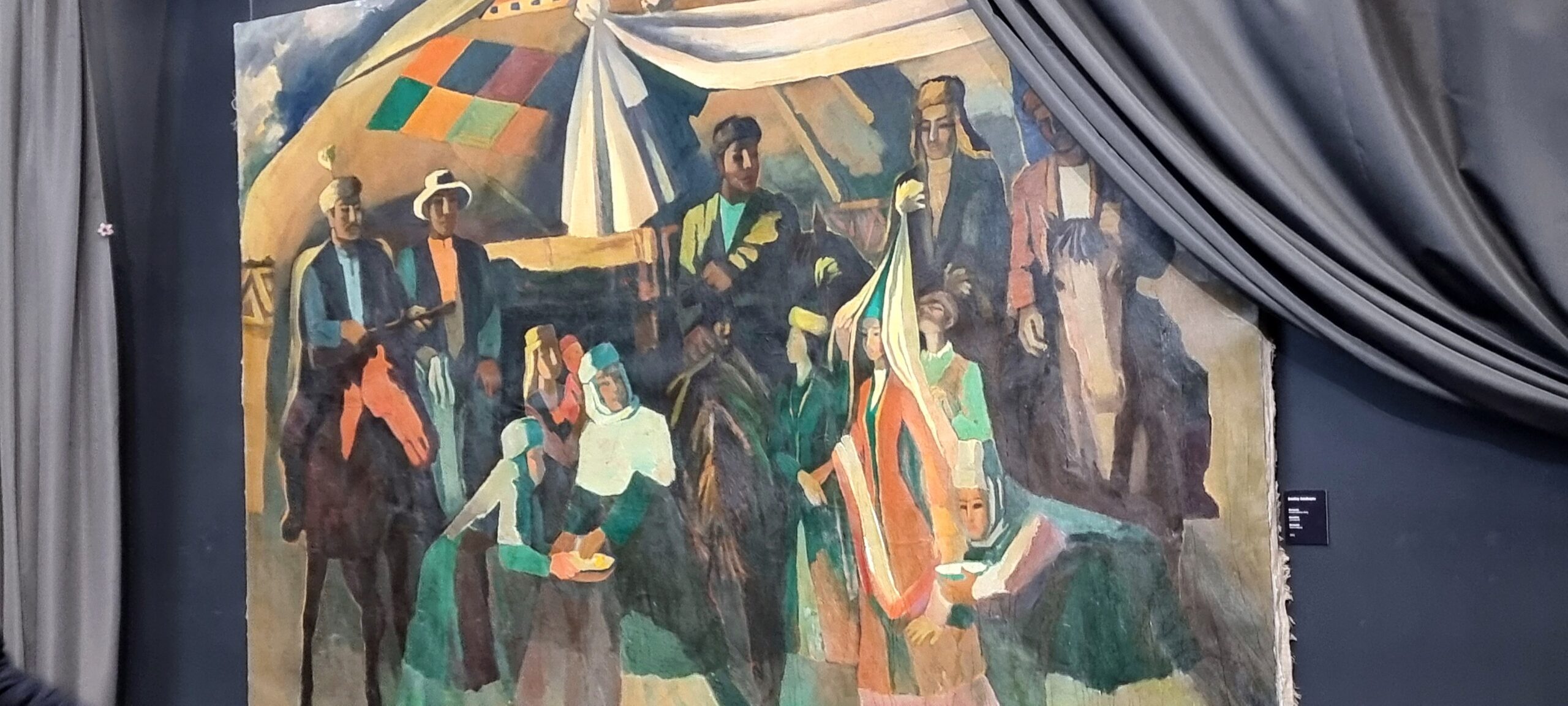
A 2-by-3-meter canvas painting by Issatay Issabayev exploring the traditional Kazakh wedding ritual of betashar. Photo credit: The Astana Times
According to Saltanat Sabyr, the exhibition’s curator, the event offers a variety of perspectives on the artist, who is best known as a graphic artist and illustrator.
“This exhibition is radically different from all the previous ones. Its uniqueness lies in the fact that it is based on a single work and theme – betashar,” Sabyr told The Astana Times.
Literature was one of the main sources of inspiration for Issabayev, particularly Kazakh folklore and epic works. For this exhibition, however, he is presented not simply as an illustrator but as an independent researcher of Kazakh traditions.
“He is not illustrating someone else’s work or folklore. Instead, he presents his own analysis and perspective on the culture and traditions of the Kazakh nomads,” Sabyr said.
According to the artist’s daughter, Aliya Tulenova, the works on display are part of a series exploring a theme her father worked on throughout much of his life.

Aliya Tulenova, Issabayev’s daughter. Photo credit: The Astana Times
“In 1967, my father created a work dedicated to Mukhtar Auezov, which includes a small episode of Abai’s wedding to his wife. In 1968, he worked on a piece dedicated to Kambar Batyr, which also features a wedding theme. In 1973, he traveled to Semey and designed a cinema, where he made sketches, including a scene with a bride,” Tulenova said.
She noted that Issabayev later developed the theme through a series of graphic works inspired by Kazakh heroic epics.
“In 2002, he created a 2-by-3-meter canvas painting devoted specifically to the theme of betashar. From 1965 until the end of his life, he continued to explore this subject,” Tulenova said.
Explaining her father’s longstanding interest in the tradition, Tulenova said wedding scenes were a natural part of his work because of his focus on Kazakh epic literature.
“Epics contain several important moments. There is the birth of a batyr, his heroic deeds and, when he grows older, his marriage. A wedding is one of the stages in many epics. I think that is why the theme of weddings was also present in my father’s work,” she said.
The meaning behind betashar
Betashar is a traditional Kazakh wedding ritual in which the bride’s face is initially covered and then unveiled as she is formally introduced to her husband’s relatives. In Kazakh tradition, covering a person’s face carries a strong symbolic meaning and is traditionally associated with death. Against this cultural background, the unveiling of the bride’s face during betashar can be understood as a symbolic end of her previous life and the beginning of a new one as a member of her husband’s family. The bride is thus symbolically “reborn” into a new stage of life, receiving blessings as she enters her new family.
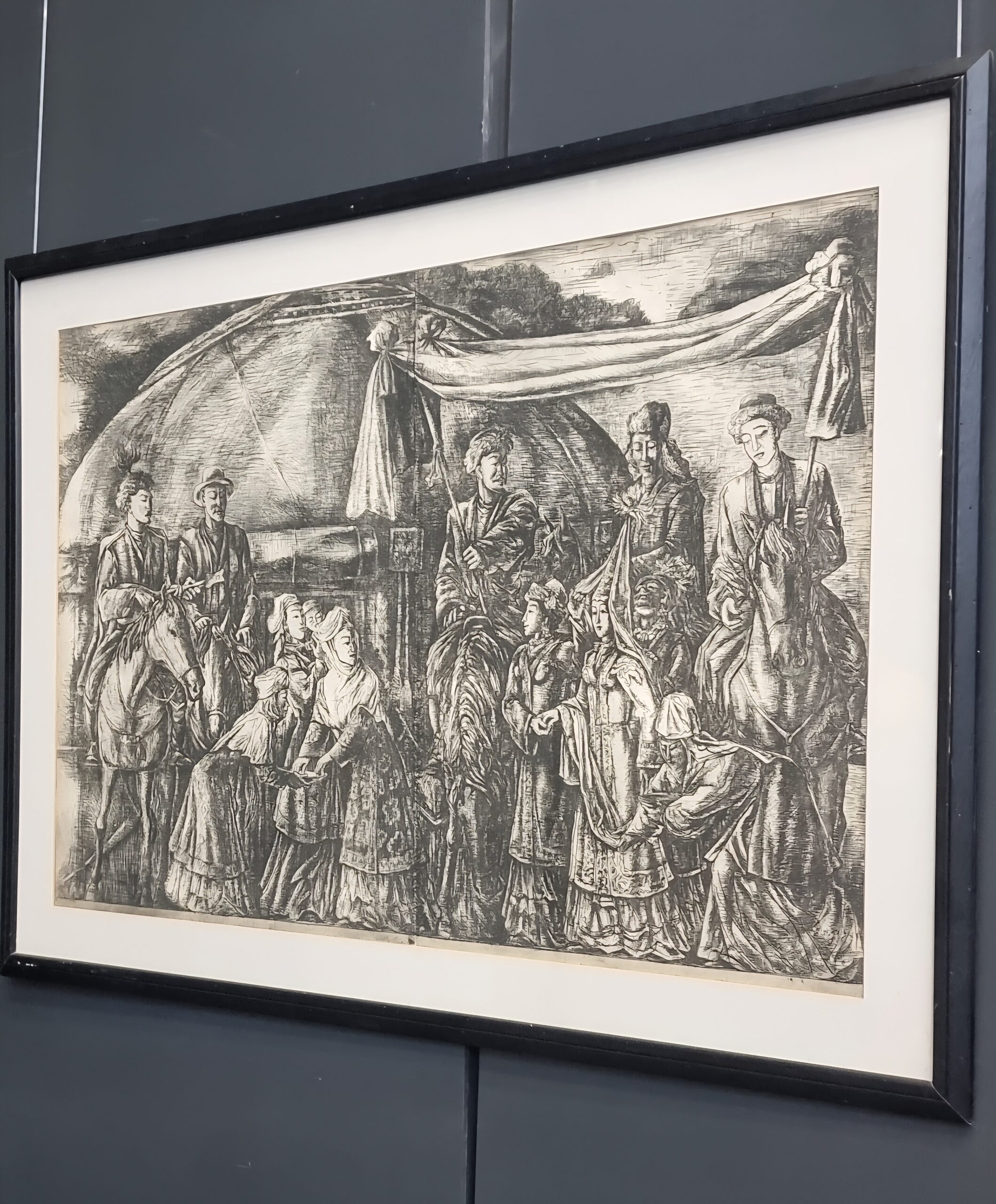
Photo credit: The Astana Times
Another important element of the ceremony is the bride’s introduction to her new relatives. A traditional singer or dombyra player names the members of the groom’s family, helping the bride recognize her new relatives and her place within the family.
In 2024, betashar was inscribed on the United Nations Educational, Scientific and Cultural Organization’s (UNESCO) Representative List of the Intangible Cultural Heritage of Humanity.
