
ASTANA – Central Asia is seeking to turn its growing digital capabilities, energy resources and human capital into a stronger regional AI economy, with the United States offering support for digital infrastructure, cybersecurity and technology investment.
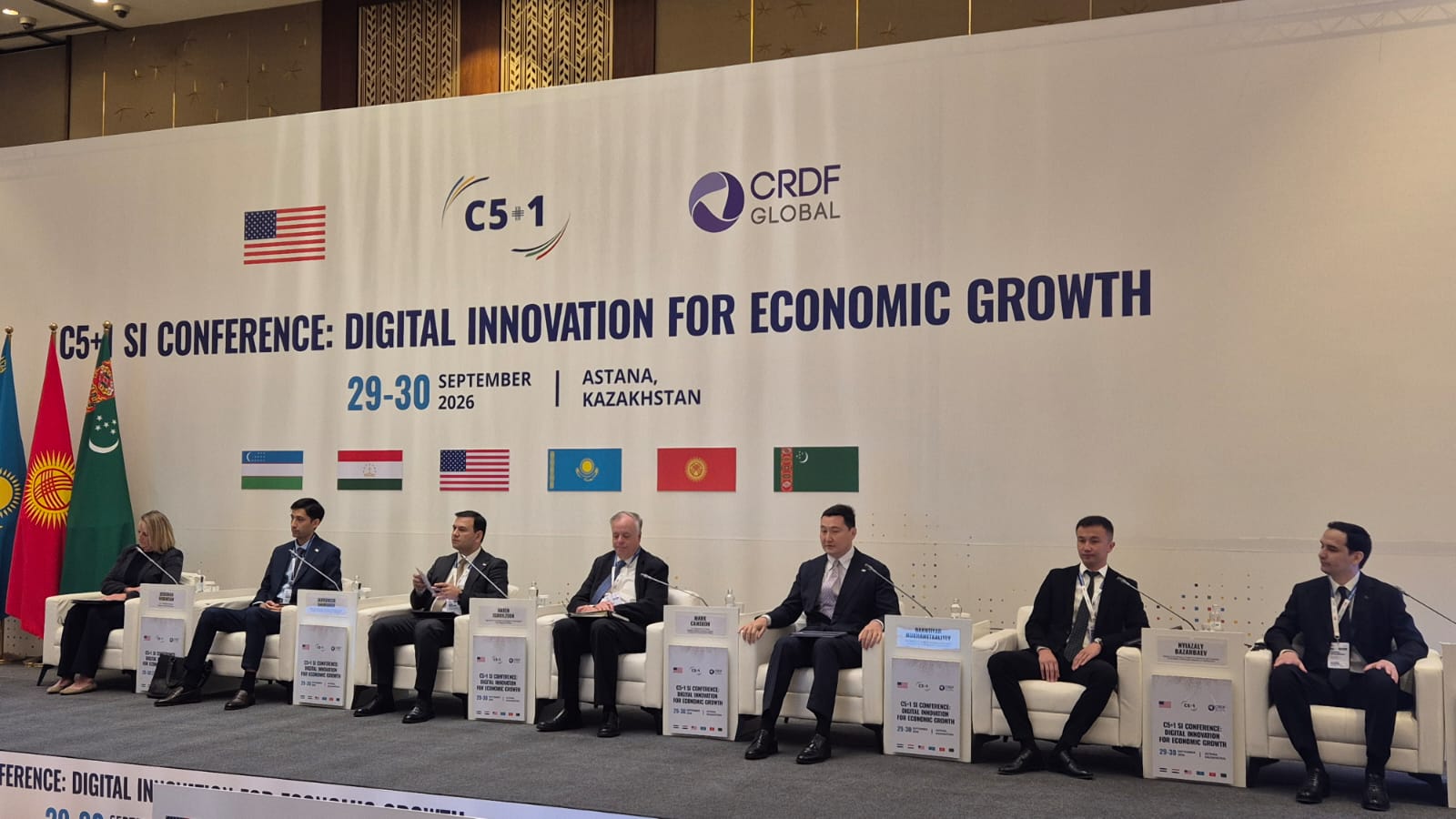
The C5+1 SI Conference opened on Sept. 29 in Astana, bringing together representatives of Central Asian countries and the United States to discuss AI, digital infrastructure and opportunities for economic cooperation. Photo credit: The Astana Times
Officials and experts discussed the opportunities and challenges of building that ecosystem at the C5+1 SI Conference: Digital Innovation for Economic Growth, which opened Sept. 29 in Astana.
U.S. sees Central Asia as emerging AI hub
Mark Cameron,the deputy assistant secretary, Bureau of South and Central Asian Affairs, U.S. Department of State, called on private-sector representatives to explore business opportunities in Central Asia, highlighting the region’s potential in the rapidly developing technology sector.
Mark Cameron, deputy assistant secretary for South and Central Asian affairs at the U.S. Department of State. Photo credit: The Astana Times
“This region is brimming with talent, ambition and untapped potential. We are here to support you, to open doors and to set every single company in this room up for success,” Cameron said.
He also highlighted the importance of making advanced technologies more accessible and understandable to the public.
“Super Intelligence (SI) is the future. It is reshaping economies, reshaping governments, reshaping the way our citizens live, work and connect with one another. And I believe, with complete confidence, that we as C5+1 countries are in the right place, at the right time and with the right partners to capitalize on the incredible momentum we have built on this issue,” Cameron said.
Cameron said the U.S. administration views Central Asia’s digital potential seriously and highlighted a $5 million U.S. foreign assistance commitment through CRDF Global to support cybersecurity and the digital sector in Central Asia.
The initiative is intended to strengthen cyber hygiene, cyber incident response, critical infrastructure protection, financial-sector security and cybersecurity policymaking.
Cameron also emphasized commitments made by the five Central Asian countries and the United States in Bishkek last spring to strengthen regional digital cooperation. These include efforts to unify digital frameworks and coordination mechanisms, harmonize personal data protection and intellectual property regimes in the IT sector, develop a coordinated approach to data center infrastructure and improve the business environment for cooperation with U.S. companies on SI.
He said greater investment in the Trans-Caspian Trade Route and the Trump Route for International Peace and Prosperity (TRIPP) could further strengthen regional economic integration.
“Central Asia is strategically positioned to be a vital hub for the flow of data and ideas. Trusted information and communication infrastructure will be essential to ensuring countries reap the benefits of new technologies and enhanced digital connectivity,” Cameron said.
Responding to a question from The Astana Times about areas of U.S.-Kazakhstan cooperation that could help build the infrastructure needed to develop domestic AI economies, Cameron highlighted data centers and trusted digital infrastructure as key priorities.
“Building the data centers and building the trusted infrastructure will give the American companies the confidence to be able to invest and expand their cooperation,” he said.
Cameron also pointed to Central Asia’s human capital, including its highly educated population and growing number of people with experience in AI and digital technologies.
“There is so much potential here. The region has a very educated population, a growing number of people working in IT, and several American universities working in partnership with Kazakh universities. That is helping to build the human infrastructure and create potential for future cooperation. Kazakhstan is really opening up possibilities for great future cooperation with the United States,” Cameron said.
Kazakhstan emphasizes regional cooperation
Bakhtiyar Mukhametkaliyev, vice minister of artificial intelligence and digital development of Kazakhstan, described Central Asia as a young region with significant economic and technological potential.
“Technology is changing very fast, and AI will change our economies, our industries and the way our governments work,” Mukhametkaliyev said.
He noted that several countries in the region are developing solutions with global potential and stressed the need for greater regional cooperation.
“Our task now is to build on this foundation, move faster and strengthen Central Asia’s position in the global technology market. To do this, we need to work together. We need to connect our infrastructure, talents and projects. And most importantly, our meetings should bring concrete results. Kazakhstan is open and ready for this work,” he said.
Responding to a question from The Astana Times, Mukhametkaliyev outlined several layers he considers essential for building an AI-driven economy. These include energy and water infrastructure, access to advanced chips and GPUs, information systems, high-quality data and AI agents.
“The first is energy infrastructure and water, because we need sufficient energy to create smart data centers. The second is access to chips and GPUs, which is one of the most important factors. The next is information systems, because if you don’t have a strong information system in your country, it becomes a major challenge,” he said.
He noted that high-quality data is another essential component and cautioned against focusing on AI agents without first developing the underlying infrastructure.
“Some countries are trying to implement AI agents first, but they do not necessarily bring additional economic benefits because AI agents need to work with your data, infrastructure and energy, and they need access to your databases. Only then can they provide information to support decision-making,” Mukhametkaliyev said.
Tajikistan proposes regional AI center
Hakim Ismoilzoda, first deputy director of Tajikistan’s Agency for Innovation and Digital Technologies, highlighted infrastructure, connectivity and regional cooperation as key priorities for developing AI.
Hakim Ismoilzoda, first deputy director of Tajikistan’s Agency for Innovation and Digital Technologies. Photo credit: The Astana Times
He said Tajikistan is revising its national AI strategy and plans to increase the target contribution of AI to GDP from 5% to 8%, covering 17 economic sectors.
Ismoilzoda also emphasized Tajikistan’s plans to dedicate 100 megawatts of green energy to AI data centers, with the goal of reaching 1 gigawatt by 2030.
“Without energy, without clean energy, without connectivity, it’s really difficult to develop digital technologies and specifically AI,” he said.
He pointed to the country’s IT Hub Dushanbe and plans to establish a Central Asian Regional AI Development Center as part of a broader regional approach to AI development.
“We are inviting all our partners, all our friends, including the U.S.-based companies and the U.S. government, to join this initiative,” Ismoilzoda said.
He highlighted that closer coordination among Central Asian countries could help create a larger regional market and attract investment.
