
ASTANA — Kazakhstan’s first MICHELIN Keys, awarded on Sept. 22, place the country inside a global system of trust familiar to international travelers, potentially unlocking wider recognition for a destination many are still discovering, said Shyryn Mussina, managing director at Kazakh Tourism national company.
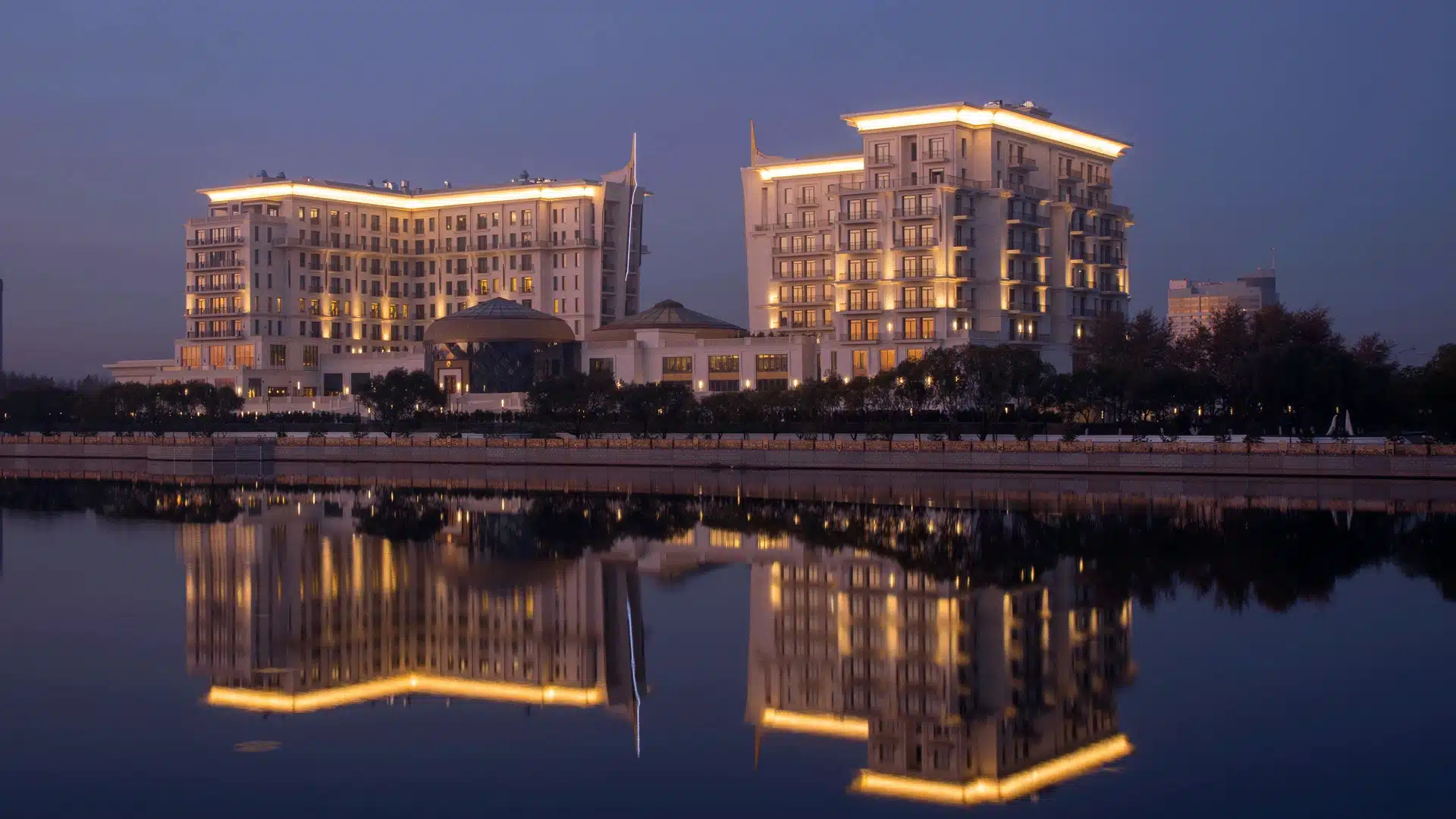
The St. Regis Hotel. Photo credit: marriott.com
She said the recognition can influence not only where travelers stay, but how they perceive the country before arriving.

Shyryn Mussina, managing director of Kazakh Tourism National Company. Photo credit: Mussina’s personal archives
“When we travel ourselves, we often choose what is familiar to us. Let’s say we trust the Rixos chain and like that format. We choose what we know because a holiday is a point of relaxation, and we do not want to be disappointed in something,” Mussina told The Astana Times.
The same logic applies when travelers consider Kazakhstan.
“A tourist coming to another country may book through a travel agent or tour operator, or individually. They may be there for a week, three days or 10 days. They want to get an experience based on what is familiar or understandable to them, or through a platform they trust. The MICHELIN Guide is very clear in that sense,” said Mussina.
The MICHELIN Guide currently features 14 hotels in Kazakhstan, five of which received One MICHELIN Key.
The hotel distinction has three levels: One Key denotes a “very special stay,” Two Keys an “exceptional stay,” and Three Keys an “extraordinary stay.” Being listed and receiving a key are therefore not the same: the five Kazakh hotels were singled out from the broader selection.
Mussina acknowledged the importance of recognition because awareness of Kazakhstan remains uneven across markets.
“For some countries, we are already understandable and more or less familiar; for others, we are still not. Many people still have questions about how safe it is here,” she said.
For travelers who do not yet know Kazakhstan well, an international guide can reduce that uncertainty and transfer some of its credibility to the destination.
“When a strong international brand enters the market, the perception that its audience has of that brand is automatically transferred to all of its members. Kazakhstan, in this case, becomes the partner country. It immediately gives a certain unspoken message that the country is gradually gaining momentum in terms of standards and in terms of an expected, good experience,” said Mussina.
Why Tenir matters alongside Ritz-Carlton
The selection is also notable for local and nontraditional properties appearing alongside major luxury chains.
“Kazakhstan is still a trendy destination. It is not super popular, but it is now becoming popular among travelers who want a different experience. And here, ‘different’ is the key word because they want an authentic experience,” said Mussina, pointing to Tenir Eco Hotel and The Veil Hotel as properties able to compete through concept and design rather than an international brand name.
“Tenir Eco Hotel received a key alongside the Ritz. Of course, it is very difficult to ignore the Ritz, both in Almaty and Astana. But Tenir and The Veil received recognition because they are exceptional in terms of design,” said Mussina.

Kairat Sadvakassov, strategic adviser at HiSeas International Tourism Group. Photo credit: The Astana Times
Kairat Sadvakassov, strategic adviser at HiSeas International Tourism Group, said the selection reflects the strength of Kazakhstan’s emerging boutique and destination-based accommodation sector.
“Kazakhstan is getting more and more popular with global travelers. Although we are relatively young in terms of culinary specialties and experiences, the hotel side of the hospitality industry is quite remarkable and deserves recognition from MICHELIN Key and other rankings such as Forbes Travel. I am happy that half of the properties presented are local brands and some of them are not traditional hotels,” he told The Astana Times.
For Sadvakassov, that is particularly encouraging for glamping and boutique lodging, where location and concept can become part of the travel experience.
Six years to get Kazakhstan noticed
Mussina said the recognition follows a years-long effort to bring Kazakhstan to the attention of international media, industry experts and global guides. Kazakh Tourism first began communicating with MICHELIN in March 2020, but contacts slowed during the COVID-19 pandemic and resumed more actively in 2023.
“The most difficult part was actually getting attention for Kazakhstan and accumulating enough of that effect. We worked for a very long time, persistently and carefully so that Kazakhstan would be chosen as a travel destination. This work with international media, international journalists and international awards all comes together because, in the end, it is the same experts and the same professional circles. Together, it creates a cumulative effect that allows the entire industry to grow,” said Mussina.
Mussina compared the process to building a reputation at university.
“In the first year, you work for your grades, and later your grades work for you. (…) Now people are beginning to look into the country itself,” she said.
The regional picture gives the recognition wider significance. MICHELIN lists three hotels in Uzbekistan, with one receiving a key, compared with Kazakhstan’s five key-awarded properties among 14 listed hotels.
“The very fact that Central Asia is represented there is already a very good development for everyone,” said Mussina.
The next layer of MICHELIN recognition
She also emphasized that individual hotels and restaurants do not pay inspectors to receive an assessment. Where destination partnerships with international guides exist, agreements can instead be concluded with public authorities or other third parties that are not themselves being evaluated.
“The important thing to understand is that MICHELIN and Gault & Millau do not take money from an individual business for the assessment of restaurants. Restaurants do not pay for the inspection, hotels do not pay for the inspection,” she said.
Mussina said she would eventually seek Kazakhstan’s engagement with MICHELIN to extend to its restaurant guide, although expansion ultimately depends on whether the destination meets MICHELIN’s own criteria. Such a project, she said, could take roughly one and a half to two years from signing a contract to an awards ceremony.
Sadvakassov said Kazakhstan can make greater use of the recognition it has already secured, including through familiarization, or FAM, trips that bring journalists and travel professionals to experience a destination firsthand.
“Part of the promotion is already done. The hotels and the country got their names out through MICHELIN. The tourism authorities should now use these properties for future press and blog tours and FAM trips,” said Sadvakassov.
