
ASTANA — For 79-year-old Ramazan Yeseyov, the tazy is a family tradition stretching back generations. He began raising the dogs at six, following in the footsteps of his father and uncle. More than seven decades later, that tradition came full circle in Astana, where his tazy Eles won a specialized exhibition.
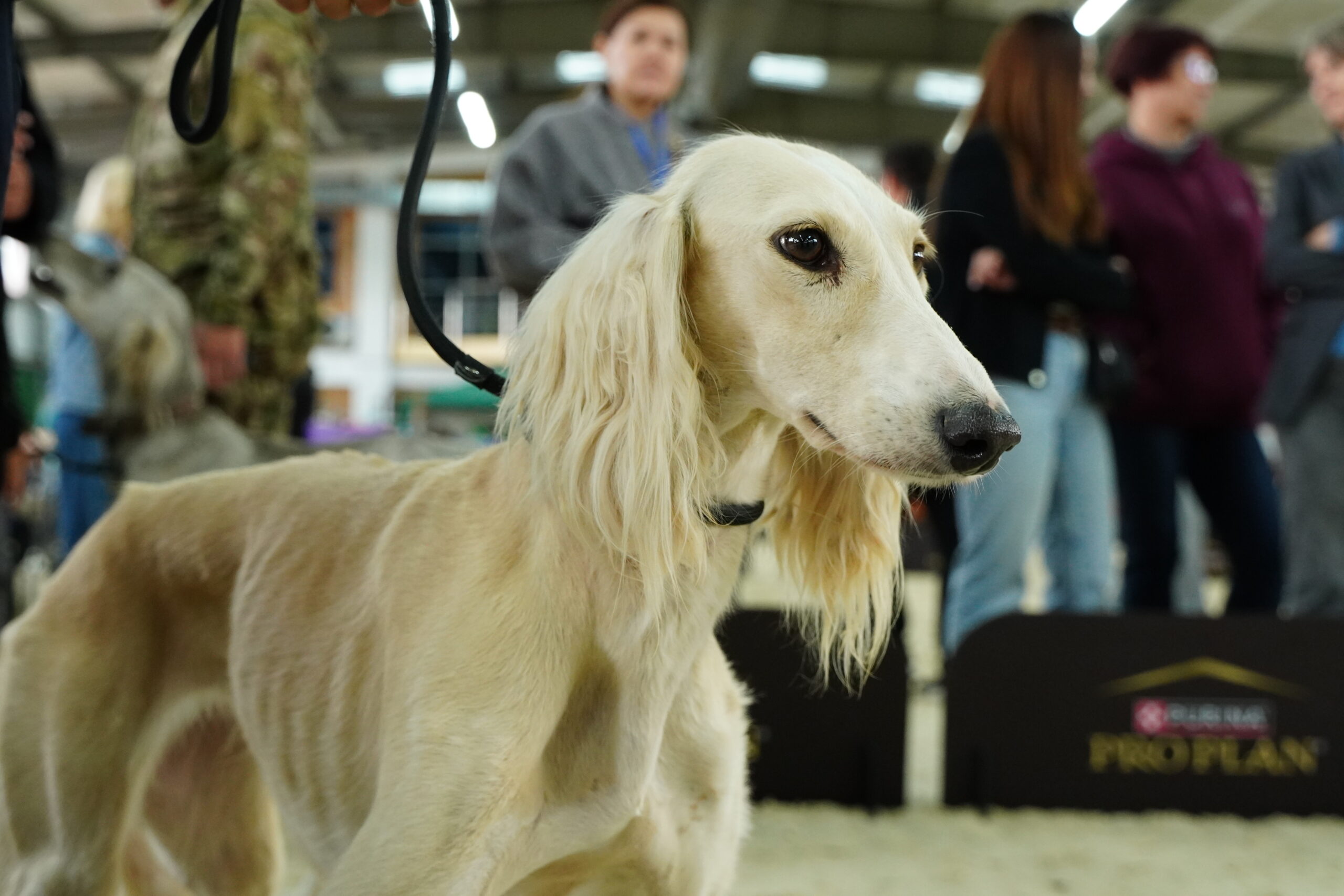
Photo credit: The Astana Times/ Fatima Kemelova
The monobreed exhibition and breeding evaluation was held on Sept. 19 in Astana as part of an international all-breed dog exhibition. It brought together breeders, owners, cynologists and international judges, providing an opportunity to assess leading representatives in their country of origin.
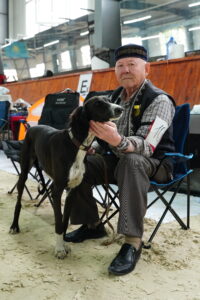
79-year-old Ramazan Yeseyov with his tazy, Eles. Photo credit: The Astana Times/ Fatima Kemelova
“My father and uncle kept tazy dogs. Seeing this tradition from childhood, I continued it. There were always tazy dogs in our home,” Yeseyov said.
Over the years, Yeseyov has raised between 50 and 60 tazys, valuing them not only as skilled hunting dogs but also as loyal companions.
“The tazy is special to me. I enjoy going hunting with it. It is a true friend, not just a dog,” he said.
His story reflects a longstanding connection between the tazy and the Kazakh way of life. Traditionally valued for hunting, the eastern sighthound is also considered an important part of the country’s historical and cultural heritage.
Today, preserving this heritage involves both generations of experience and professional international assessment.
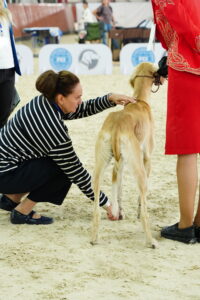
Natalia Drovosekova, an international all-rounder judge of the Fédération Cynologique Internationale (FCI), assesses a Kazakh tazy during the competition. Photo credit: The Astana Times/ Fatima Kemelova
According to Natalia Drovosekova, an international all-rounder judge of the Fédération Cynologique Internationale (FCI), the Kazakh tazy shares characteristics with other eastern sighthounds while having its own distinctive features.
“One of the characteristics we look for in the tazy is a strong, solid bone structure compared with other sighthounds,” she said.
Such expert assessment has become particularly significant since the FCI provisionally recognized the Kazakh tazy in 2024 and designated Kazakhstan as its country of origin. The recognition placed the breed within the international canine system and gave Kazakhstan an important role in preserving its defining characteristics.
“This is important because now all countries that are members of the Fédération Cynologique Internationale, more than 100 countries, know that this is our national breed,” Drovosekova said.
As the country of origin, Kazakhstan also contributes to the development and interpretation of the standard, including its physical characteristics and working qualities.
The evaluation in Astana provided an opportunity to apply these principles in practice. Experts assessed the dogs’ conformation and breeding qualities, while breeders and owners presented the results of their work with the current population.
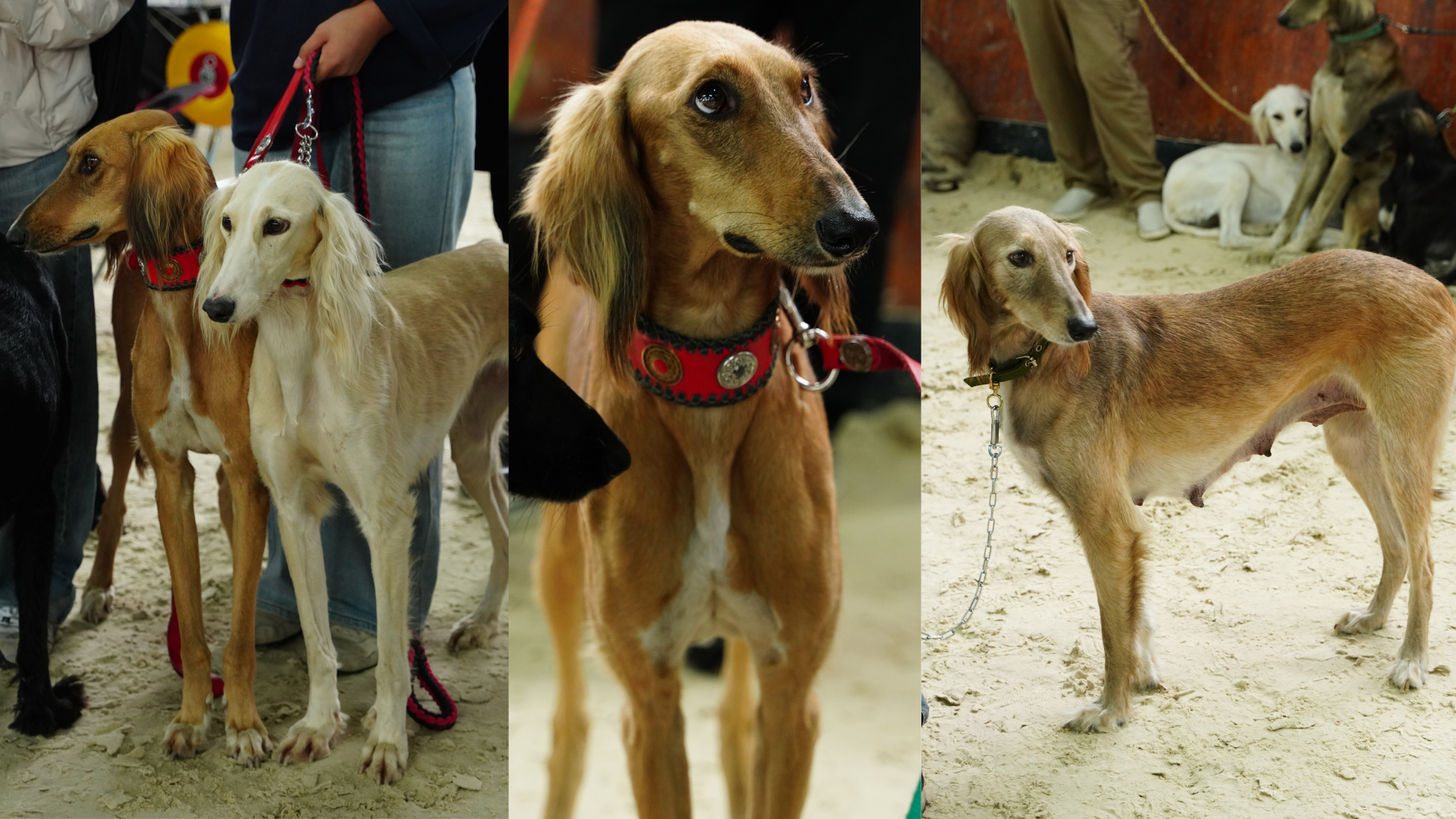
Photo credit: The Astana Times/ Fatima Kemelova
For those involved in breeding, such assessments are part of a broader effort to maintain accurate pedigrees, responsible breeding practices and the distinctive characteristics of the tazy.
For Yeseyov, however, preserving the tazy is deeply personal. His bond with the breed began in childhood, shaped by his father and uncle, and has endured for more than seven decades as a family tradition he now hopes to pass on to a new generation.
