
ALMATY – After years of habitat restoration and careful adaptation, the success of Kazakhstan’s tiger restoration effort will soon depend on whether the animals can survive and coexist with people in the wild.
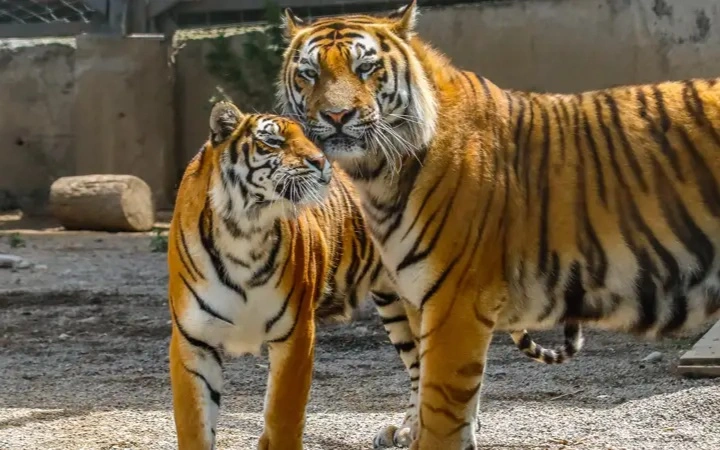
Photo credit: Ministry of Ecology and Natural Resources.
For nearly a decade, Kazakhstan’s effort to restore tigers to the Ili-Balkhash ecosystem has been approaching what conservationists consider its most consequential milestone: the first release of adult Amur tigers into the wild.
According to the Kazakh Ministry of Ecology and Natural Resources, two adult tigers transferred from Russia are expected to be released within the next month if they successfully complete the final stage of behavioral assessment. The animals are undergoing tests designed to determine whether they can hunt independently while maintaining a natural avoidance of humans as these two conditions are considered essential for successful reintroduction.
From importing tigers to rebuilding an ecosystem
The planned release represents the transition from years of preparation to the practical implementation of one of Central Asia’s most ambitious wildlife restoration projects.
Rather than focusing solely on breeding or transporting animals, Kazakhstan has invested heavily in recreating the ecological conditions necessary for a self-sustaining tiger population. This has included expanding the Ile-Balkhash State Nature Reserve, restoring prey populations, strengthening environmental protection measures and preparing local communities for coexistence with large predators.
According to the ministry, the reserve now covers more than 450,000 hectares after its expansion earlier this year, creating additional habitat for the future population.
The broader goal extends beyond introducing Amur tigers. Kazakhstan ultimately seeks to restore the ecological niche once occupied by the extinct Caspian (Turanian) tiger, which disappeared from the region in the mid-20th century.
The final test before freedom
Veterinarians and wildlife specialists are assessing whether the adult tigers can consistently hunt live prey while avoiding human interaction. According to the ministry, both animals remain in good physical condition and have demonstrated behavior consistent with wild predators.
Importantly, the tigers continue to avoid people when approached, while direct human contact throughout the adaptation period has been deliberately minimized. Feeding is conducted remotely to ensure the animals never associate humans with food.
“If the current positive results are maintained and the final stages of the assessment are successfully completed, the release may take place in the next month. However, the exact date will be determined only after all the necessary procedures have been completed and the relevant expert opinions have been received,” the ministry told the Kazinform news agency in a written response.
Conservation success depends on local communities
For wildlife experts, releasing the tigers is only half the challenge. Long-term success depends equally on preventing conflict between predators and nearby communities. Recognizing this, Kazakhstan has developed an extensive conflict-prevention system before the first release takes place.
Every released tiger will carry satellite and radio collars allowing specialists to monitor movements around the clock. A dedicated anti-conflict team has already been established within the reserve to respond should an animal approach populated areas.
Perhaps the most notable measure is a new early-warning system. Local residents will receive individual notifications whenever a tiger approaches within five kilometers of a settlement or residence. A dedicated hotline has also been operating since May 2025.
Authorities have also established a livestock compensation mechanism supported by international partners. If a tiger attacks domestic animals, owners will be compensated through a specially created compensation herd, reducing the financial burden on local communities and lowering incentives for retaliation against predators.
Building a population
The two adults expected to be released are part of a larger reintroduction effort. The reserve currently houses six Amur tigers undergoing various stages of adaptation. Two adult and two juvenile animals were transferred from Russia in 2026, while another pair arrived from the Netherlands in 2024.
According to the ministry, all six remain in good health, with the younger animals continuing to develop normally while adapting to their new environment. The staggered introduction reflects international best practice, allowing scientists to monitor each phase before expanding the wild population.
For Kazakhstan, the anticipated release represents more than a conservation milestone as it is the point at which years of planning give way to real-world testing. When Olzhabek Kholov, then a lead expert at the Forestry and Wildlife Committee, told The Astana Times in 2022 that wild tigers could return to Kazakhstan within a few years, the focus was on habitat restoration, prey recovery and international cooperation. Those preparatory stages are largely complete. The next phase will determine whether the country’s long-term investment in ecosystem restoration can translate into a viable wild tiger population.
Whether the project succeeds will ultimately be measured not by the release itself, but by whether the animals establish territories, reproduce naturally and coexist sustainably with surrounding communities.
The coming months will therefore mark the beginning of the project’s most closely watched and scientifically significant phase.
