
ASTANA – Kazakhstan is marking the 100th anniversary of Yermek Serkebayev on July 4, one of the country’s most celebrated opera singers and a towering figure in national musical culture.
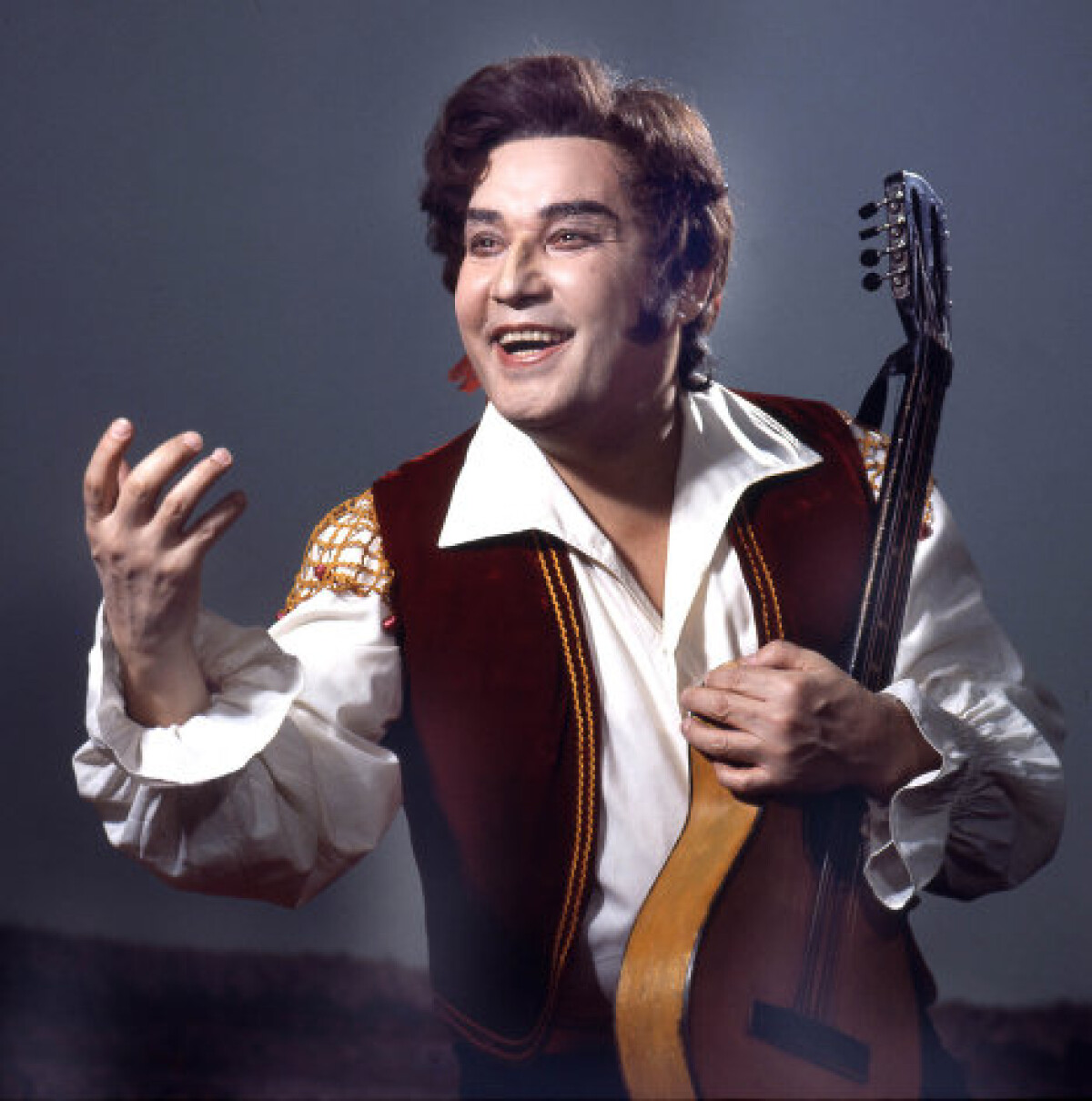
Yermek Serkebayev performed the role of Figaro in Gioachino Rossini’s “The Barber of Seville” at the Abai Kazakh State Academic Opera and Ballet Theater from the 1950s onward. Photo credit: e-history.kz
A lyrical baritone, educator and People’s Artist, Serkebayev played a defining role in shaping Kazakh opera and vocal performance in the 20th century. His interpretations of Kazakh folk songs, classical opera and chamber music helped bring national music to broader international audiences, while his decades of work on stage and in the classroom left a lasting mark on generations of performers.
A voice that defined an era
Born in Petropavl on July 4, 1926, Serkebayev moved with his family to Almaty in 1937. His father, Bekmukhamed Serkebayev, was a teacher, writer, poet and playwright, and one of the first members of the Union of Writers of Kazakhstan and a member of the Alash party. His mother, Zylikha Serkebayeva, was a primary school teacher.
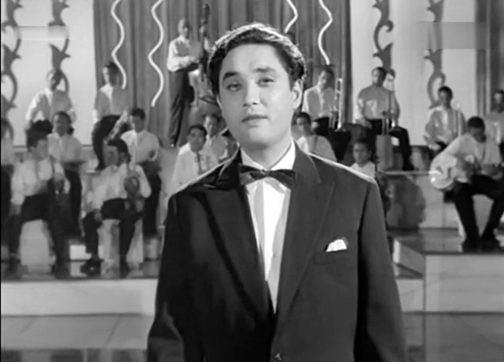
Serkebayev appeared in the 1961 film “The Song Calls”. Photo credit: russian-retro.com
Music entered Serkebayev’s life early. His first instrument was the balalaika, a Russian traditional musical instrument, and by 15, he had entered formal music training. What followed was a career that made him one of the defining voices of 20th-century Kazakh classical music.
He studied violin at the Almaty Music College and later graduated from the Kurmangazy Kazakh Conservatory, where he trained as a vocalist under professor Aleksandr Kurganov.
He began his career at Kazakh Radio and made his stage debut in the 1940s. In 1947, he joined the Abai Kazakh State Academic Opera and Ballet Theater as a soloist, beginning a career that would make him one of the most recognizable voices in Kazakh music.
Over the decades, Serkebayev performed leading roles in Kazakh, Russian, and Western European operas. He became especially renowned for his portrayal of Figaro in Gioachino Rossini’s “The Barber of Seville,” a role that earned him widespread acclaim across the Soviet Union and abroad. Soviet opera stars Dmitry Hnatyuk and Muslim Magomayev reportedly praised him as one of the finest baritones of his generation and among the best Figaros in the Soviet opera tradition.
His repertoire also included Abai in the opera “Abai” by Akhmet Zhubanov and Latif Khamidi, as well as major roles in works by Yevgeny Brusilovsky, Mukan Tulebayev, and Yerkegali Rakhmadiyev, among other Kazakh composers. Alongside opera, Serkebayev was known for his performances of Kazakh folk songs, romances and chamber pieces, which he brought to audiences with both technical precision and emotional depth.
Ambassador of Kazakh musical culture
Serkebayev’s career extended well beyond Kazakhstan. He toured internationally in Belgium, China, Cuba, Finland, France, India, Indonesia, Pakistan, Romania, Sweden, Switzerland, and helped introduce Kazakh vocal art to foreign audiences during the Soviet period.
He also became an influential figure in musical education and cultural life. Beginning in 1973, he taught at the Kazakh conservatory, where he trained future generations of singers. He became a professor in 1982. From 1988, he served as chairman of the Union of Musical Figures of Kazakhstan and was a member of the presidium of the International Union of Musical Figures in Moscow.
In addition to his work as a performer and teacher, Serkebayev frequently served as a juror and jury chair at major vocal competitions, including the Tchaikovsky International Competition and the Glinka Competition.
He died in Almaty on Nov. 16, 2013, and was buried at Kensai Cemetery.
A nationwide tribute
Kazakhstan’s centennial celebrations for Serkebayev include a series of cultural events highlighting his life and work.
The 100th anniversary of Serkebayev has also been included in the list of anniversaries commemorated under UNESCO, recognizing his contribution to global cultural and artistic heritage.
One of the central events of the commemorative year took place in Astana on July 3, when the capital hosted the “Voice of the Century” musical evening dedicated to the anniversary.
Deputy Prime Minister and Minister of Culture and Information Aida Balayeva read out a congratulatory letter from President Kassym-Jomart Tokayev to participants of the anniversary concert.
In his message, Tokayev described Serkebayev as a unique talent who made an invaluable contribution to the development of Kazakhstan’s national arts. He noted that the singer performed leading roles in Kazakh and international operas with exceptional skill, elevating them to the heights of classical music and promoting Kazakh culture on some of the world’s most renowned stages.
“Serkebayev was an outstanding singer and a wise mentor. For many years, he worked fruitfully at the Kurmangazy Kazakh National Conservatory, where he trained numerous students and established his own distinctive vocal school. His artistic excellence and noble character remain an example for the younger generation. Therefore, preserving the memory of such a son of the nation as Yermek Serkebayev and promoting his legacy is our shared responsibility,” the president’s message said.
The evening featured members of Serkebayev’s family, including Murat Serkebayev, Baigali Serkebayev and Zhamilya Serkebayeva, whose participation underscored the continuity of generations and paid tribute to the legacy of the legendary performer.
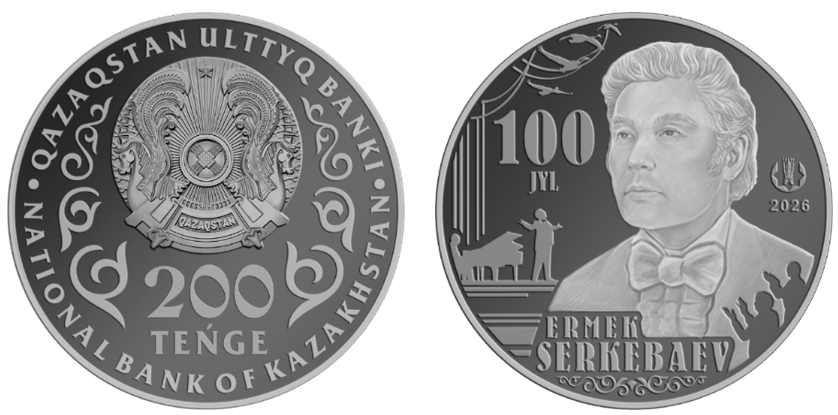
The National Bank of Kazakhstan has issued a commemorative coin marking Serkebayev’s 100th anniversary. Photo credit: nationalbank.kz
The centennial program has included exhibitions dedicated to Serkebayev’s life and work. On June 26, the Gogol Library hosted “Legend of the Stage – Yermek Serkebayev,” an exhibition featuring archival documents, rare photographs, books, vinyl records and recordings of the singer. Earlier, on May 28, the Magzhan Zhumabayev Akmola Regional Universal Scientific Library organized a slide-gallery exhibition devoted to his creative path.
The National Bank of Kazakhstan has also issued a commemorative coin marking Serkebayev’s 100th anniversary as part of its Outstanding Events and People series. The 200-tenge coin, made of cupronickel, was released in a limited run of 7,000 pieces.
The celebrations will continue on July 4, when Astana Opera hosts a tribute concert titled “Uly Dalanyn Uly Dauysy” (The Great Voice of the Great Steppe) in honor of Serkebayev’s centenary.
The concert is expected to be one of the key highlights of the theater’s Operalia festival this season, which has been dedicated to anniversaries of major figures in Kazakh classical music.
A special moment of the program will be the performance of “Paraphrase on the Theme of Figaro” for string orchestra by Serkebayev’s son and composer Almas Serkebayev, further linking the concert to one of the singer’s most iconic stage roles.
