
ASTANA – A young Akhal-Teke filly named Akzhan, born to purebred horses Ganatly and Tabys, has attracted widespread attention in Kazakhstan for her rare isabelline coat and has become an emerging cultural symbol in Astana.
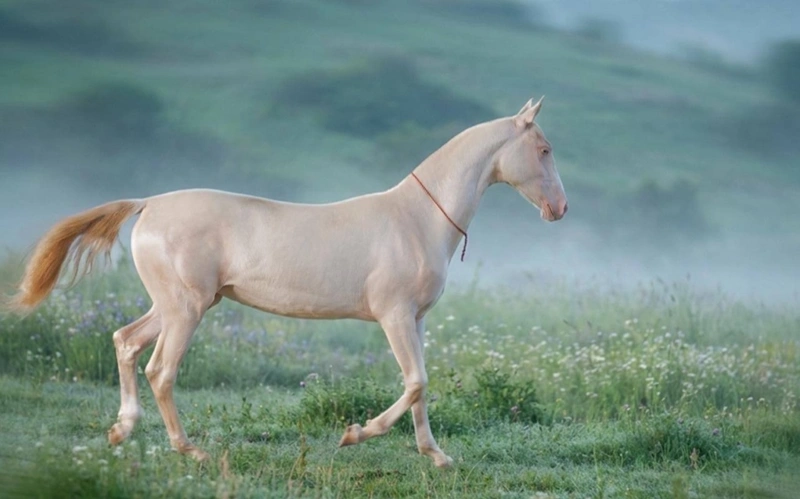
Photo credit: Kazinfom
Born on March 30, 2025, Akzhan belongs to one of the rarest color varieties of the Akhal-Teke breed, with only around 3% of the horses displaying the distinctive pale golden coat. The fine structure of her hair reflects light, creating the metallic sheen for which the breed is renowned. Akzhan is also a favorite of President Kassym-Jomart Tokayev.
In Kazakh tradition, horses with this coloring have long been associated with prosperity, good fortune and nobility.
Horse at the center of Kazakh civilization
For centuries, the horse has occupied a central place in Kazakh culture, shaping transportation, trade, warfare and daily life across the Great Steppe.
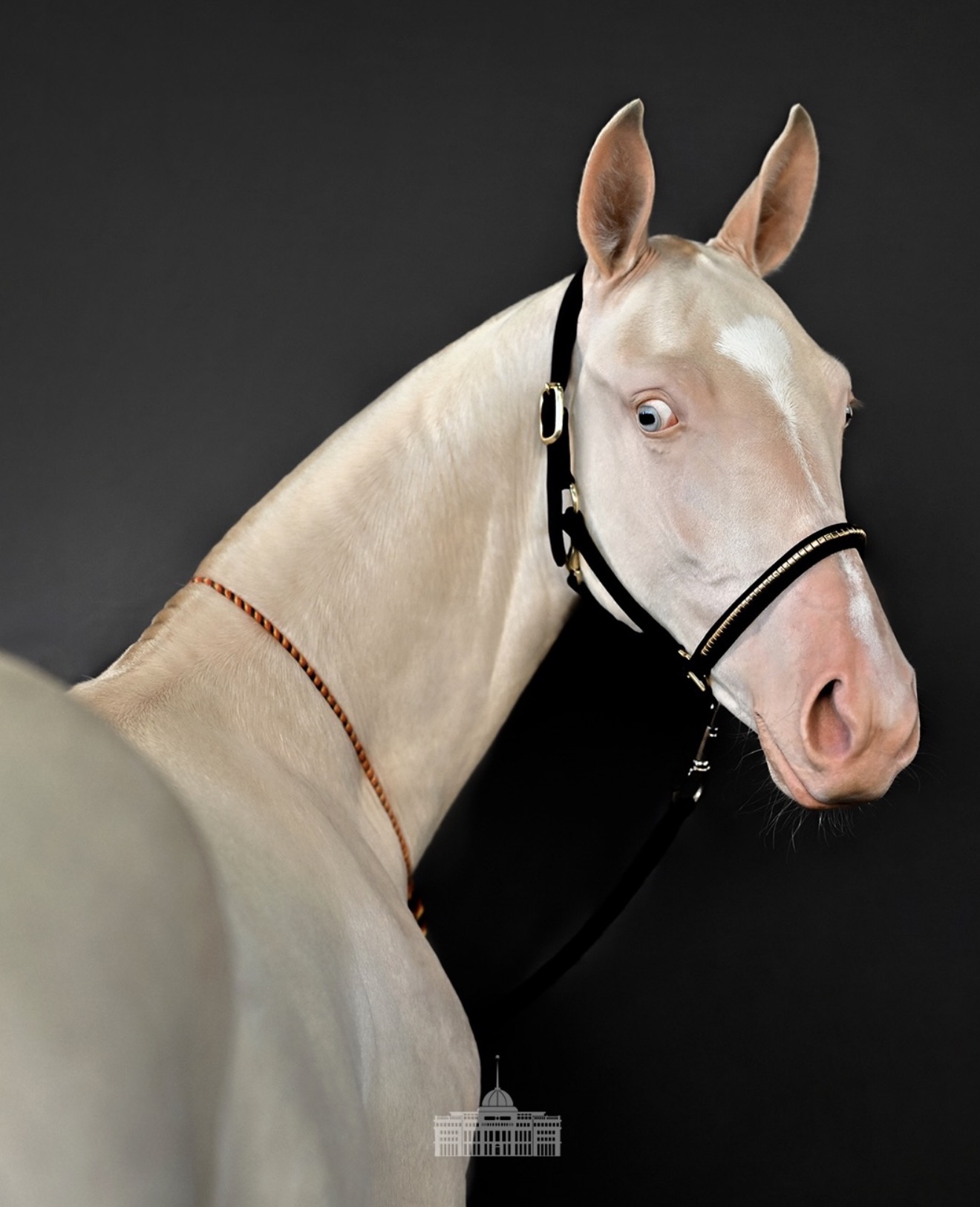
Akzhan is one of the rare Akhal-Teke horses with a color variety seen in only around 3% of the breed. Photo credit: Akorda
“The horse has always been more than an animal for the Kazakh people. It formed the foundation of our civilization, accompanied nomads throughout their lives and became a source of strength and inspiration,” said cultural expert Assel Nikambekova.
According to Nikambekova, horses also occupy an important place in Turkic mythology and in Kazakhstan’s historical identity.
“The Botai archaeological culture established the horse as one of the defining symbols of Kazakh civilization,” she said.
Archaeological discoveries at the Botai settlement in northern Kazakhstan, dating to the fourth millennium B.C., provide some of the earliest evidence of horse domestication. Many researchers believe that the inhabitants of present-day Kazakhstan were among the first to domesticate horses for riding and practical use.
The development transformed human mobility, expanded trade routes and played a significant role in the emergence of nomadic civilizations across Eurasia.
Petroglyphs found throughout Kazakhstan similarly depict horses at the center of hunting scenes, rituals and battles, reflecting their importance in the worldview of ancient steppe societies.
Blending heritage and modern identity
As a descendant of the Akhal-Teke breed, sometimes referred to as the heavenly horse, Akzhan has become a symbol for some observers of the connection between Kazakhstan’s nomadic heritage and its modern identity.
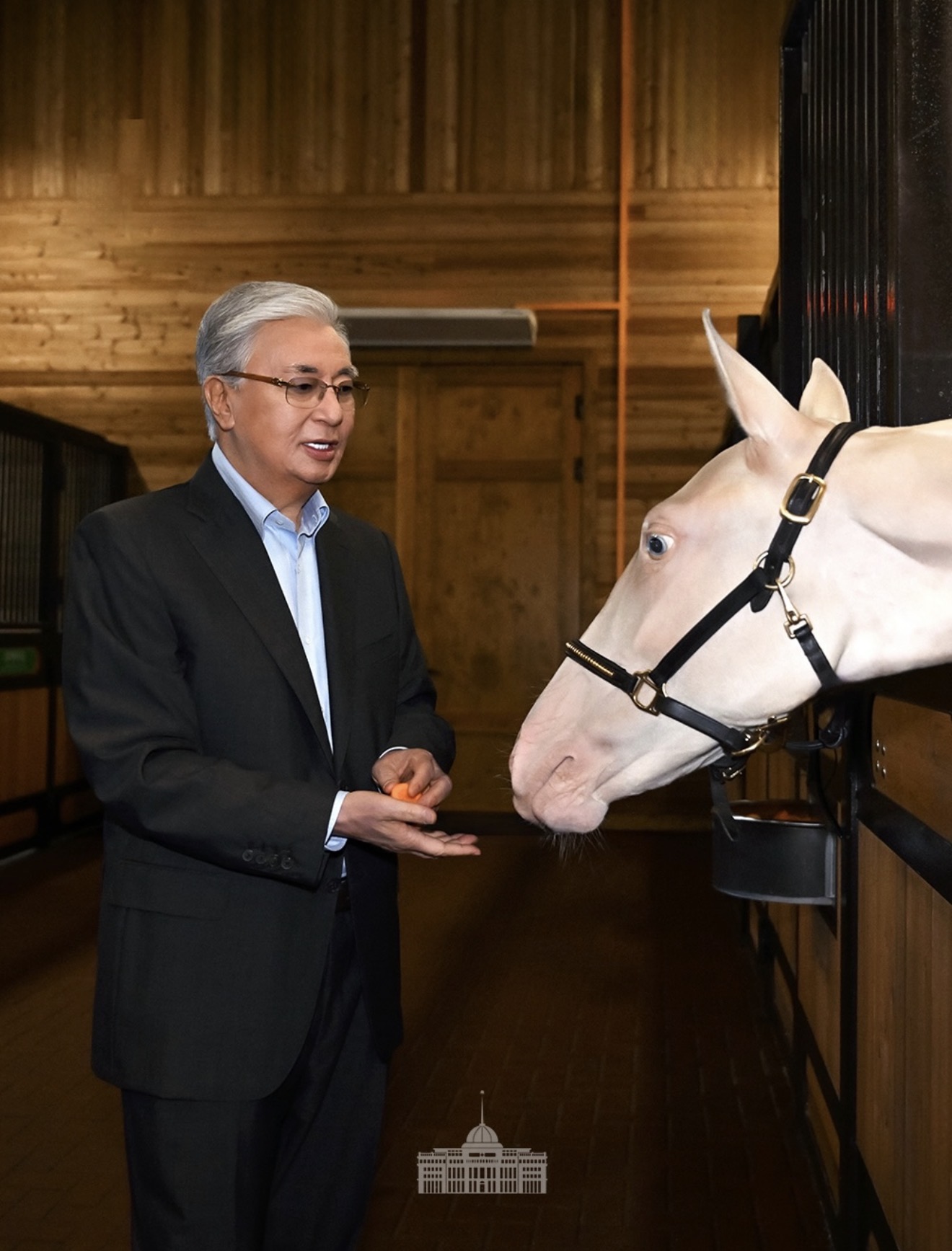
Akzhan, a favorite of President Kassym-Jomart Tokayev. Photo credit: Akorda
Her name, which translates as pure soul, carries symbolic meaning associated with honesty, integrity, harmony and respect for society.
Urban planner Adiya Karsybek said cities develop stronger identities when residents connect emotionally with cultural symbols rather than architecture alone.
“It is important for our capital’s identity to be built not only around iconic buildings but also around stories, traditions and symbols with which people can emotionally connect,” she said.
According to Karsybek, urban symbols emerge naturally through public acceptance rather than official promotion.
“Such symbols cannot be imposed from above. They become symbols only when people themselves embrace them as part of the city’s culture,” she said.
Images of Akzhan have circulated widely on Kazakh social media, where users have shared photographs and comments about the young filly. Karsybek noted that this growing public engagement illustrates how cultural symbols can strengthen people’s connection to a city.
A symbol of freedom and responsibility
The image of a rider on horseback has long symbolized freedom in Kazakh culture. Today, however, that idea is increasingly interpreted not simply as unrestricted independence but as the ability to make responsible choices.
Some cultural observers see the relationship between horse and rider as a reflection of modern partnership. The rider understands when to give the horse freedom and when to gently guide its direction, while the horse retains its own character, strength and independence. They said that this balance mirrors the relationship between citizens and the state, where cooperation is built on trust and mutual respect rather than control.
In that context, Akzhan’s image has taken on broader cultural significance. Beyond representing Kazakhstan’s equestrian heritage, the filly has come to symbolize values such as responsibility, care for shared spaces and respect for others.
Her image reflects the country’s effort to preserve its nomadic heritage while embracing modernization. In this sense, Akzhan has become more than a remarkable horse. She symbolizes a nation seeking to build its future without losing sight of the traditions that shaped it.
The article was originally published in Kazinform.
