
ASTANA – Kazakhstan and Germany are seeking to expand cooperation across key strategic sectors, with Prime Minister Olzhas Bektenov and German Minister for Economic Affairs and Energy Katherina Reiche, discussing investment, industry, energy, transport logistics and critical minerals on June 29 in Astana.
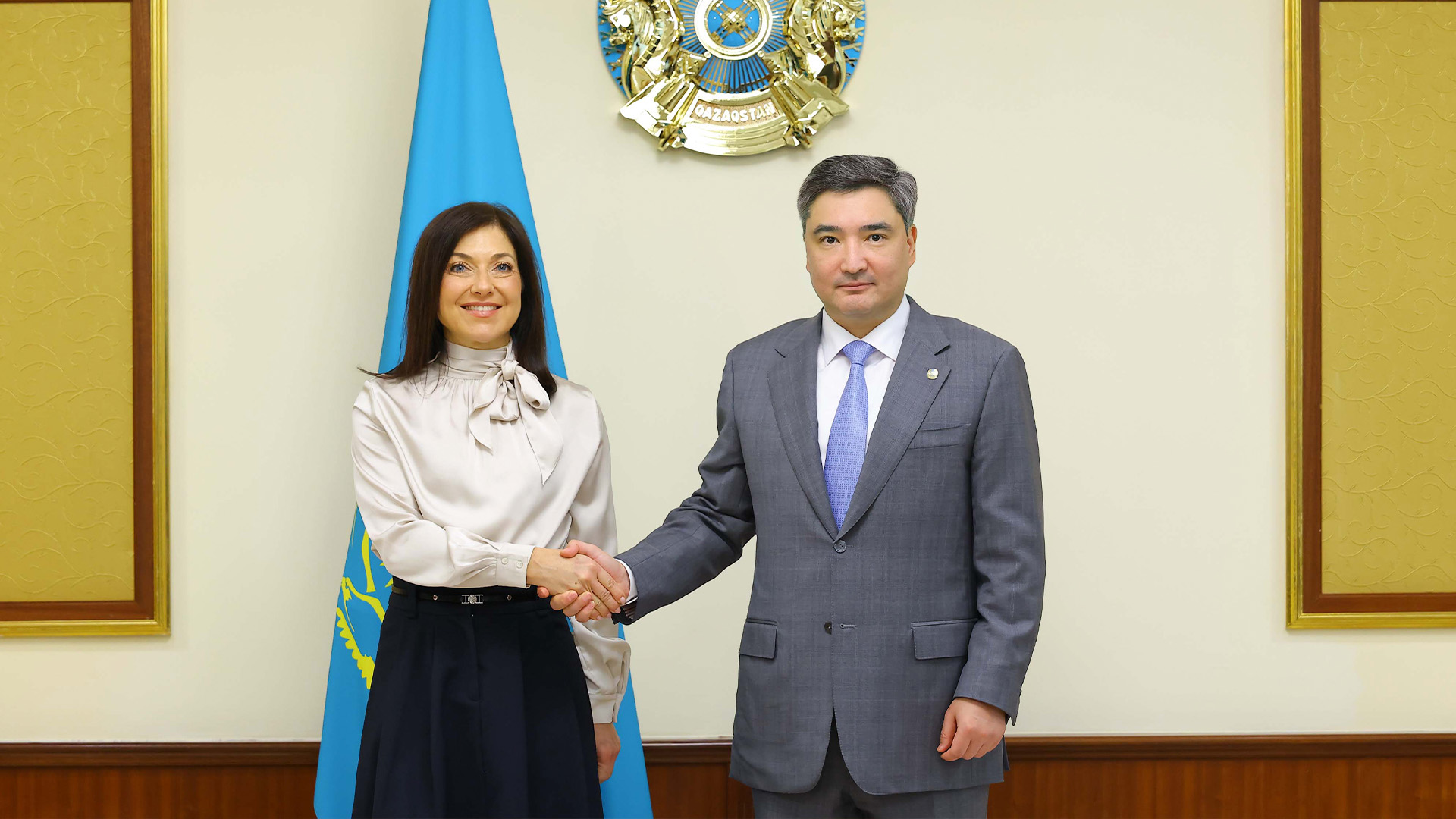
Reiche and Bektenov. Photo credit: primeminister.kz
“For Kazakhstan, Germany is one of its key trade, economic and investment partners in the European Union. President Kassym-Jomart Tokayev attaches great importance to cooperation with Germany,” said Bektenov.
According to him, in 2025, bilateral trade reached $4.4 billion, up 9.5% from the previous year. Trade reached $1.4 billion between January and April, up 5.9% from the same period in 2025. Since 2005, Kazakhstan has attracted around $7.8 billion in German investment. Last year, investment from Germany rose by 28.5% to $700 million.
“Looking ahead, our task is to transform traditional trade and investment cooperation between our countries into more advanced industrial and technological partnership. We are interested in taking industrial cooperation to a new level through production localization, technology transfer and the training of highly qualified personnel,” Bektenov said.
The officials pointed to the experience of CLAAS and Horsch in Kazakhstan’s agricultural machinery sector as evidence that phased production localization can work, adding that the model could be expanded to other industries.
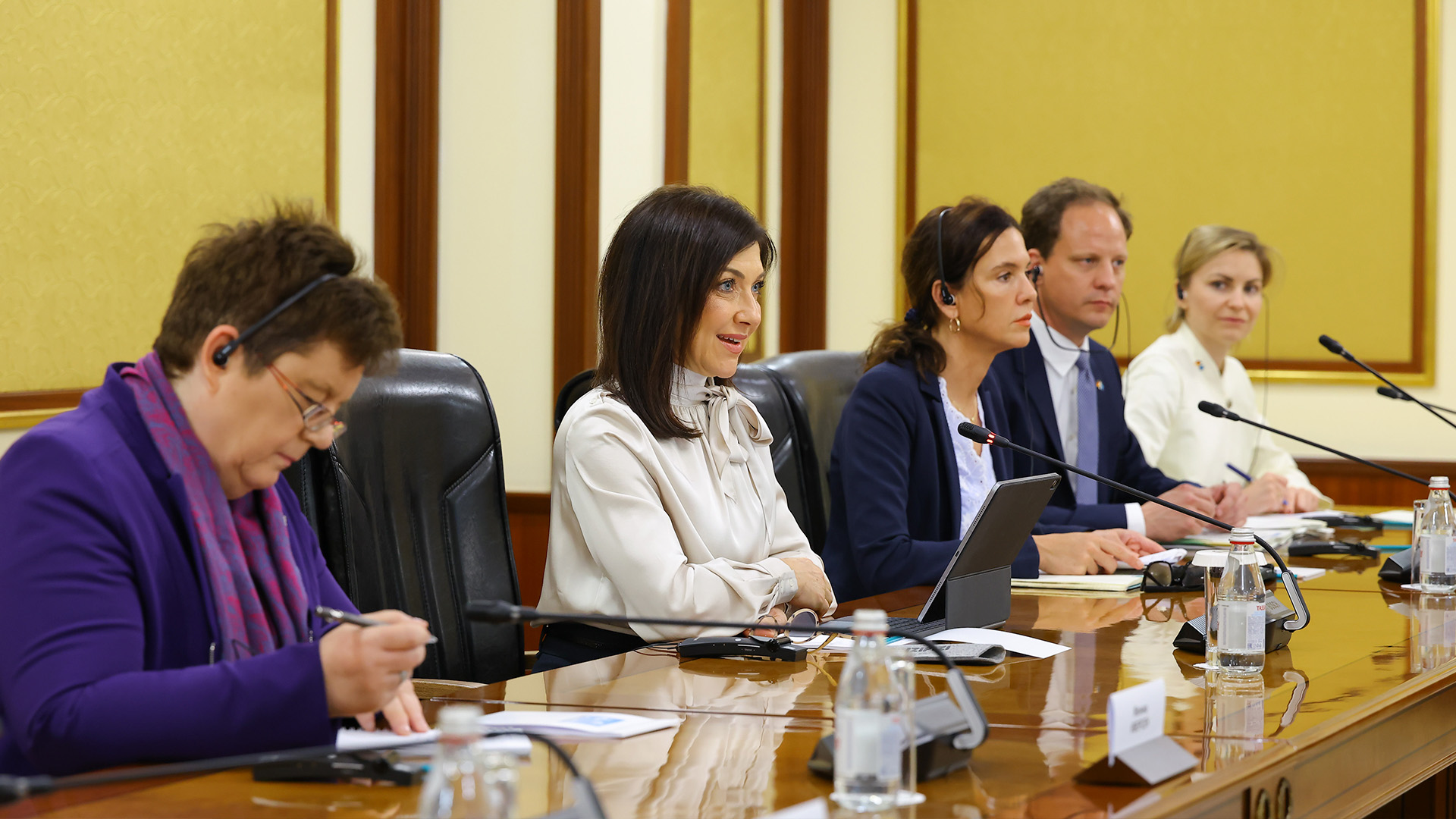
Kazakhstan is Germany’s largest trade partner in Central Asia. Photo credit: primeminister.kz
Reiche, who is the first German economy minister to visit Kazakhstan in 19 years, commended the development of bilateral ties and said there is ample room to expand it.
“Supply security requires diversification and concrete projects, not declarations of intent. In 2025, Kazakhstan was our fourth-largest oil supplier, delivering 10.4 million tons. A future-ready industry in Germany needs raw materials that are mined in Kazakhstan. Kazakhstan needs German capital and German technology to create more value added domestically. This is not about one-sided supply contracts, but about a long-term partnership with clear benefits for both sides,” said Reiche, as quoted by her press office.
As a strategic partner, particularly in the energy and raw materials sectors, Kazakhstan can help strengthen Germany’s economic resilience and supply security. Deeper trade relations, new industrial value chains and the complementary strengths of both countries are expected to support shared growth and economic momentum.
Meeting with Kazakhstan’s Minister of Energy Yerlan Akkenzhenov, Reiche discussed expanding technological partnership and investment in infrastructure, reported the Kazakh ministry’s press service.
Akkenzhenov and Reiche explored in detail opportunities for further supplies of Kazakh oil to Germany to meet production demand from key enterprises. The ministry said export logistics are being adjusted in a timely manner to current macroeconomic conditions. To fulfill commercial agreements with partners, Kazakhstan is flexibly redirecting flows to the Caspian Pipeline Consortium system and using reserve transit routes.
Akkenzhenov commended how advanced European engineering is being integrated into Kazakhstan’s energy sector, with Siemens Energy equipping new generating facilities in Almaty and the Turkistan Region with modern gas turbines in line with approved schedules.
The ministers also discussed the implementation of the Hyrasia One project, developed by Svevind Energy in the Mangystau Region. The planned platform is expected to produce up to two million tons of green hydrogen annually, covering up to 20% of the European Union’s import needs over the next decade.
