
ASTANA – The International Energy Agency’s (IEA) latest monthly report warns that global oil markets are entering a period of sharp volatility, with demand expected to decline and supply disruptions continuing to reshape trade flows. For Kazakhstan, Central Asia’s largest oil producer, the report is particularly relevant as the country works to restore output after disruptions at major fields and maintain its role in global energy supply.
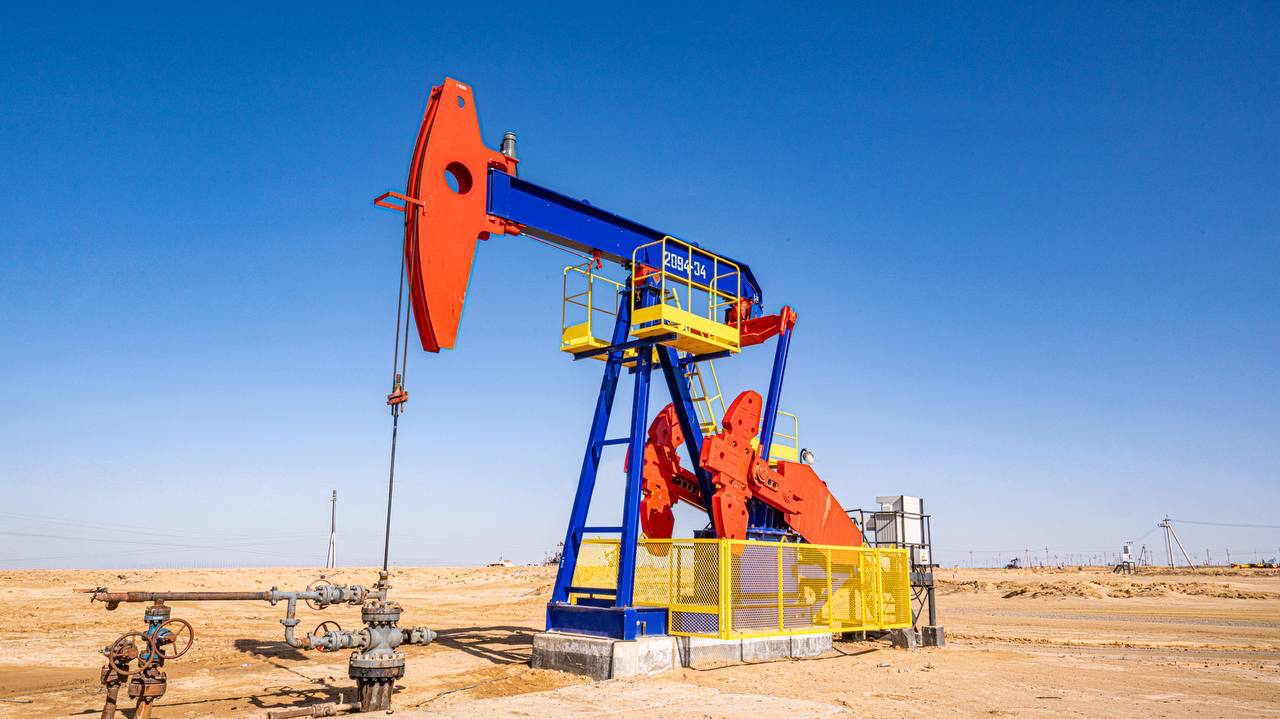
The country’s three largest projects, Tengiz, Kashagan and Karachaganak, remain the backbone of Kazakhstan’s oil industry. Photo credit: KazMunayGas
According to the IEA, global oil demand is forecast to decline by 420,000 barrels per day in 2026 to 104 million barrels per day. The agency said this is 1.3 million barrels per day lower than its pre-conflict forecast. The biggest fall is expected in the second quarter of 2026, with petrochemicals and aviation among the most affected sectors.
“For now, the steepest losses are seen in the petrochemical sector where feedstock availability is becoming increasingly constrained. Aviation activity is also running well below normal levels, helping to ease some of the pressure on jet fuel prices, which nearly tripled after Middle Eastern exports were cut off. Higher prices, a deteriorating economic environment and demand-saving measures will further weigh on global oil consumption,” reads the report.
According to the IEA, global oil supply fell by 1.8 million barrels per day in April to 95.1 million barrels per day. The IEA links this to disruptions in the Middle East and reduced flows through key export routes. At the same time, producers outside the Middle East have increased output and exports, with Kazakhstan named among the countries contributing to higher Atlantic Basin crude flows.
“Global supply losses have been partly offset by higher flows from the Atlantic Basin, with exports up 3.5 mb/d [million barrels per day] since the start of the war [in the Middle East]. The United States, Kazakhstan, Russia and Venezuela provided most of the increase,” reads the report.
For Kazakhstan, this creates both opportunities and risks. Higher prices and tighter supply can support export revenues, but operational disruptions and export-route dependence remain serious vulnerabilities. Kazakhstan exports most of its crude through the Caspian Pipeline Consortium route to the Russian Black Sea port of Novorossiysk, making infrastructure stability central to the country’s oil strategy.
The latest official data from Kazakhstan’s Energy Ministry shows that oil and gas condensate production reached 19.7 million tons in January–March 2026, or 80.2% of the level recorded in the same period of 2025. Oil exports over the same three months stood at 15.3 million tons, or 78.5% year-on-year.
The decline was linked to earlier disruptions affecting the Caspian Pipeline Consortium and the Tengiz field. Tengiz remains Kazakhstan’s largest oilfield and a key source of production growth following its major expansion project. Reuters reported that Kazakhstan’s oil and gas condensate production averaged 2.1 million barrels per day in May, down from 2.16 million barrels per day in April, after a temporary incident at Tengiz. Output was later restored to around 290,000 tons per day, or approximately 2.2 million barrels per day.
Maintenance at Kashagan is another factor to watch. Energy Minister Erlan Akkenzhenov said on May 28 that maintenance at the giant offshore field had not yet started and shareholders were still discussing the schedule. Reuters, citing sources, reported that work at Kashagan, which has a capacity of around 400,000 barrels per day, could begin in early June and last more than 30 days. Maintenance at Karachaganak is also planned this year, though the minister said it would be minor and should not significantly affect production.
The government is also looking beyond short-term production figures. According to the Energy Ministry, Kazakhstan plans to develop new hydrocarbon fields and strengthen its gas resource base. At Karachaganak, work continues on a sixth sour gas re-injection compressor, which is expected to help maintain annual oil output at 10–11 million tons.
The IEA report shows why these steps matter. Although global demand weakens, supply losses and geopolitical risks are keeping markets tight.
“As a result, the oil market remains in deficit until the final quarter of the year. With global oil inventories already drawing at a record clip, further price volatility appears likely ahead of the peak summer demand period,” said the report.
For Kazakhstan, the challenge will be to capitalize on stronger demand for alternative crude supplies while maintaining stable production and export flows. The performance of major projects such as Tengiz, Kashagan and Karachaganak, as well as the reliability of export routes including the CPC will remain critical to Kazakhstan’s ability to benefit from shifting global trade flows.
