
ASTANA – Centuries before modern borders took shape across Eurasia, Kipchak nomads from the Kazakh steppe played a role in the rise of medieval Georgia, a little-known chapter of shared history explored by Kazakh writer Madi Raimov and historian Zhaksylyk Sabitov during a recent event organized by QazaqGeography.
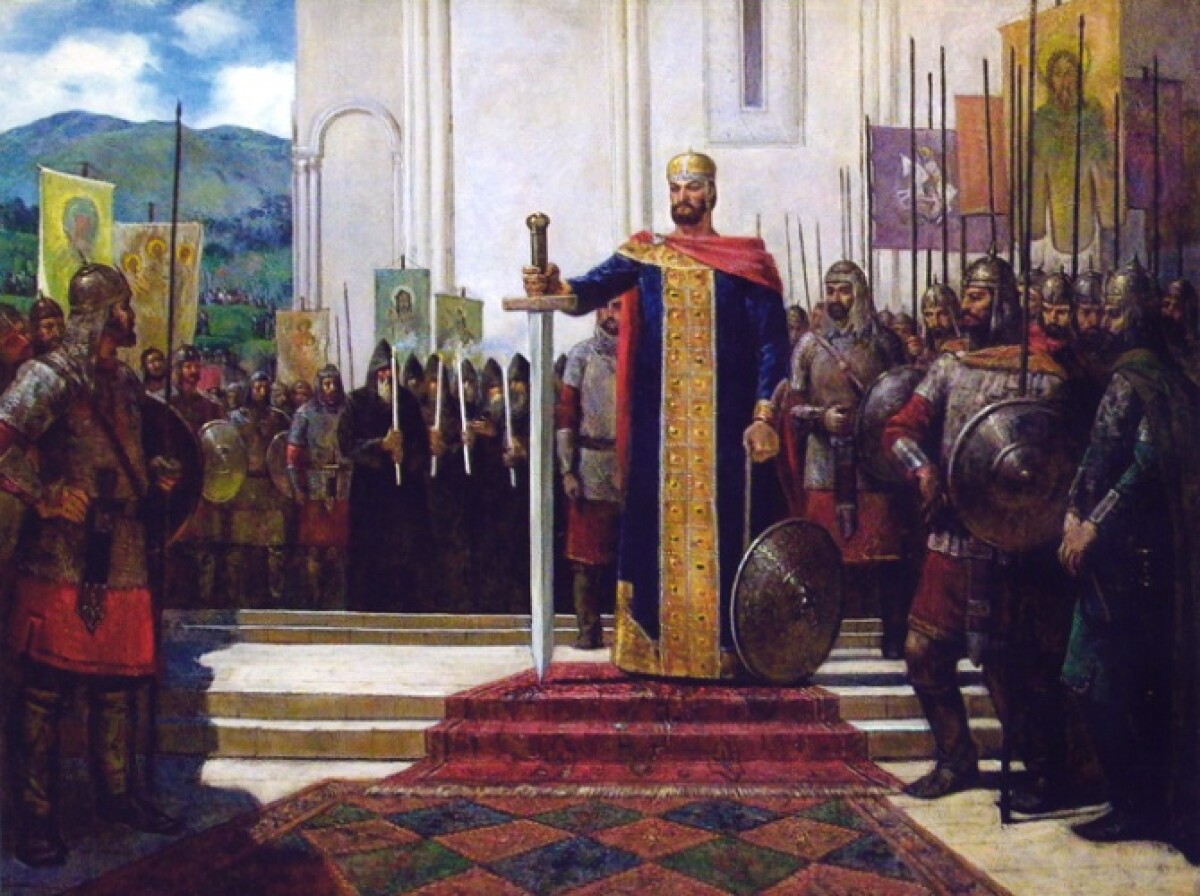
Photo redit: e-history.kz
The event coincided with Georgia’s Independence Day celebrations on May 26. The speakers explored key moments in Georgian history, including the alliance between the Kipchaks, a Kazakh tribe, and King David IV of Georgia, also known as David the Builder, who ruled from 1089 to 1125.
Raimov highlighted the role of Turkic peoples in supporting Georgian statehood throughout history, including during the Battle of Didgori in 1121 and through financial assistance provided to Georgia in the 1990s.
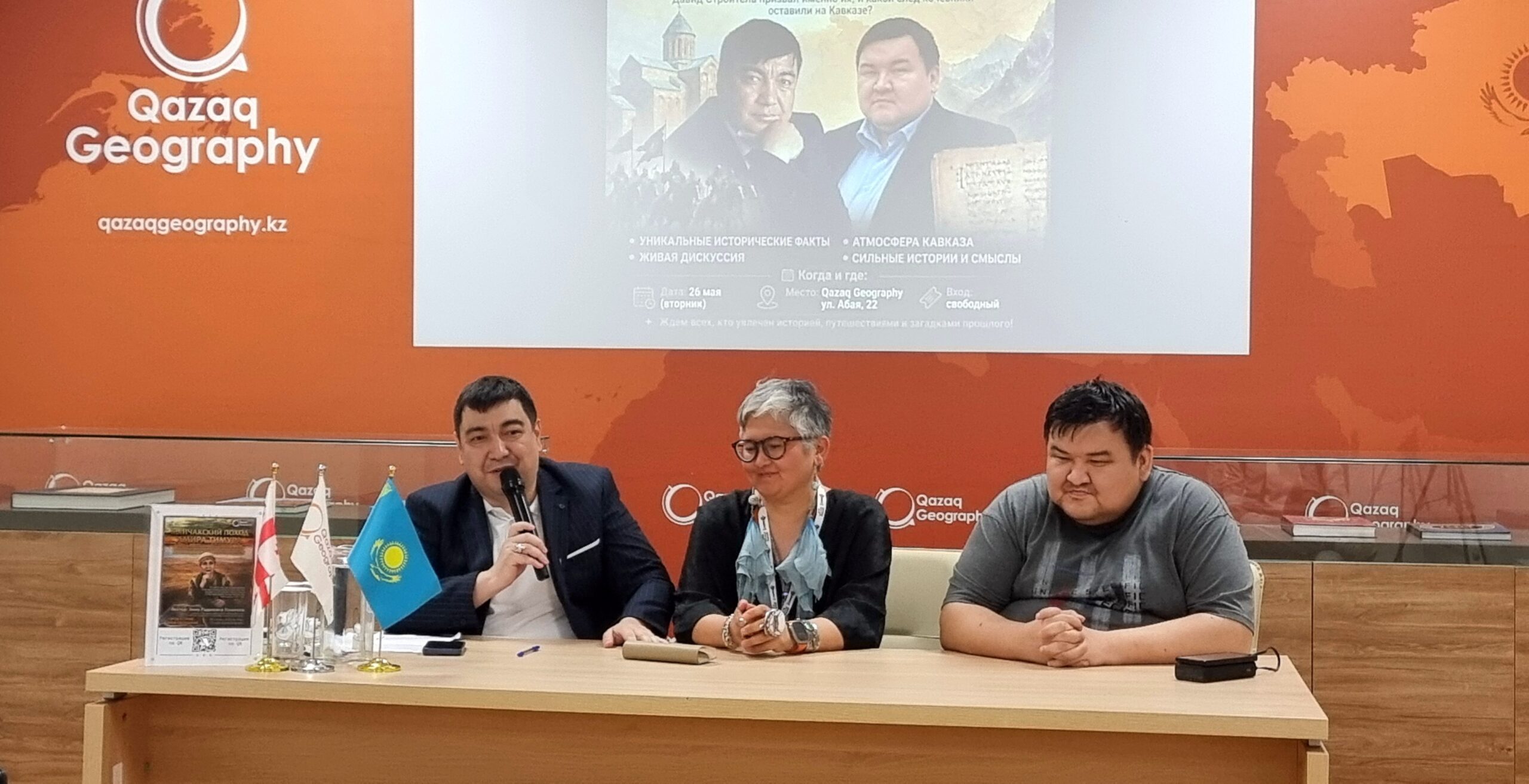
From L to R: Kazakh writer Madi Raimov, guide and member of the Astana Guides Club Assel Shulenbayeva and historian Zhaksylyk Sabitov during May 26 event. Photo credit: The Astana Times
“Turkic nations played a key role in the salvation and establishment of Georgian statehood. That is why I believe Kazakh-Georgian ties are very close,” Raimov said.
He noted that in 1118, around 40,000 Kipchak families crossed the North Caucasus mountains and settled in present-day Georgia under the leadership of Kipchak Artyk Khan.
According to Raimov, King David IV strengthened his alliance with the Kipchaks by marrying Gurandukht, the daughter of Artyk Khan.
“Before asking the khan for military support, David asked for his daughter’s hand in marriage. Thus, Gurandukht became the wife of David IV, and it can be argued that Queen Tamar had Kipchak ancestry,” Raimov said.
From Desht-i-Kipchak to the Caucasus
Sabitov began by outlining the broader historical context. In the 11th century, he said, the Kipchak Khanate emerged as a major power across the Eurasian steppe, centered in present-day Kazakhstan. The state united nomadic warrior tribes that expanded southward and westward across the region.
“It is believed that the Kipchaks crossed the Volga River at the end of the 10th and beginning of the 11th centuries. They later reached the borders of Kyivan Rus and established the western frontier of Desht-i-Kipchak,” Sabitov said.
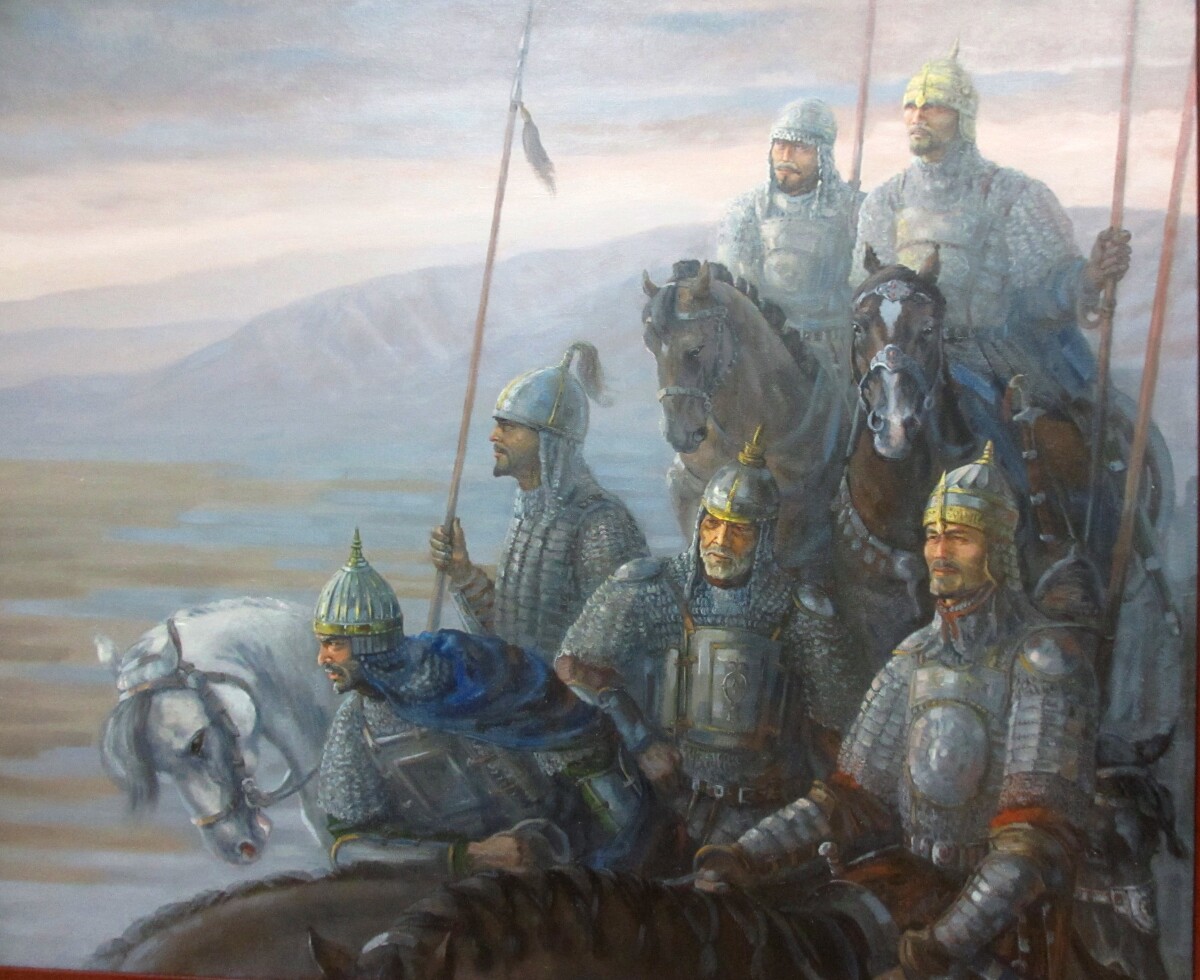
Photo credit: e-history.kz
The strength of the Kipchak Khanate enabled it to continue military campaigns across Eurasia, yet the state was undergoing fragmentation and gradual disintegration. Geographically, almost the entire territory of modern Kazakhstan was the domain of the Kipchak possessions, which was called Desht-i Kipchak (Steppe of the Kipchaks). In different parts of Desht-i-Kipchak, local rulers were increasingly asserting authority over their assigned steppe territories. These rulers established their own dynasties.
“One of the most powerful dynasties before the Mongol invasion was founded by Khan Otrok, who took part in the Rus-Kipchak wars. Artyk Khan, also known in some sources as Atrak, belonged to this dynasty through his father, the powerful Sary Khan, or Sharukhan,” Sabitov said.
In 1117, the army of Artyk Khan captured the North Caucasian steppes, including the city of Belaya Vezha, originally built by the rulers of the Khazar Khaganate and once serving as the residence of the Khazar khagans. From that point, Artyk Khan and his brother Saryzhan ruled the territory jointly.
Military alliance and shared legacy
“At that time, Georgia was a fragmented state threatened by enemies on all sides. During this difficult period, a young king named David ascended the Georgian throne. He would later become known as David the Builder, the founder and architect of the Georgian kingdom. He sought a strong ally, and the choice was obvious – the Kipchaks,” Sabitov said.
He noted that David IV first established a dynastic alliance through marriage before requesting military assistance against the Seljuks and Persians.
“At the invitation of King David IV, Khan Artyk and his people crossed the mountains and arrived in Georgia. Around 40,000 families, or nearly 200,000 people, migrated from the steppe to the Caucasus,” he said.
According to Sabitov, the Kipchaks became the foundation of a powerful professional army that helped strengthen Georgian statehood.
“This was not free assistance. Historical sources mention a special Kipchak tax in Georgia, which was used to maintain the army, including uniforms and gifts,” Sabitov said.
The speakers emphasized the significance of the Battle of Didgori on Aug. 12, 1121, when the forces of David IV defeated the Seljuk army in a decisive victory that marked the revival of the Georgian state.
“Several sources give various figures for the number of Kipchaks and Georgians who fought in the battle. However, the main point is that they achieved victory together,” Sabitov said.
Following the victory, David IV regained Tbilisi and strengthened Georgian statehood with Kipchak support. However, after the death of ruler of Kiev Vladimir Monomakh in 1125, Artyk’s brother Saryzhan called him back to the steppe.
Sabitov recounted a legend connected to Artyk’s return. According to the story, Saryzhan sent a musician named Orev to Georgia to persuade Artyk to come home. Orev performed songs in the Kipchak language, awakening Artyk’s nostalgia. He later pulled a sprig of wormwood, known in Kazakh as jusan, from his robe. The scent of the plant reminded Artyk of his homeland and convinced him to return to the steppe.
