
The month-long 11th Review Conference to the Nuclear Non-Proliferation Treaty concluded without a consensus-based outcome document on May 22, continuing the weight of two prior “failed” attempts and extending the next five-year cycle as deteriorating.
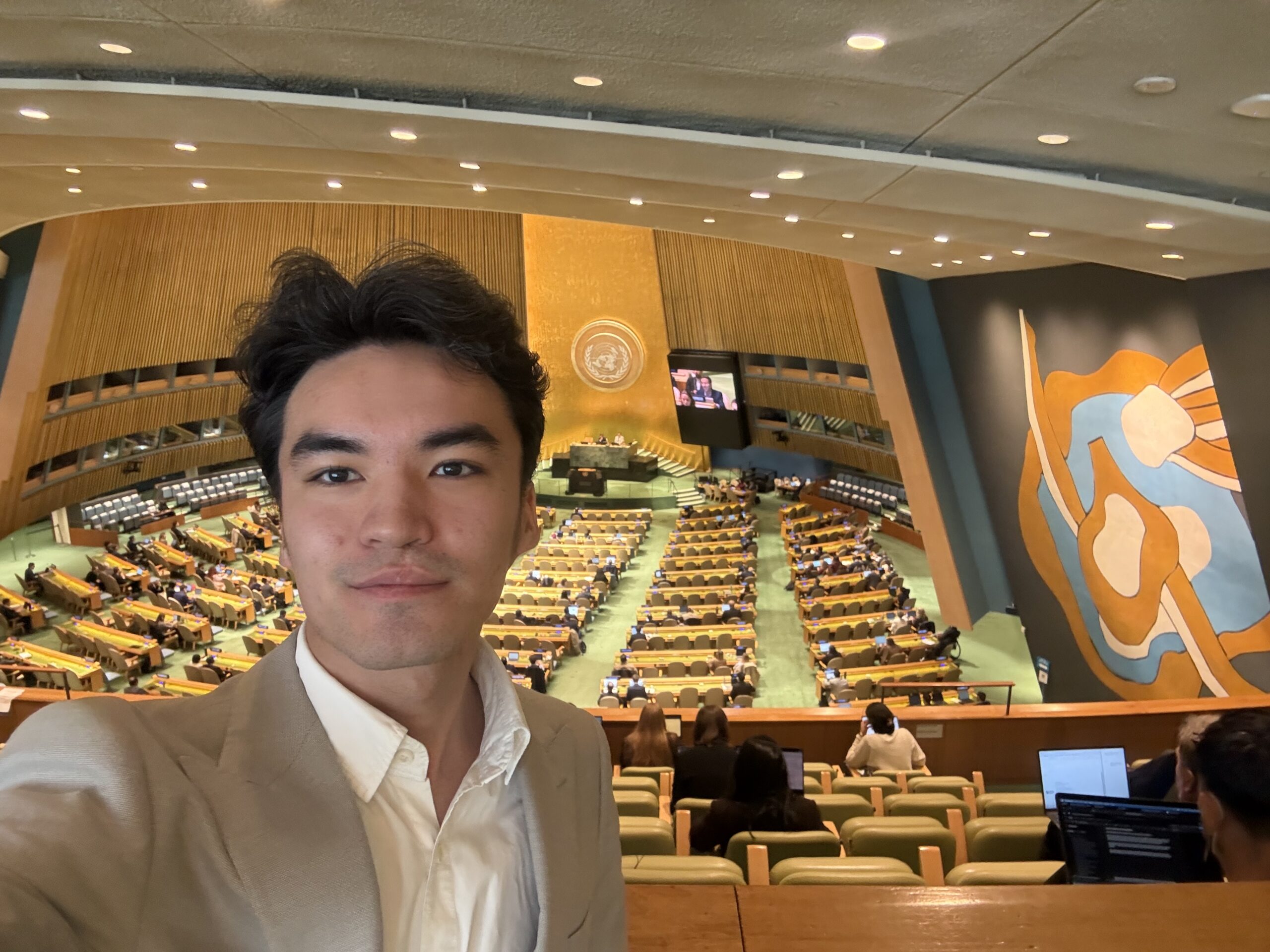
Yerdaulet Rakhmatulla, a Kazakh youth disarmament advocate and alumnus of the UN Youth4Disarmament Forum. Photo credit: personal archives
While observing the general debates as a Youth4Disarmament Forum alum during the first week at the UN Headquarters, I already noticed tensions were high. In the final week, despite a month of intensive consultations to prevent gridlock by navigating the language of the text, the review ended with states rejecting the final version.
This year’s Conference President, Amb. Hung Viet told delegates early at the press conference that he would strike to make all parties left “equally unhappy”. The structural fault lines from arms control and nonproliferation erosion to resumption of nuclear testing and attacks on nuclear facilities and disarmament deficit put another layer of complexity on consultations.

Photo credit: Quoc Thai Ly.
Chairing the 20th anniversary of the Treaty of Semei with the delivery of the CANWFZ (Central Asian Nuclear-Weapon-Free Zone) Joint Statement, inside the conference halls, the Kazakh delegation was active across the NPT’s three main committees, each corresponding to one of the treaty’s core pillars.
Permanent Representative Kairat Umarov chaired the main committee II on non-proliferation, where Kazakhstan joined calls for reduced nuclear weapons roles in military doctrines and for human control over AI-integrated nuclear systems. At the main committee III on peaceful uses of nuclear technologies, it reaffirmed the role of the IAEA’s fully-operated low-enriched uranium (LEU) Bank in global stability, established in Kazakhstan in 2019, and this reference was supported by Canada. The Kazakh representative also described the nationwide referendum on nuclear power as a model of public accountability.
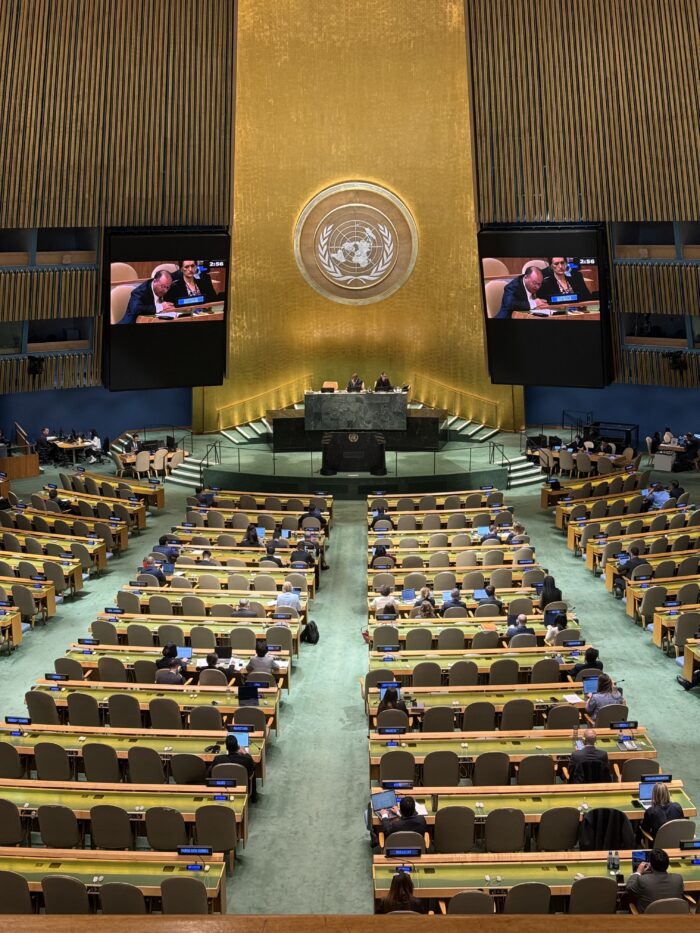
Photo credit: Quoc Thai Ly.
Four iterations of drafts featured the points, welcomed by Kazakhstan and allied states: development and implementation of nuclear (weapons), plus AI and other emerging technologies risk reduction measures, and ongoing cooperation and coordination among the existing nuclear-weapon-free zones. The expressed concern with the continued failure of nuclear-armed states to advance nuclear disarmament was formally expressed throughout the document.
Notably, Kazakhstan’s joint call for an arms control dialogue-building among nuclear-weapon states was supported by China.
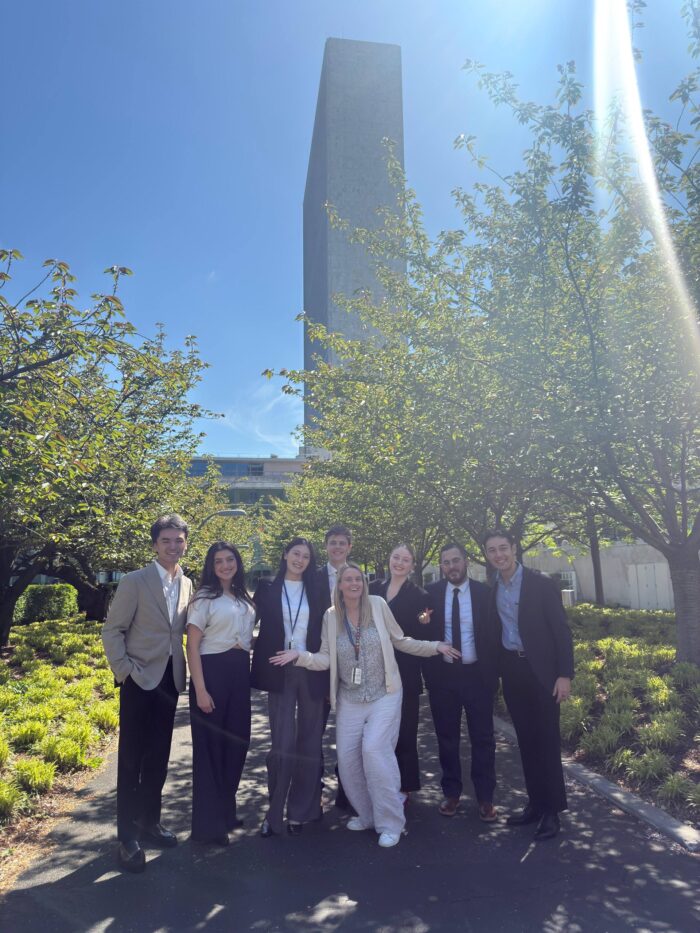
Youth4Disarmament alumni. Credits: The authors personal archive.
At the urging of dozens of states, including Kazakhstan among 37 endorsees of a Joint Statement on Nuclear Testing, the outcome document could have included the call to strengthen and is more detailed in its expressions of support for the CTBT ratification, the 1996 nuclear-test-ban treaty, and its effective monitoring and verification on its 30th anniversary.
The impact of nuclear weapons testing is not sufficiently mentioned in the final form, especially in nations that may not be very progressive on nuclear disarmament but are nonetheless adamantly opposed to nuclear testing. It would be beneficial to demand that text be put here to acknowledge that more than 2,000 tests had long-lasting effects on future generations, the environment, and human health.
Iran’s nuclear activities were one of the conference’s central flashpoints in the first half of the RevCon, dealt with in the zero draft and revised version of the outcome document. This is the first RevCon since the IAEA Board of Governors formally found Iran in noncompliance with safeguards obligations. The U.S. and allies framed this as a central test of NPT credibility, while Iran, together with other states, argued that if Iranian nuclear facilities can be attacked without consequence, confidence in the NPT system erodes. Both the U.S. and Iran could not show greater flexibility and agree to preserve the NPT, and decided to score rhetorical points at this time.
On May 12, President Tokayev proposed transferring Iranian uranium to the IAEA LEU Bank as a possible contribution to resolving the standoff over Iran’s nuclear programme. The proposal landed mid-conference, in week three, as negotiators were still parsing a zero-draft outcome document. It was notable not only for its content but for its timing and its source: summit-level diplomacy, from outside the negotiating room, connecting Kazakhstan’s existing infrastructure to one of the RevCon’s sharpest fault lines.
Throughout the three side events, Kazakh diplomats reinforced the need to balance national security with human security and sustainable development, and the initiative to elevate young people into senior public roles as part of a broader push to expand education storytelling on nuclear issues. Head of Europe Department at the Kazakh Foreign Ministry Zhangeldy Syrymbet delivered final opening remarks at the side event, emphasizing the importance of the upcoming UN International Meeting on Victim Assistance and Environmental Remediation, which will be held later in September.
Kazakhstan noted that, as a nation that has first-hand knowledge of the human and environmental cost of nuclear weapons testing, it recognized the complementary role of the Treaty on the Prohibition of Nuclear Weapons (TPNW) in reinforcing the humanitarian dimension of nuclear disarmament at the beginning of the NPT RevCon.
Kazakhstan, with Kiribati, a fellow co-chair of the TPNW Working Group on Victim Assistance and Environmental Remediation, said the draft should include specific humanitarian and environmental impacts of nuclear weapons, like recognition of the transboundary harm. Additionally, two states supported the work of the Group of Qualified Experts on the renewal of the comprehensive study on NWFZs.
NPT states parties could have demanded that the outcome acknowledge that the TPNW is a complementary measure that its states parties believe fulfills their Article VI obligations and commitments on nuclear disarmament, rather than merely taking note of its existence and keep relying on nuclear sharing. Additionally, it would be beneficial if the NPT RevCon encouraged all states to attend the TPNW’s first Review Conference, which is scheduled for Nov. 30-Dec. 4, 2026, as parties and observers.
Despite the RevCon ending without a consensus for the third consecutive time, Kazakhstan enters the post-RevCon period with a set of concrete commitments to victim assistance, to nuclear energy governance, to treaty bridge-building, that do not depend on the outcome of the vote.
The author is Yerdaulet Rakhmatulla, the UN Youth4Disarmament Forum alumnus and independent international peace and security analyst.
Disclaimer: The views and opinions expressed in this article are those of the author and do not necessarily reflect the position of The Astana Times.
