
ALMATY – Rivers in Kazakhstan became both witnesses and storytellers in “When the River Speaks,” a multimedia exhibition that ran from May 9 to 18 in Almaty, bringing together artists, architects, journalists and researchers to reflect on the devastating floods in the country in 2024 and the growing impact of climate change.
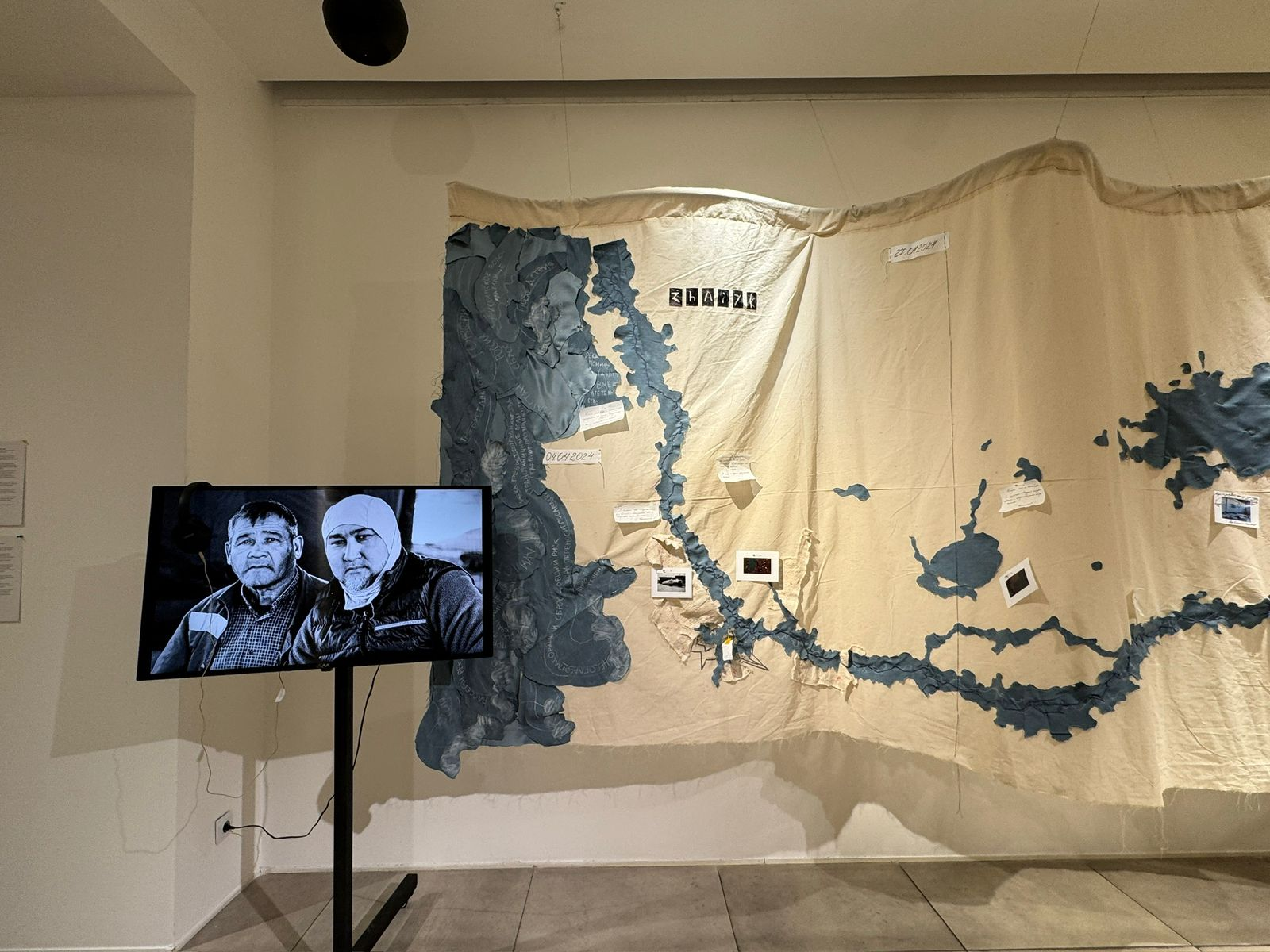
The installation examines the Zhayik River basin during the 2024 floods as a system of interacting forces— hydrological processes, geographical conditions, and emergency decisions. Photo credit: The Astana Times.
The spring 2024 floods, which became the focus of the exhibition, affected large parts of West and North Kazakhstan after rapidly melting snow and overflowing rivers inundated cities and villages, forcing tens of thousands of people to evacuate and causing extensive damage to homes, roads and infrastructure.
Curated by Anel Moldakhmetova and Georgia Leigh-Münster, the exhibition was created with support from British Council Kazakhstan, Tselinny Center of Contemporary Culture and Art Future.
The project grew out of discussions that began around a year ago, eventually evolving into a month-long interdisciplinary multimedia laboratory focused on climate change, flooding and climate justice in Kazakhstan. Organized as a multimedia laboratory, the program combined artistic practice with research, lectures and workshops led by environmental experts, journalists, architects and volunteers involved in flood response efforts.
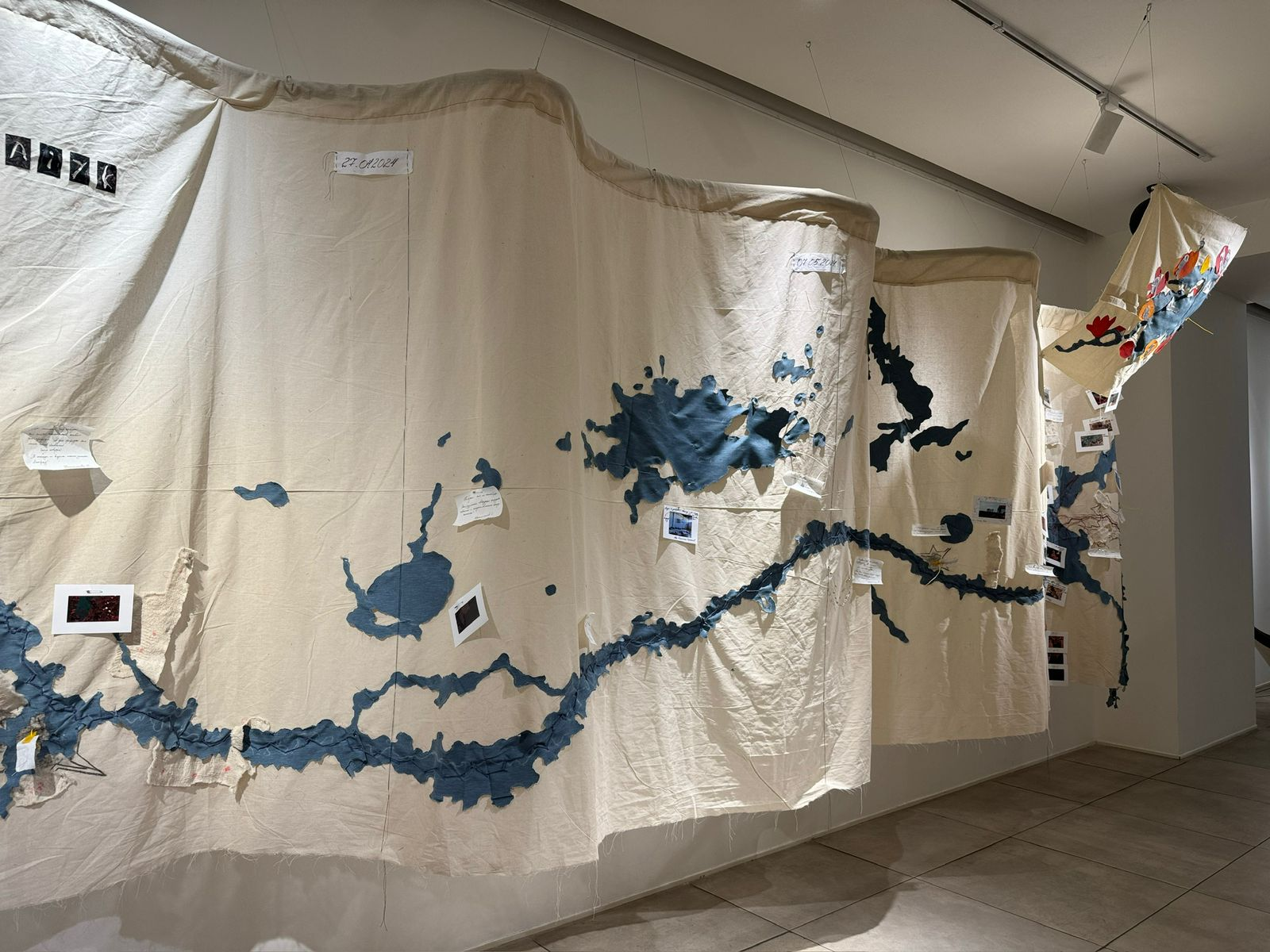
The fragments woven into the fabric-images, traces, field materials-function as local evidence. They capture specific states: rising water levels, collective labour, and the rupture and restructuring of space under pressure. Photo credit: The Astana Times.
The result was revealed as a large collective collage exhibition that weaves together interviews, mental maps, archival materials, sound elements, video installations and artistic interpretations of Kazakhstan’s rivers and flood zones.
Moldakhmetova said the idea behind the project was to create a space where people could reflect on floods and environmental anxiety through different artistic languages rather than through fear-driven narratives.
“We wanted to approach the topic through contemporary art and different media formats so people could process and reflect on it in their own way,” Moldakhmetova said during the exhibition presentation on May 16.
Art, architecture and journalism meet climate research
Participants were selected through an open call and came from a wide range of professional backgrounds, including architecture, journalism, data visualization, video art, urbanism, art therapy and archival studies.
According to Moldakhmetova, many had little prior connection to contemporary art but shared a common interest in environmental issues and water systems.
As part of the project, the participants attended lectures by investigative journalists, climate researchers, hydrologists, architects and volunteers who helped communities during the 2024 floods.
Among the invited speakers were journalists covering the floods, architects who designed emergency dam systems in the Atyrau Region and international interdisciplinary researchers working on environmental monitoring projects.
Rivers transformed into immersive installations
Architect and urbanist Artyom Agekyan helped design the spatial concept of the exhibition, turning rivers into immersive walk-through installations.
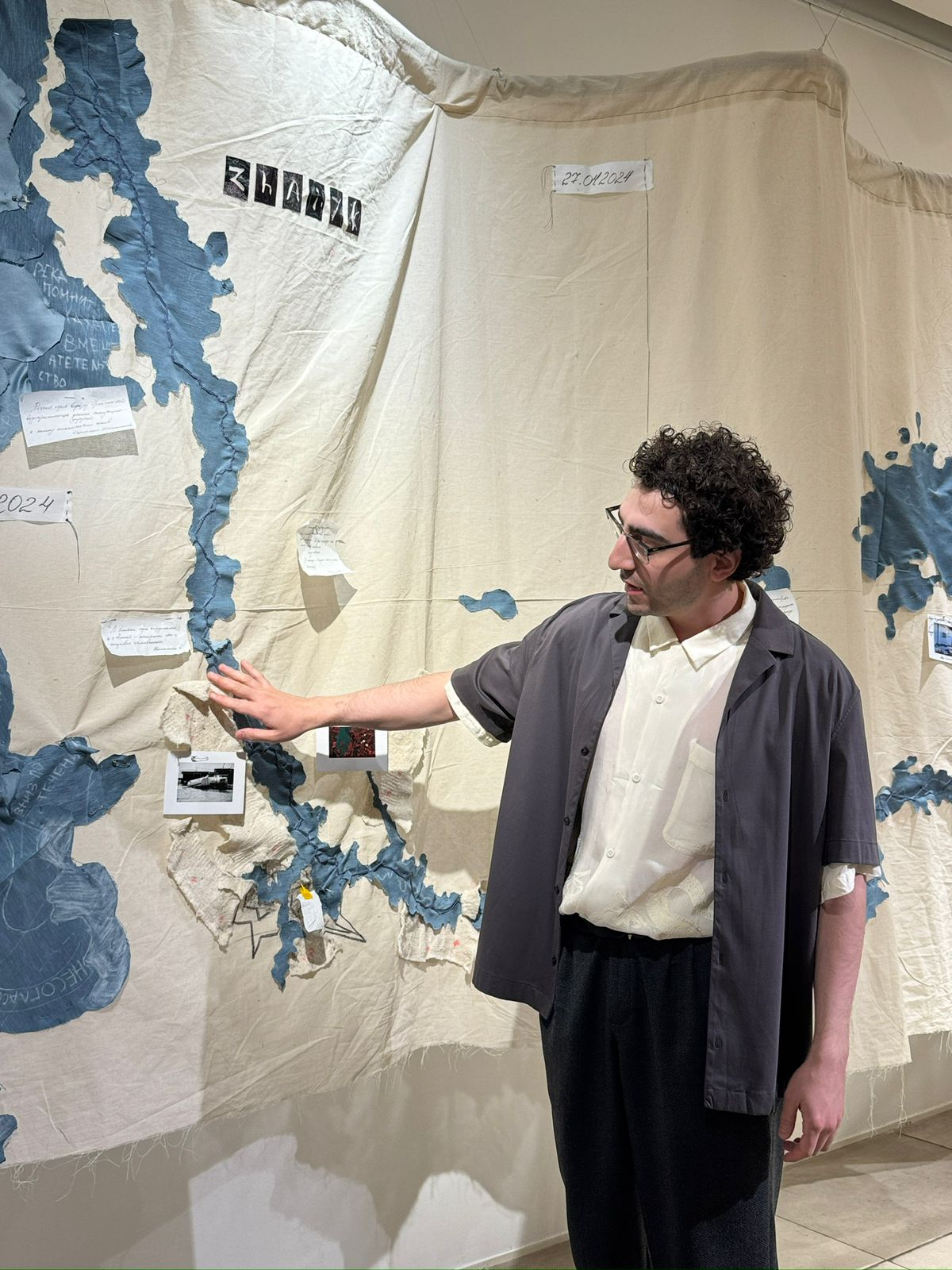
Artyom Agekyan. Photo credit: The Astana Times.
Large suspended fabric panels trace the shapes of Kazakhstan’s rivers across the exhibition space, allowing visitors to physically move through river systems and flood zones.
“Essentially, visitors are walking through a river map of Kazakhstan,” Agekyan said.
The installation incorporates flood peak graphs obtained from Kazakhstan’s Institute of Geography and Water Security, particularly focusing on the Zhaiyk River, where some of the most destructive flooding occurred.
Agekyan said the exhibition also addresses the transboundary dimension of flooding, including concerns surrounding water management and reservoir discharges originating in Russia. The fabrics themselves symbolize flooded territories and saline lands left behind after waters receded.
“In some places, floodwaters stretched up to 30 kilometers wide. We wanted people to understand the scale not through numbers, but physically, in relation to the human body,” he said.
Giving voice to collective trauma
Journalist and artist Dariya Zhylkybayeva focused her work on Kulsary, one of the hardest hit cities. Unlike other parts of western Kazakhstan where emergency efforts managed to protect urban areas, Kulsary suffered extensive damage and mass evacuations.
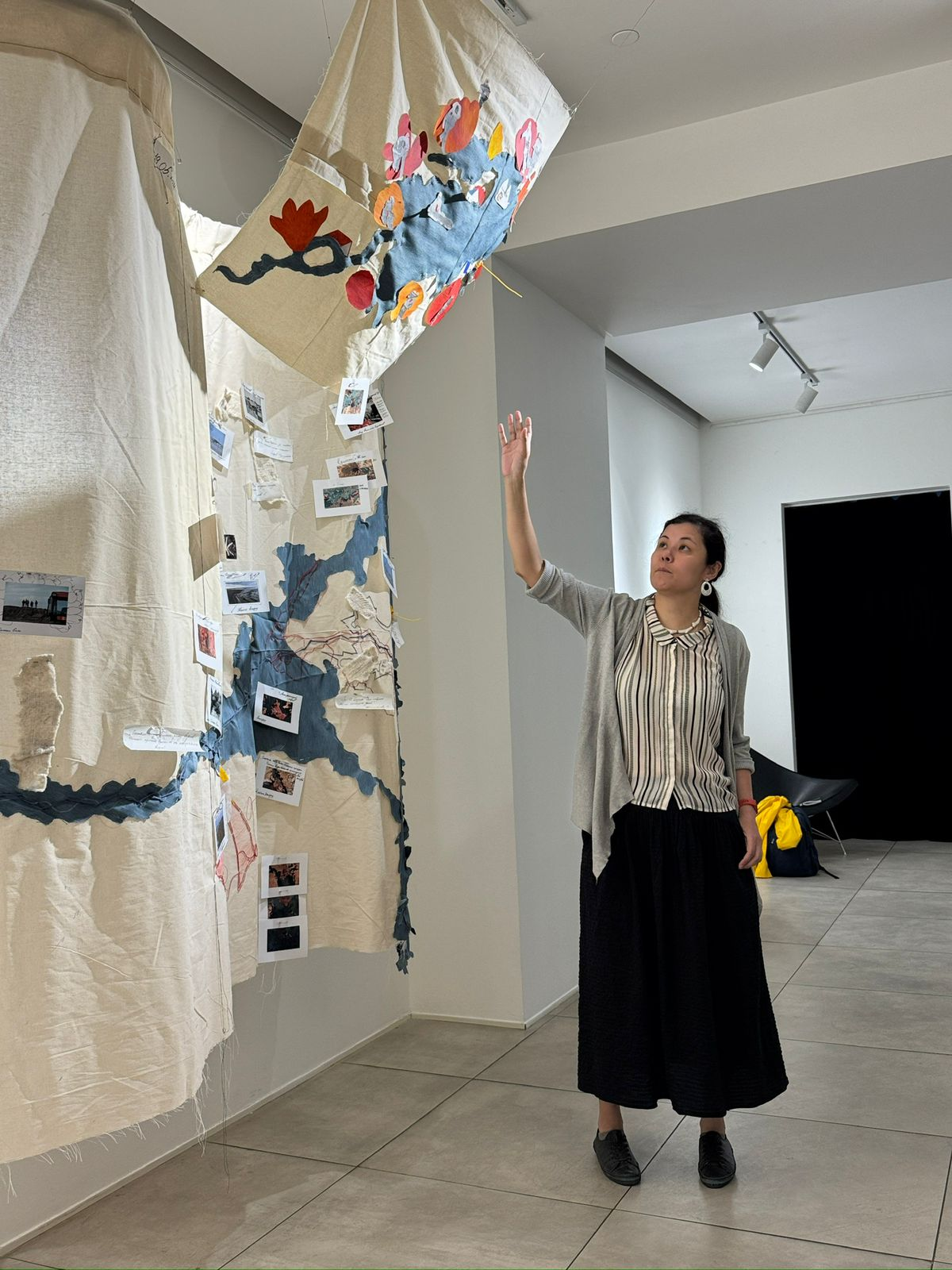
Dariya Zhylkybayeva. Photo credit: The Astana Times.
Bukvaeva said many flood survivors were unwilling to speak about their experiences even months later, something she interpreted as evidence of unresolved collective trauma.
“People found it too painful to talk about,” she said. “After the floods ended, the topic almost disappeared from conversations entirely.”
Instead of using written testimonies in her section of the exhibition, Zhylkybayeva chose visual symbolism.
Her installation uses flowers and greenery to reflect a paradoxical reality observed after the floods: while communities experienced destruction and displacement, nature in some drought-prone regions temporarily flourished due to the sudden abundance of water.
“In the Atyrau Region everything became incredibly green that year,” she said. “Flowers bloomed everywhere, animals thrived and the steppe came alive.”
For Zhylkybayeva, the blooming landscapes represented nature’s own response to the floods. one rarely included in public discussions about climate disasters. “I wanted to give a voice not only to people, but also to nature itself,” she said.
Climate justice through collective storytelling
Rather than presenting a conventional documentary account, the exhibition approaches climate change through layered personal narratives and collaborative artistic interpretation.
The exhibition blends emotional testimonies with environmental analysis, exploring how floods reshape memory, landscapes, infrastructure and social relationships.
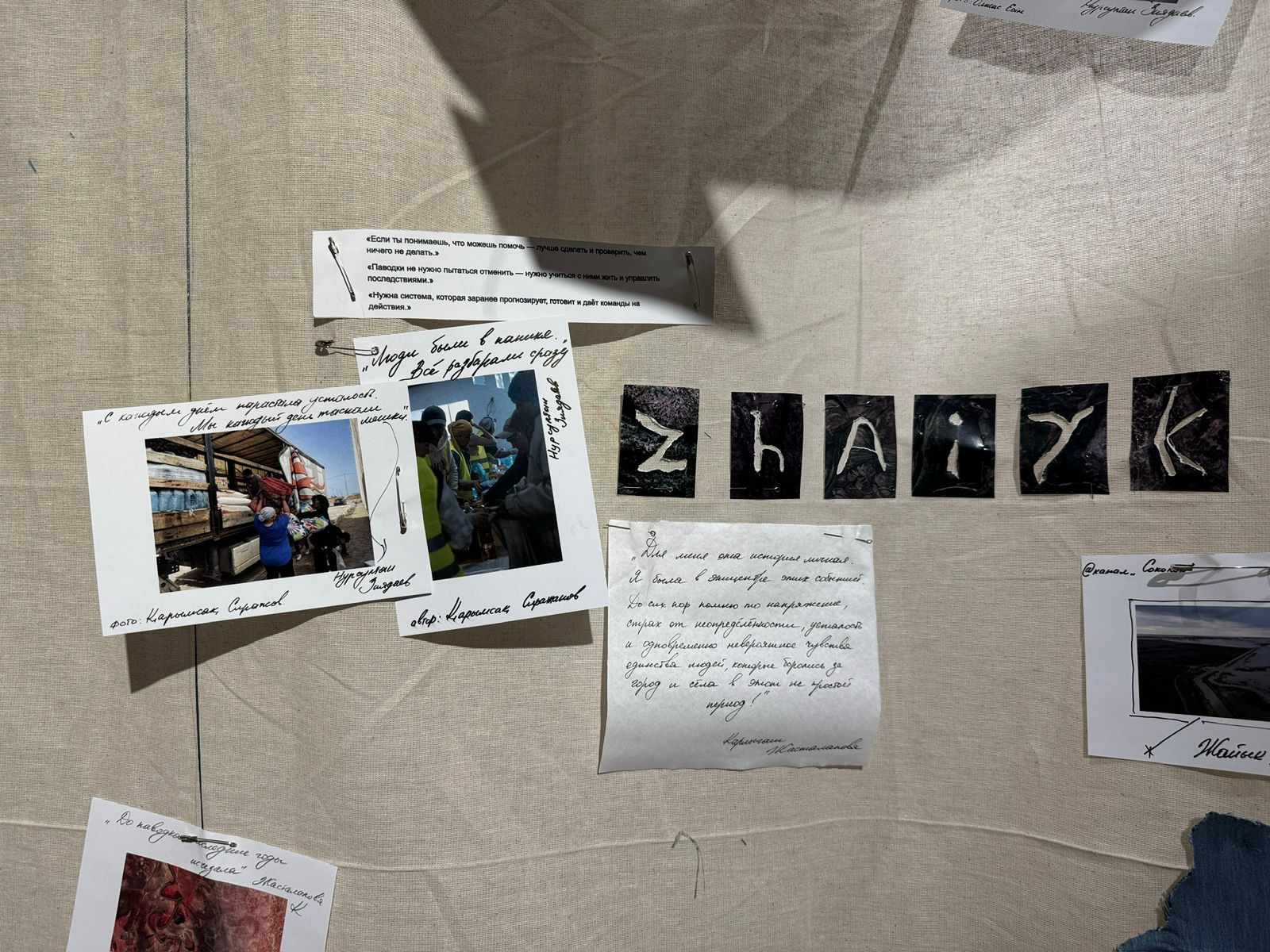
Participants inscribe fragments collected during the residency-interviews, field observations, archival traces, and situated accounts-translating them into textile interventions. Photo credit: The Astana Times.
The participants said the project also revealed stories of solidarity that emerged during the disaster with volunteers reinforcing dams overnight, residents saving neighborhoods and communities organizing emergency support for evacuees.
For organizers, the exhibition is ultimately about creating a new language for discussing environmental crises in Kazakhstan.
“We wanted people not just to observe the floods as statistics or news reports,” Moldakhmetova said, “but to emotionally and personally engage with what these rivers are telling us.”
