
ASTANA – President Kassym-Jomart Tokayev described the Golden Horde as one of the largest political powers in Eurasian history and urged scholars to study its legacy objectively and without political bias.
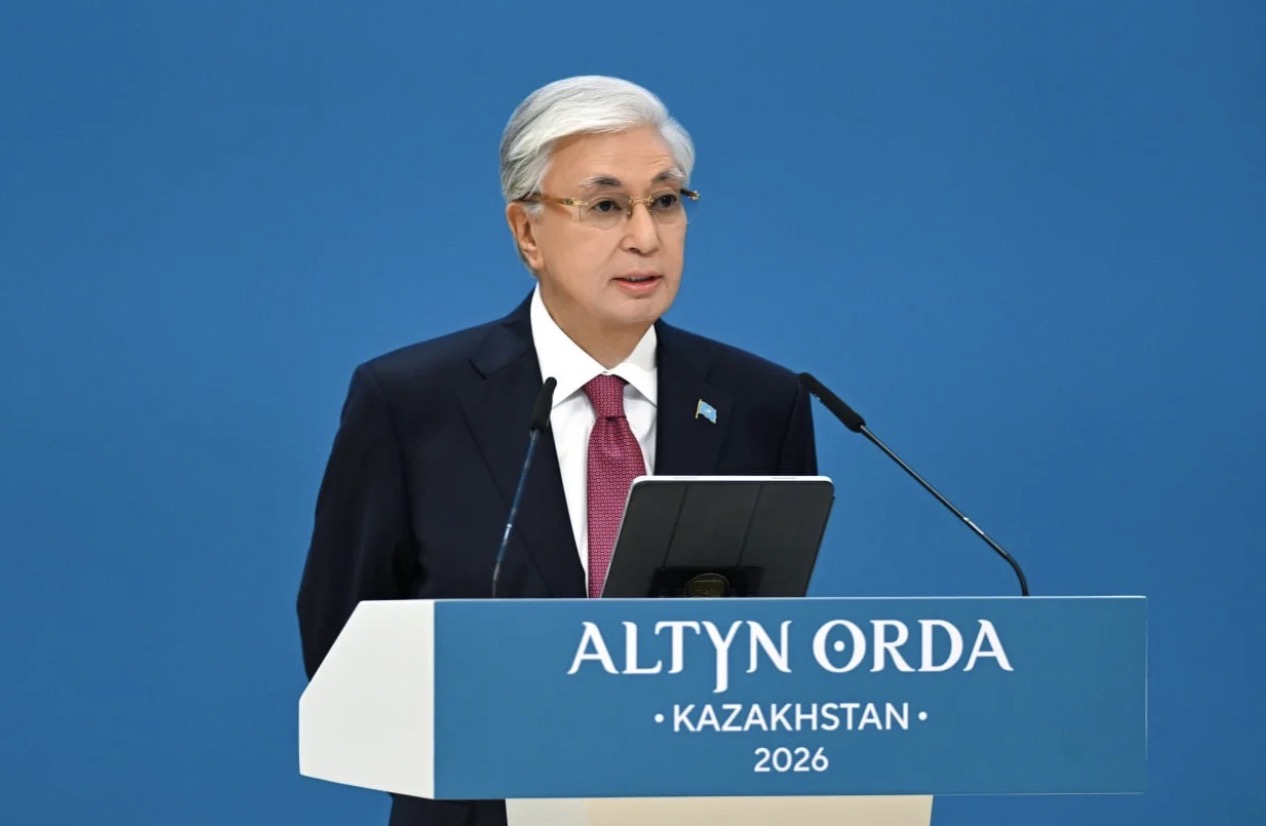
Photo credit: Akorda
Addressing an international symposium on the Golden Horde in Astana on May 19, Tokayev said the empire connected East and West and influenced the development of many civilizations and states.
“Today, no historian questions the power of the Golden Horde, an empire that ruled the Great Steppe and spanned the vast expanses of Eurasia. This is a historical fact. The empire, which connected East and West and had a significant influence on the development of various civilizations and the formation of states, was one of the largest political entities in history. Another indisputable fact,” said Tokayev.
Kazakhstan has convened more than 350 scholars from over 25 countries for the international forum, reframing the medieval Eurasian empire as a key driver of trade, governance and cultural exchange across the continent. It has become one of the largest academic gatherings dedicated to the study of the Golden Horde and its role in shaping Eurasian civilization and identity.
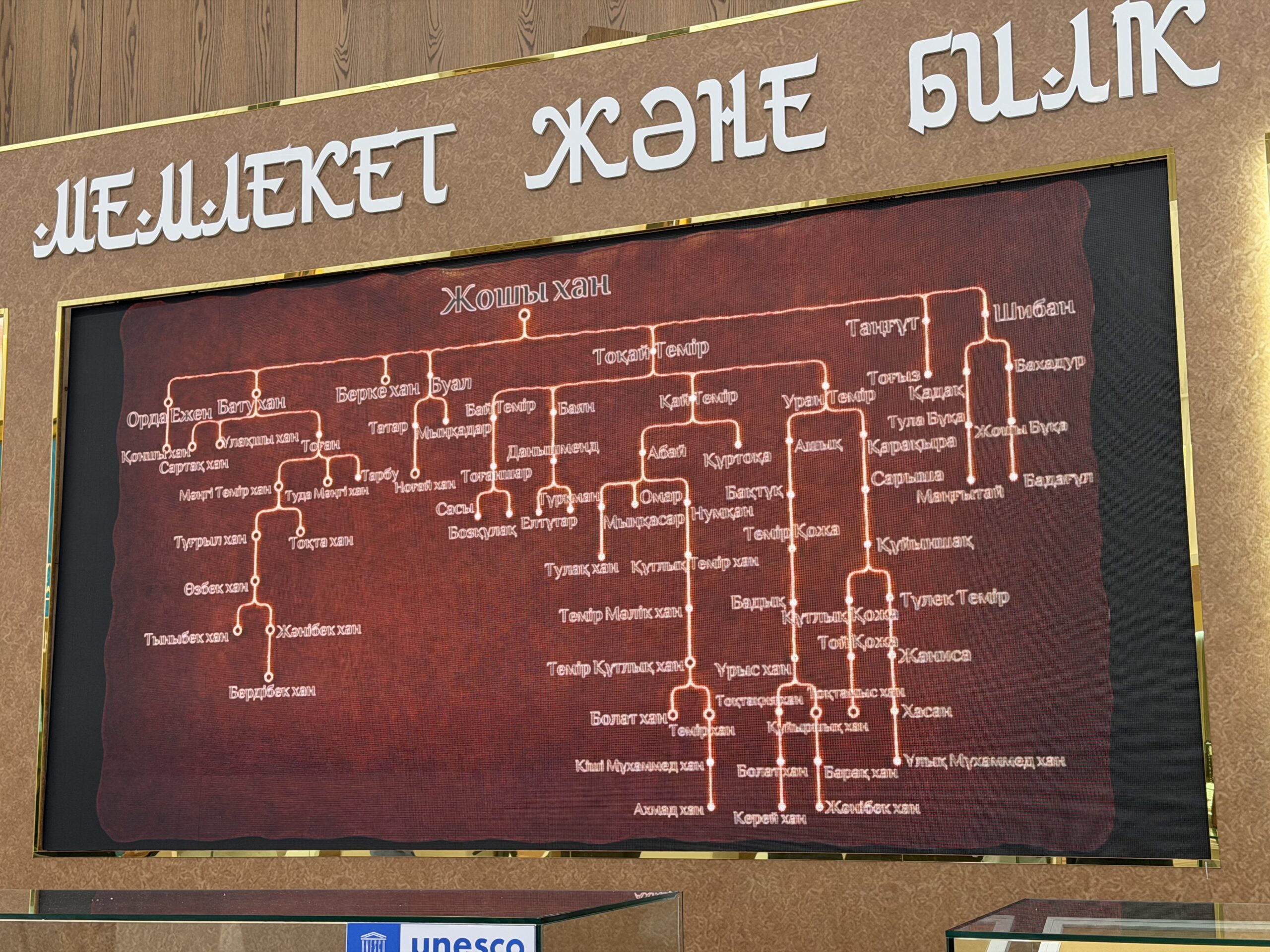
Photo credit: The Astana Times
Tokayev also cautioned against portraying the Golden Horde solely through the lens of military conquest, saying its intellectual, economic and institutional contributions deserve greater attention.
He thanked UNESCO for supporting Kazakhstan’s efforts to preserve and promote the heritage of the Great Steppe, emphasizing that the history of the Golden Horde belongs to all humanity and can serve as a foundation for dialogue and cooperation between nations.
Tokayev highlighted the intellectual legacy of thinkers such as Al-Farabi and Khoja Ahmed Yasawi, whose ideas shaped the region’s cultural and spiritual traditions. He also pointed to the Golden Horde’s sophisticated governance system, legal traditions, diplomacy, trade networks and monetary system as evidence of a highly developed civilization.
According to Tokayev, Kazakhstan views the Golden Horde as an important part of its historical continuity and statehood. He announced that a separate volume dedicated to the Golden Horde will be included in the new academic history of Kazakhstan and proposed launching a large-scale international publishing project on the subject.
Tokayev said history should unite rather than divide nations. He reiterated that because the world is at a “historic crossroads and faces a civilizational choice,” it is “critically important to unite the efforts of respected and professional scholars to present the shared history as a factor that brings peoples together.”
“It is essential to understand that historical assessment must be absolutely objective and politically neutral,” he added.
He announced that the forum would be held regularly and that a special resolution adopted at the end of the event would help strengthen international cooperation and research on the history and legacy of the Golden Horde.
The symposium brought together historians, archaeologists, orientalists, Turkologists, political scientists, diplomats, museum representatives and international organizations from Europe, Asia, North America and the Middle East. The program included an opening ceremony, an exhibition on Golden Horde heritage, plenary discussions and ten specialized scientific sections.
AI platforms and new archaeological discoveries
Minister of Science and Higher Education Sayasat Nurbek told The Astana Times that the symposium marks the beginning of a long-term global research platform uniting scholars of the Golden Horde, and that the forum is now set to become an annual event.
“Today’s symposium is just the beginning, the first step in building a long-term research platform that will unite scholars of the Golden Horde. What is unique is that all archaeological findings and recent discoveries are all collected on an AI-powered digital platform. For example, we have all the artifacts, cities and dwellings of the Golden Horde period on one digital platform with full information, the statistics and archaeological findings,” he said.
He also emphasized the empire’s economic influence, noting that researchers believe around 28 million silver coins were minted annually across approximately 36 minting houses during the Golden Horde’s peak, making it one of the largest trade and financial systems of its time.
Recent archaeological discoveries, he said, challenge long-standing stereotypes portraying the Golden Horde solely as a nomadic military empire. Researchers have identified more than 100 cities across its territory, many featuring advanced urban planning, sewage systems and sophisticated architecture. Nurbek cited the famous durable Golden Horde brick as evidence of highly developed construction technologies and craftsmanship.
Building a global research network
Nurbek also described the Golden Horde as one of the world’s longest continuous political traditions. According to him, 104 khans and sultans of the Kazakh state traced their lineage directly to Jochi Khan, the eldest son of Genghis Khan, creating a political dynasty that lasted more than six centuries.
Kazakhstan is also working with major international institutions, including the Vatican archive and library, the British Museum and the Metropolitan Museum of Art in New York, to assemble a large collection of manuscripts and historical texts from the Golden Horde era. AI technologies are already being used to translate texts written in Chagatai, the historical lingua franca of the region.
