
ALMATY – Kazakhstan presented its vision for sustainable, technology-driven urban development at the 13th session of the World Urban Forum (WUF) in Baku held on May 17-22, where Prime Minister Olzhas Bektenov highlighted artificial intelligence, climate resilience and water security as central pillars of the country’s urban transformation strategy.
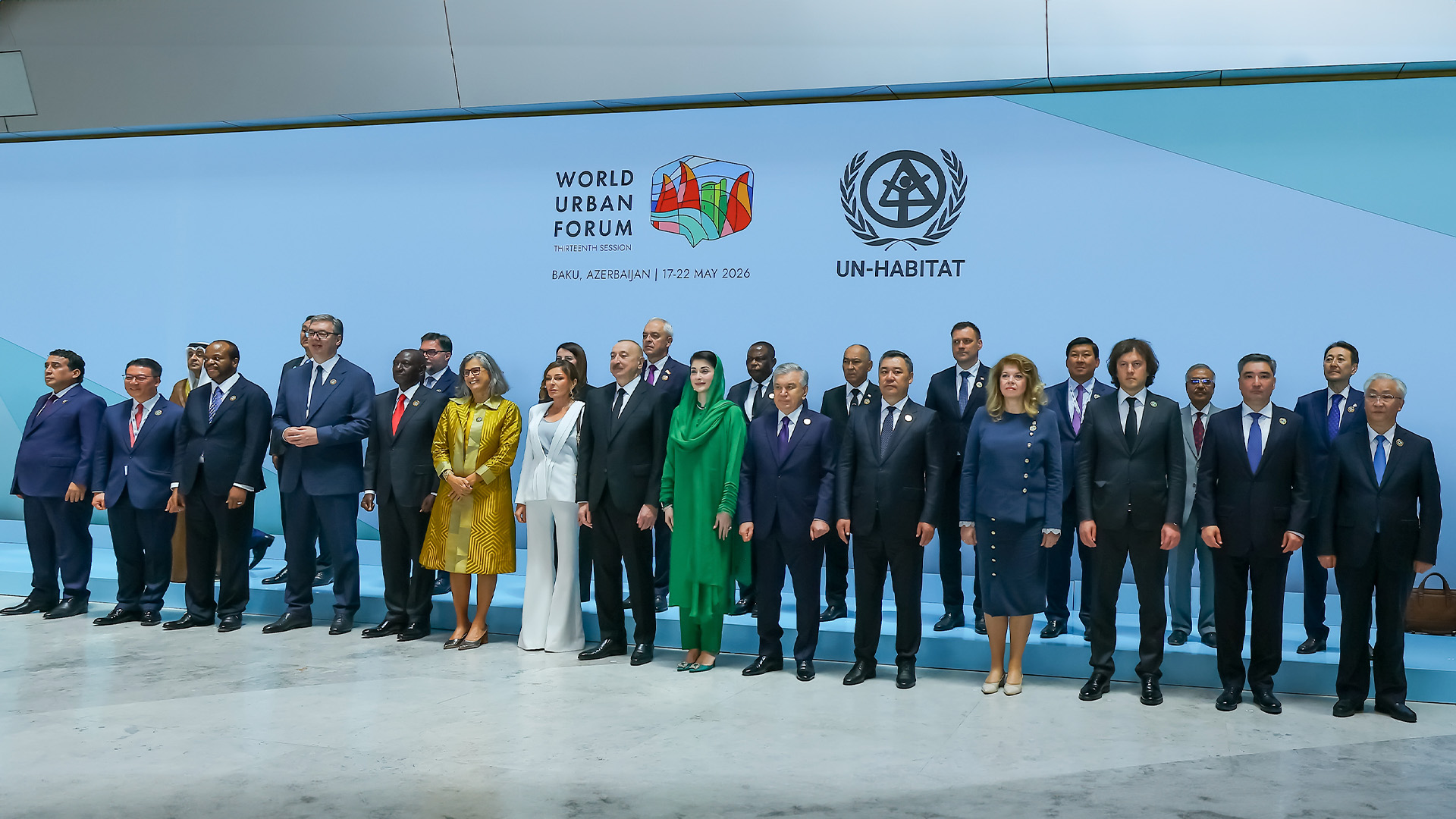
Kazakhstan presented its vision for sustainable, technology-driven urban development at the 13th session of the World Urban Forum (WUF) in Baku. Photo credit: PM’s press service.
The forum, held under the auspices of UN-Habitat, brought together more than 20,000 participants from over 100 countries, including heads of state and government, international organizations, urban planners, academics and business leaders, reported the Prime Minister’s press service on May 18.
Speaking on behalf of President Kassym-Jomart Tokayev, Bektenov said Kazakhstan is pursuing a human-centered approach to urban development focused on safety, accessibility and environmental sustainability.
“Today, more than 63% of Kazakhstan’s population lives in cities, which are becoming engines of economic growth and centers of human capital,” Bektenov said.
AI and digitalization at the center of urban policy
Bektenov said Kazakhstan’s decision to declare 2026 the Year of Digitalization and Artificial Intelligence reflects the country’s broader ambition to modernize urban governance through advanced technologies.
He noted that Kazakhstan has established a legal framework regulating the transparent and safe use of AI, while more than 1,200 public services are now accessible through the country’s digital government ecosystem.
The prime minister also highlighted the launch of the Alem.ai international AI center in Astana and Kazakhstan’s willingness to cooperate internationally on AI initiatives through the newly created Asia-Pacific Digital Solutions Center for Sustainable Development in Almaty under the UN Economic and Social Commission for Asia and the Pacific.
Among the flagship projects presented at the forum was Alatau City, a large-scale urban development initiative designed as a hub for advanced urban growth, international investment and innovative infrastructure solutions.
According to Bektenov, the project aims to create a technologically advanced and environmentally sustainable urban ecosystem.
Climate resilience and water security
Kazakhstan also used the forum to emphasize climate adaptation and water management challenges facing Central Asia.
Bektenov noted that Kazakhstan’s new Constitution formally recognizes environmental protection as a fundamental state value and stressed that water security is becoming inseparable from sustainable urban planning amid climate change and growing water shortages.
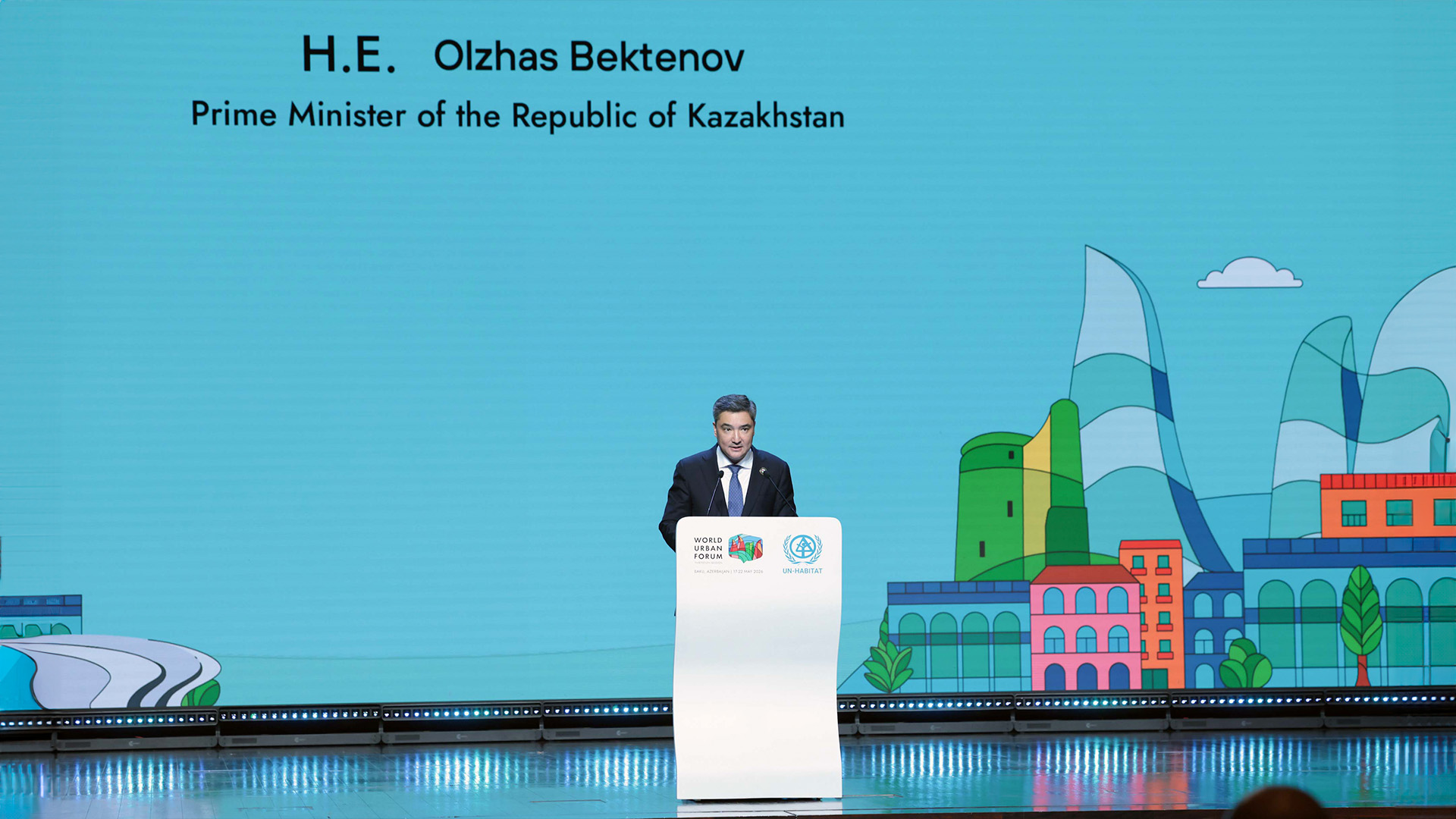
Prime Minister Olzhas Bektenov. Photo credit: PM’s press service.
He reiterated Kazakhstan’s proposal to establish an International Water Organization under the UN framework, an initiative previously advanced by Tokayev.
Bektenov also referenced the recent Regional Ecological Summit hosted by Kazakhstan, which focused on strengthening practical cooperation among Central Asian countries on climate resilience and environmental sustainability.
Kazakhstan pavilion highlights green urban concepts
As part of the forum’s Urban Expo exhibition, Kazakhstan unveiled a national pavilion showcasing sustainable city planning, digital urban management and green infrastructure projects.
A central feature of the pavilion was the Green ID initiative, which focuses on increasing urban climate resilience through greening projects and environmentally sustainable public spaces.
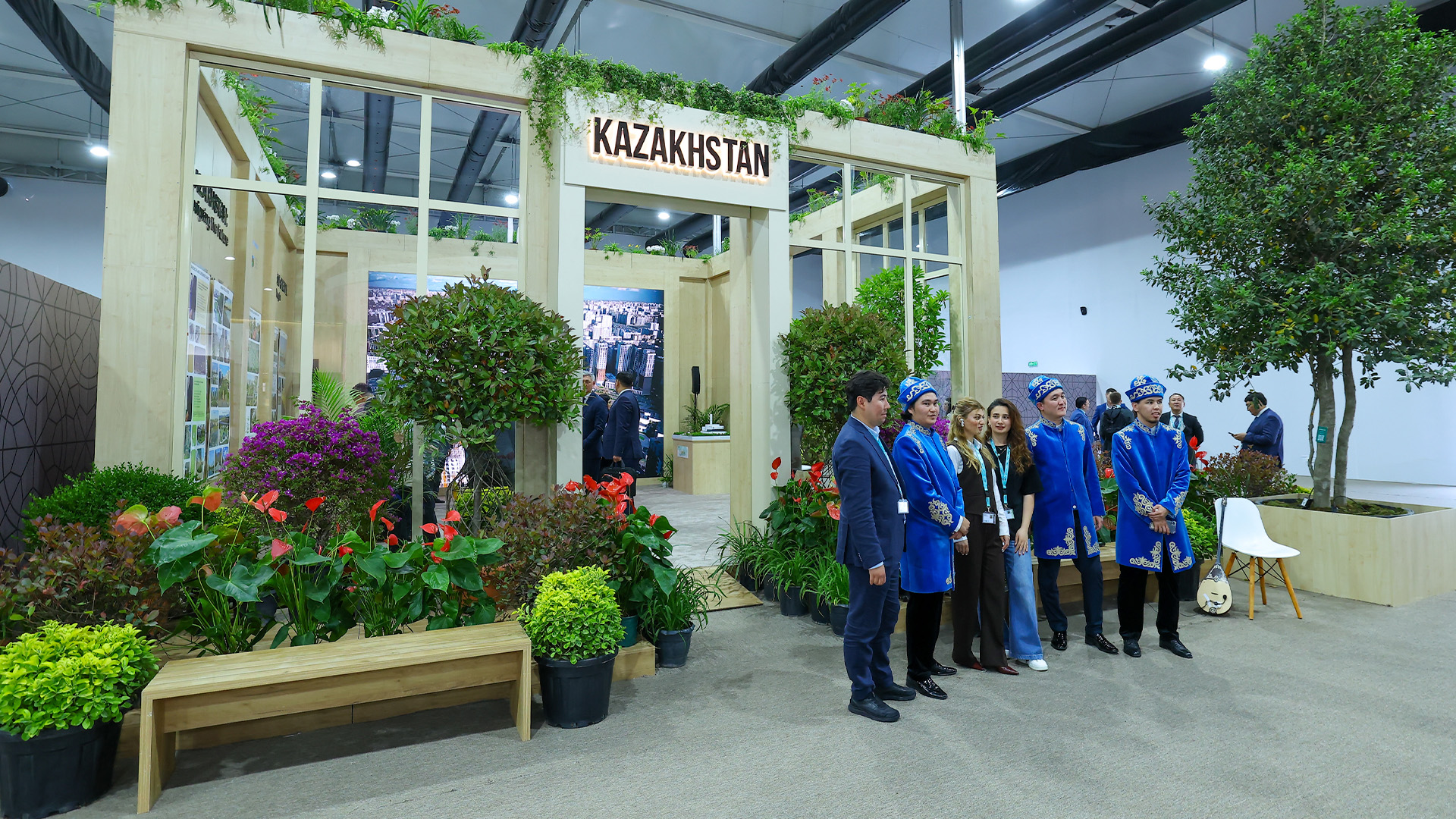
As part of the forum’s Urban Expo exhibition, Kazakhstan unveiled a national pavilion showcasing sustainable city planning. Photo credit: PM’s press service.
The pavilion itself incorporated eco-friendly materials, open architectural layouts and green design elements. It also featured LED presentations of infrastructure projects and models of modern urban developments.
According to Elnar Baziken from Astana’s Urban Planning Center, the pavilion reflects Kazakhstan’s broader effort to create cleaner, greener and more livable cities, reported the Kazinform news agency.
“The exposition reflects Kazakhstan’s aspiration to develop modern, clean and comfortable cities where quality of life, environmental sustainability and harmony with nature become priorities,” he said.
Kazakhstan also highlighted its growing cooperation with UN-Habitat and international resilience initiatives as Astana recently became the first city in Central Asia to receive Resilience Hub status under the global Making Cities Resilient 2030 initiative.
Officials also confirmed plans to launch a UN Regional Center for Sustainable Development Goals for Central Asia and Afghanistan in Almaty, which is expected to serve as a platform for regional coordination on sustainable development priorities.
