
ALMATY – The partnership between Kazakhstan and the United Kingdom is increasingly grounded in trade, investment, production, skills and shared standards, Kazakh Foreign Minister Yermek Kosherbayev wrote in an article published in Intellinews on Feb. 19.
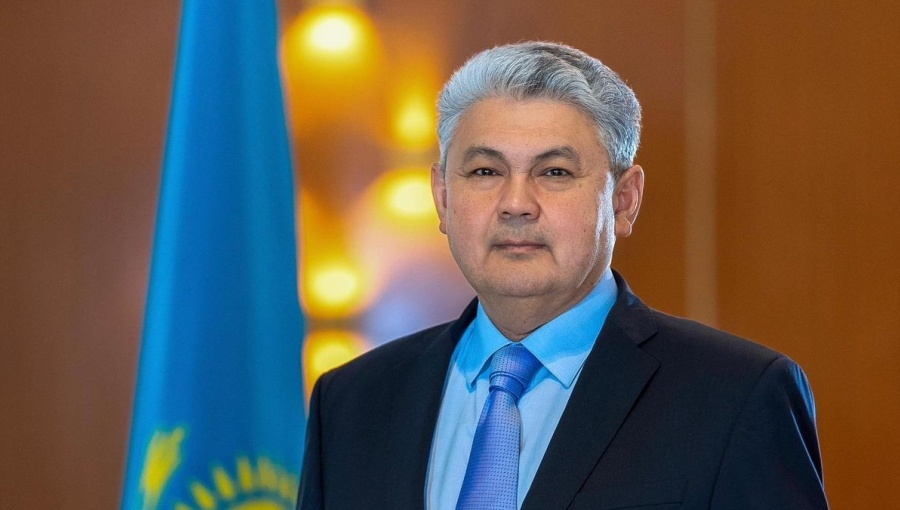
Kazakh Foreign Minister Yermek Kosherbayev. Photo credit: MFA.
According to him, more than three decades after the establishment of diplomatic relations, cooperation between the countries is defined by economic engagement and institutional depth.
“Economic fragmentation, supply-chain reorientation, accelerating technological change and the energy transition are reshaping how countries pursue growth and security,” Kosherbayev wrote.
Growing trade and investment
The minister highlighted the steady expansion of bilateral economic engagement. In 2025, trade turnover between the two countries reached $1.62 billion, an 83.6% increase from 2024. Kazakhstan’s exports to the UK rose by more than 190%, reaching $1.22 billion.
Kosherbayev stressed that since 1993, cumulative British foreign direct investment into Kazakhstan has totaled approximately $23 billion, placing the UK among Kazakhstan’s top ten investors.
“In 2024 alone, UK investment reached $723.7 million, followed by an additional $471.5 million during the first nine months of 2025. Today, 516 enterprises with British participation operate in Kazakhstan,” he wrote.
Kazakhstan’s economic position
Kosherbayev underscored Kazakhstan’s macroeconomic stability and competitiveness. According to him, the country’s GDP exceeded $300 billion last year, with economic growth reaching 6.5%, placing Kazakhstan among the world’s fifty fastest-growing economies.
“We rank 34th in the IMD World Competitiveness Ranking, and account for over 60% of total foreign direct investment into Central Asia,” he wrote.
Kosherbayev emphasized that digital transformation has also progressed, with more than 90% of public services digitized and internet penetration reaching 93%, supporting the development of a technology-driven economy.
Expanding sectoral cooperation
According to the minister, while energy and extractive industries remain central to the partnership, it is increasingly diversifying. Engagement now extends to green technologies, advanced manufacturing, financial services, pharmaceuticals and digital innovation.
Kosherbayev stressed that critical minerals and the energy transition represent a particularly strategic area of collaboration.
“Global demand for critical raw materials is rising rapidly, driven by clean energy technologies, advanced manufacturing and defence industries,” reads the article.
He noted that Kazakhstan produces 22 of the 36 minerals identified in the UK’s Critical Minerals Strategy, including uranium, titanium, silicon and rhenium.
Financial integration and legal compatibility
Financial cooperation remains another cornerstone of bilateral relations. According to Kosherbayev, the successful initial public offering of Air Astana on the London Stock Exchange in 2024 demonstrated Kazakhstan’s ability to operate under international governance and regulatory standards.
“The presence of British judges in the AIFC Court and the application of familiar legal principles provide predictability for cross-border investment,” reads the article.
The minister stressed that the Astana International Financial Centre (AIFC), which operates under English common law with an independent court and arbitration system, hosts 88 British companies.
Connectivity and regional role
Kosherbayev highlighted that Kazakhstan’s geographic location also plays a strategic role in bilateral cooperation. According to him, 85% of overland cargo between Europe and Asia passes through Kazakhstan’s territory.
Agriculture offers additional opportunities. Kazakhstan exported more than 13 million tonnes of grain and grain products in the most recent marketing year and supplies over 200 agricultural products to more than 70 countries.
“As global food security becomes increasingly important, agricultural technology, logistics and financing partnerships offer additional scope for UK engagement,” reads the article.
Human capital and institutional links
Kosherbayev highlighted that almost 6,000 Kazakh students have studied in the UK under the Bolashak scholarship program.
British universities, including De Montfort, Heriot-Watt, Coventry, Cardiff and Queen’s University Belfast, have established campuses or joint programs in Kazakhstan. Meanwhile, the introduction of Kazakh language teaching at Oxford University in 2024 reflects growing academic exchange.
“These institutional links matter because they create familiarity with standards, regulatory systems and business culture — factors that underpin long-term investment and cooperation,” he wrote.
Why cooperation matters today
The minister noted that beyond individual sectors, Kazakhstan-UK relations increasingly illustrate a shared understanding of Central Asia’s growing economic and strategic relevance.
“Partnerships grounded in investment, infrastructure, skills and institutional compatibility provide resilience,” he stated, emphasizing that his visit to London aims to deepen bilateral cooperation and strengthen the UK’s engagement with Central Asia.
Ultimately, he wrote, Kazakhstan–UK economic cooperation is measured not only by trade and investment volumes but also by the depth of financial integration, the expansion of processing capacity, and the development of transport corridors.
