
ASTANA – The Investor Rights Protection Committee oversees more than 3,000 projects worth over 100 trillion tenge ($205.6 billion), with prosecutors assigned to help investors resolve disputes, address regulatory hurdles and coordinate with government agencies, committee chairman Bauyrzhan Yeraly said in an interview with The Astana Times.
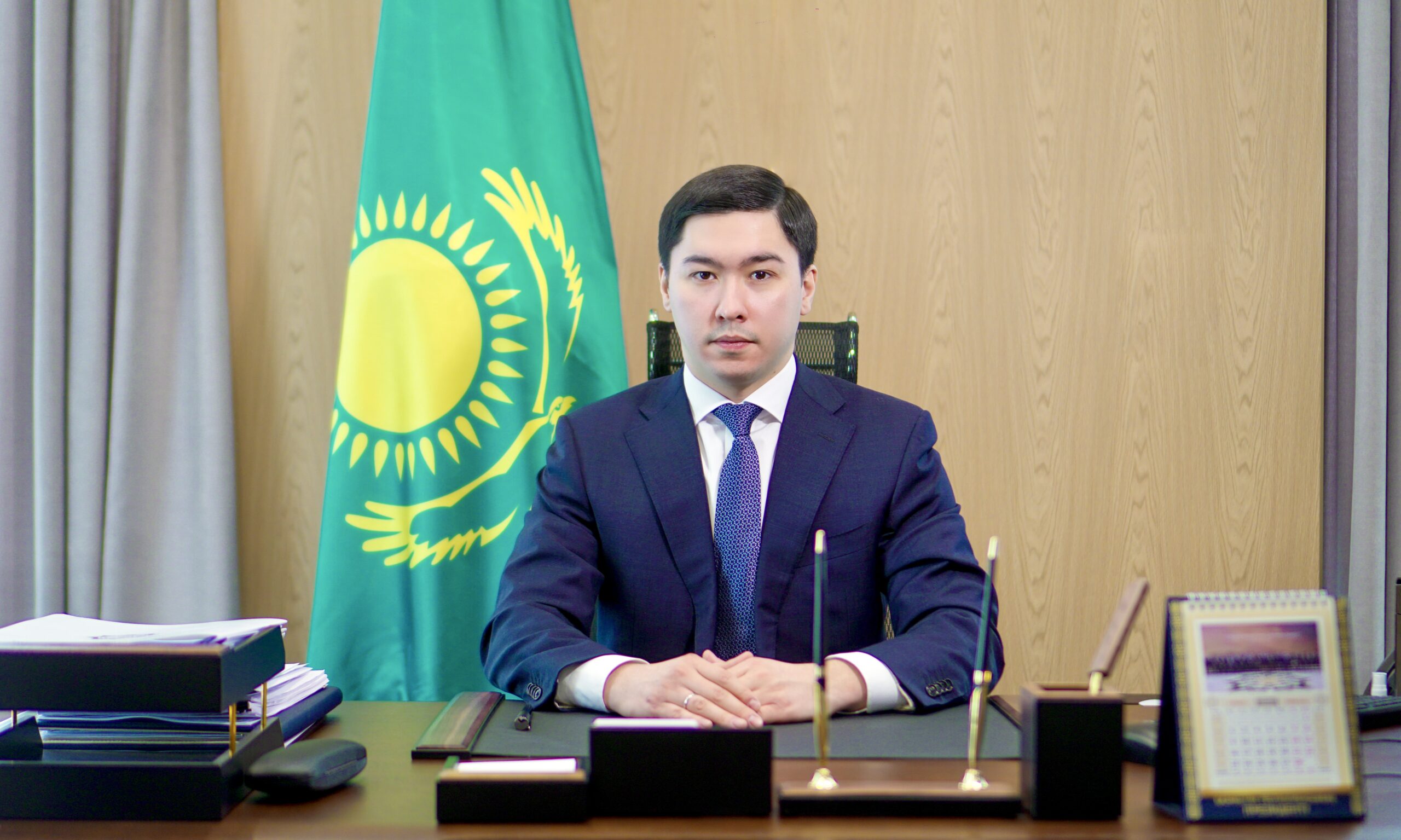
Bauyrzhan Yeraly. Photo credit: the Investor Rights Protection Committee
The committee was created in December 2025 and operates under the Prosecutor General’s Office. More than 600 investors have received assistance since the start of the year.
While Kazakhstan has several institutions involved in investment promotion and project support, Yeraly said the committee’s mandate differs, focusing on legal protection for investors and the resolution of issues affecting their activities.
“We are not responsible for attracting investment. Our role is to ensure that investors are protected throughout project implementation: from administrative pressure, unlawful decisions and unjustified barriers. In essence, the Prosecutor’s Office serves as a guarantor of the rule of law in the economy,” he explained.
“That is precisely why a separate Investor Rights Protection Committee was established. It is no longer just a department. It is a specialized institution with its own tools and approach,” he added.
The main difference lies in what he described as a shift from reactive model to proactive.
“Previously, our work was largely complaint-driven. Today, we take a proactive approach by identifying and addressing the root causes of problems rather than simply responding to their consequences. Our goal is not merely to resolve disputes, but to build a system in which investors do not need to seek protection in the first place,” said Yeraly.
Yeraly said the number of criminal cases involving businesses has declined four-fold over the past three years, attributing it to stronger legal safeguards for investors and companies.
“At the same time, liability for officials who unlawfully interfere in business activities is being strengthened. In the first quarter of this year alone, the number of administrative proceedings for illegal interference in business increased more than threefold, from 16 to 50,” he said.
Key mechanisms
Yeraly said a key tool used by authorities is the individual oversight of investment projects.
“Whereas previously we worked primarily in response to complaints, we now accompany projects from their launch through implementation and even after completion. A prosecutor is assigned to each project,” Yeraly explained.
“The prosecutor remains in regular contact with the investor, monitors the fulfillment of obligations by government agencies and helps address barriers as they arise. This is not merely formal oversight, but ongoing day-to-day work,” he said.
The committee monitors projects digitally via the National Digital Investment Platform.
“Another key element is the ‘prosecutor filter.’ No inspection, fine or lawsuit involving an investor can be initiated without the approval of a prosecutor. It is a preventive mechanism rather than one that responds after the fact,” he said.
Yeraly said prosecutors have blocked more than 1,500 actions proposed by government agencies since the introduction of this mechanism. According to him, those decisions included rejecting 636 administrative cases, 574 inspections, 296 restrictive measures and 42 lawsuits involving investors.
What are the key complaints
Yeraly said the most common issues faced by investors involve access to land, infrastructure, permits, inclusion in government registries and disputes with state agencies. Complaints most frequently concern local executive bodies, tax authorities and police. He believes many of these issues could have been resolved without the involvement of prosecutors.
“Investor feedback is a direct indicator of the state of the investment climate. It reveals where the system is failing: delays in decision-making, a purely procedural approach, and poor coordination between authorities,” he said.
“A simple example: an investor from China was unable to obtain the technical specifications for electricity for almost eight months. The problem was not with the law, but with bureaucracy and a lack of proper communication,” he said.
Yeraly said the problem was resolved within a week after a meeting involving the relevant parties, enabling the 150 billion tenge (US$308.4 million) project to move forward.
Predictability is key to investors
Predictability in the legal and regulatory environment is often cited by investors as a key factor and here, rules matter as equally as the confidence that they will be applied equally to everyone.
“A unified system for investor protection is currently being established in Kazakhstan. At its core lies the office of the Investment Ombudsperson, whose functions are assigned to the Prosecutor General. The committee acts as its executive body,” he explained.
“Investment prosecutors operate in the regions, effectively a unified system from the central to the local level. This eliminates fragmentation between departments and establishes a single point of accountability,” he added.
The investor protection framework has received additional institutional backing. On June 4, the Senate, an upper chamber of the Kazakh Parliament, approved amendments that would designate Kazakhstan’s Prosecutor General as the country’s investment ombudsperson, expanding the office’s role in protecting investors’ rights and coordinating government agencies involved in investment projects.
“Investors can reach out to us at any time,” Yeraly said. “We are always open.”
What needs to be improved?
The priority task, Yeraly noted, is now to further decrease the administrative barriers and improve the accountability of state bodies.
“An investor evaluates not only incentives. The speed of decisions, the stability of the rules and the quality of interaction with the government are also important,” he said.
Yeraly said the committee will also focus on digitalisation of processes, reducing approval times, personal accountability of officials, and consistent practices at all levels.
He added that improving mechanisms for resolving disputes before they reach court is another key priority.
The committee is also creating a platform to help investors and government agencies resolve disputes outside the courts. Cases requiring coordination among multiple agencies can be referred to Kazakh Invest national company and the Investment Headquarters under the Prime Minister’s Office.
Yeraly also said an expert council comprising business representatives, government officials and lawmakers has been established to identify systemic issues and recommend changes to legislation and regulatory practices.
