
ASTANA — The World Bank Group is preparing to launch its 2026-2031 partnership strategy with Kazakhstan as the country completes a previous phase of cooperation that delivered 14 projects worth $4.2 billion. The new framework aims to support Kazakhstan’s transition beyond a state-dominated, resource-driven growth model, said World Bank Country Manager for Kazakhstan and Turkmenistan Andrei Mikhnev in an interview with The Astana Times.
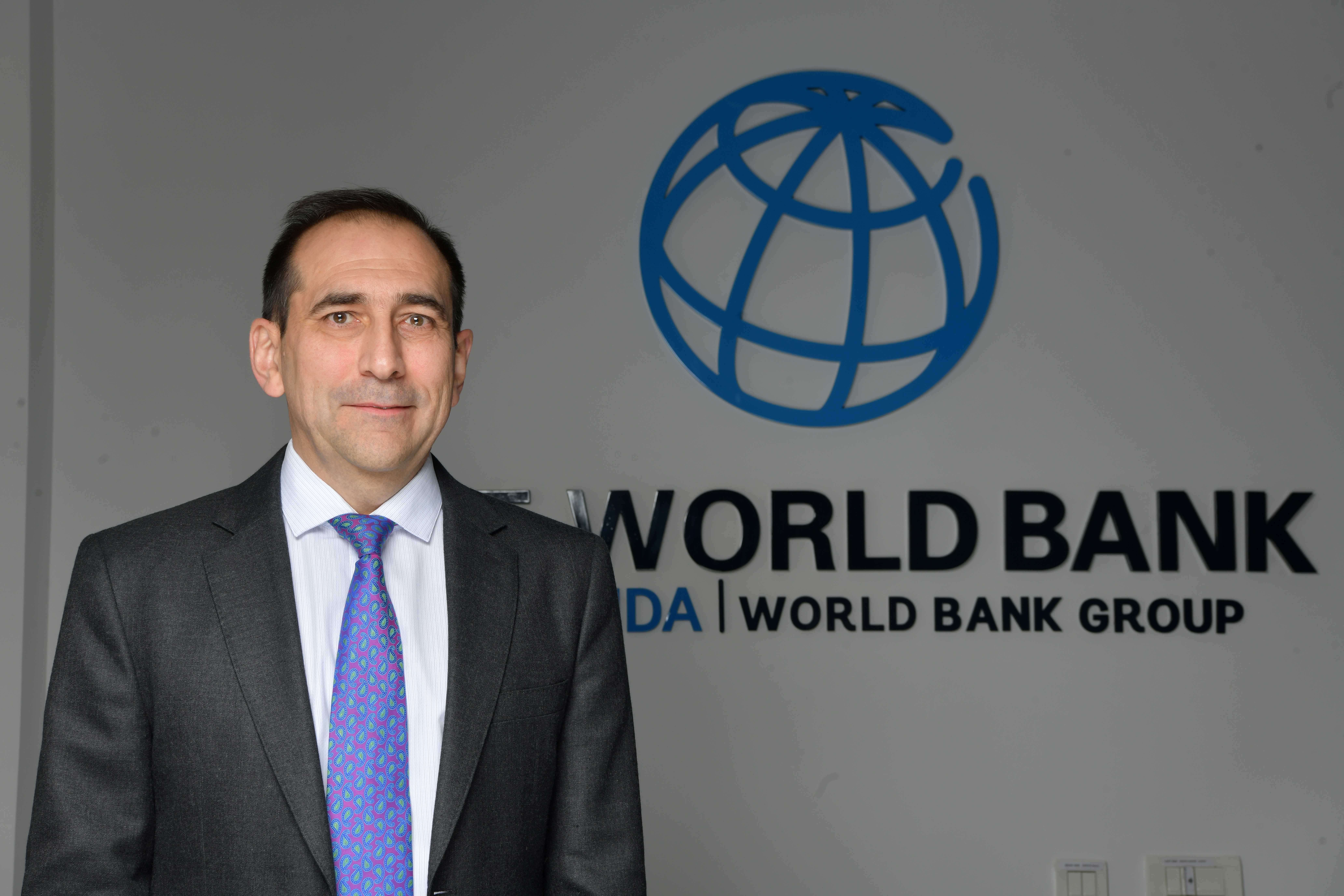
World Bank Country Manager for Kazakhstan and Turkmenistan Andrei Mikhnev. Photo credit: World Bank Country Office in Kazakhstan
“Kazakhstan is completing a phase of cooperation with the World Bank Group and entering a new cycle at a pivotal moment. The core message of the 2026-2031 partnership strategy is to support Kazakhstan’s transition to a more diversified, competitive, and sustainable growth model – one that can generate more and better jobs, raise productivity, and strengthen resilience in an increasingly uncertain global environment,” said Mikhnev.
The upcoming framework could provide up to $1 billion annually to support infrastructure, private-sector development and economic reforms, building on the 2020-2025 program that delivered 14 projects worth $4.2 billion. Under that strategy, transport investments improved connectivity for more than five million people, reduced travel time by two-thirds, lowered transport costs by 35%, and created more than 1,200 permanent jobs.
Mikhnev said that Kazakhstan begins the new phase as Central Asia’s largest economy, with substantial energy and mineral resources and a stable macro-fiscal framework. At the same time, structural constraints continue to limit growth.
“The main challenge today is that the current growth model has reached its limits. Structural and institutional constraints, particularly the dominant role of the state in the economy, barriers to competition and private investment outside the extractive sectors, and gaps in institutional effectiveness, continue to hold back productivity and innovation,” he said.
Addressing these constraints, alongside infrastructure modernization and stronger environmental sustainability, will be central to long-term competitiveness.
Building foundations for diversification
Mikhnev emphasized that diversification should be understood as a gradual transformation rather than a short-term shift.
“Diversification is a long-term process, so the goal over the next six years is not to replace the resource sector entirely, but to accelerate the foundations of a more balanced and resilient growth model,” he said.
The strategy prioritizes reforms to enable private-sector-led growth, including improvements to the investment climate, predictable regulation, stronger competition policy, and expanded access to finance, particularly for micro, small, and medium-sized enterprises. Development of domestic capital markets is also identified as a priority.
Strengthening human capital and aligning skills with emerging sectors such as manufacturing, logistics, digital services and clean energy are described as equally important.
“What matters most is the consistency and credibility of reform implementation. Even incremental improvements in productivity, governance, and conditions for private investment can generate a powerful compounding effect over time,” said Mikhnev.
He also pointed to infrastructure gaps as binding constraints on competitiveness, particularly in transport and logistics networks, digital connectivity and modern water and energy systems, where service reliability directly affects firms and households.
Kambarata-1: energy, water and regional integration
Discussing the Kambarata-1 hydropower project, Mikhnev said it combines several strategic dimensions for Central Asia.
“We see the project as combining several strategic dimensions. First, it can strengthen regional energy security by increasing the supply of reliable electricity and improving power system stability across Central Asia,” said Mikhnev.
“In this sense, Kambarata-1 is not only about electricity generation, but also about strengthening transboundary water management and enhancing regional water security,” he added.
Hydropower also contributes to climate objectives by providing low-carbon electricity and supporting the integration of other renewable sources. The project is positioned as a potential driver of regional integration through shared infrastructure and stronger economic linkages.
Risk, resilience and private capital
Amid rising global volatility and sanctions-related pressures affecting the broader region, Mikhnev said the World Bank’s risk assessment frameworks have evolved.
“Today, projects are evaluated with greater attention to resilience, supply chain risks, macroeconomic vulnerabilities, and potential regional spillovers,” he said.
Mobilizing private investment is central to the new strategy, as large-scale infrastructure and reform agendas cannot rely solely on public financing. Mikhnev said the World Bank Group will apply a One World Bank Group approach, combining financing from the International Bank for Reconstruction and Development (IBRD) with investments and advisory services from the International Finance Corporation (IFC), as well as political risk guarantees provided by the Multilateral Investment Guarantee Agency (MIGA).
This includes guarantee instruments and political risk insurance to reduce project risks, support for public-private partnership frameworks, improvements in state-owned enterprise governance, and expanded access to finance for small businesses through financial intermediaries and capital market development.
By aligning policy reforms, institutional strengthening and targeted investments in transport, digital connectivity, water and energy, the aim is to create scalable models capable of attracting private capital.
Turning strategy into results
Mikhnev outlined three conditions for the partnership strategy to deliver measurable outcomes.
“First, reforms must be implemented consistently and backed by stronger institutional capacity, so that policy decisions translate into measurable outcomes on the ground. Second, Kazakhstan needs continued progress toward a more level playing field for businesses, where competition, predictable regulation and access to finance support growth and innovation,” he said.
Third, project preparation and execution must become more efficient through the removal of systemic bottlenecks, stronger governance frameworks and timely delivery of large infrastructure projects with clear accountability.
Institutional strengthening is positioned as a cross-cutting priority across all areas of engagement, linking financing, knowledge support and partnerships to implementation capacity.
“For this reason, the strategy places strong emphasis on targeted institutional strengthening as a cross-cutting priority across all outcomes, ensuring that financing, knowledge, and partnerships work together to support implementation and deliver tangible improvements for people and businesses,” said Mikhnev.
