
ASTANA – Janara Sayasat has turned her life in the French capital into both a profession and a cultural mission. A Kazakh licensed by France’s Ministry of Culture to work as an official tour guide in Paris, she introduces visitors to the country’s historic landmarks while building a bridge between French and Kazakh cultures. In an interview with The Astana Times, Janara spoke about adapting to French culture, building a creative career abroad and maintaining her Kazakh roots.

Janara Sayasat, a Kazakh tour guide licensed by France’s Ministry of Culture. Photo credit: Janara’s personal archieve
For nearly two decades, Paris has been both her home and her canvas. Since moving there in 2007, Janara has immersed herself in French life, absorbing its rhythms, rituals, and quiet codes of conduct. Today, she shares that experience through her tours and her Instagram blog, where she captures the city in photographs and words that reveal both its grandeur and its everyday subtleties.
A life between cultures
Born in Atyrau and raised between Moscow and Almaty, Janara graduated from Lomonosov Moscow State University’s faculty of journalism in 2007. That same year, she moved to Paris to pursue a master’s program at the Sorbonne. She later earned another higher education diploma from a Paris audiovisual arts school.
Her transition to life in France, she said, was smooth.
“I have spoken French since childhood, and I moved here with a clear goal. I have a French social circle – friends, colleagues and people I share hobbies with,” she said.
One of those hobbies is ballet. Janara trains six times a week and previously studied for more than six years at Paris fine arts workshops, completing courses in art history from the Renaissance to the 20th century, as well as photography theory and practice.
Her creative perspective as a photographer eventually reshaped how she saw the city and how she presented it to others.
From Instagram to licensed guide
Janara launched her Instagram blog in 2013, initially sharing photographs of Paris with short captions. Over time, the captions grew longer and more detailed, offering historical insights and cultural commentary.
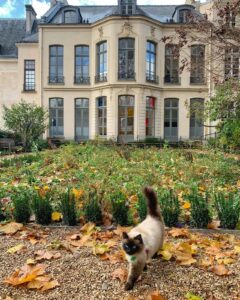
The hidden courtyards of the Marais district remain largely out of sight for most tourists. Photo credit: Janara’s personal archieve
“As I developed in photography, I started writing more about Paris. People began following me because they said I shared interesting facts about the city. That’s how the first Russian-language blog about Paris on Instagram appeared, almost by accident,” she said.
The growing audience brought her first tour clients, prompting her to obtain an official French guide license and open her own business.
Janara noted that obtaining the license is demanding. Applicants should complete specialized guide training and pass exams or demonstrate extensive professional experience in tourism combined with relevant academic qualifications. The license grants the right to conduct tours in national museums and historic monuments, including the Louvre and the Palace of Versailles.
“Without a license, even a university professor cannot legally conduct tours in these institutions. The license confirms professional knowledge and competence. I am the only licensed guide from Kazakhstan working in Paris. It also allows me free and often priority access to state museums, castles and palaces across the European Union,” she said.
French habits and cultural codes

The Rue de l’Abreuvoir in Montmartre offers one of the most picturesque views of the Sacré-Cœur Basilica. Photo credit: Janara’s personal archieve
Nearly 20 years in Paris have subtly shaped Janara’s habits.
“The main habit is almost automatic politeness. Greeting people, smiling and apologizing constantly. Paris is a densely populated city, and we apologize several times a day when we accidentally bump into someone on public transport or on the street,” she said.
She also noted the strong emphasis on personal boundaries and time management. Business communication is conducted primarily via formal email, with numerous established polite expressions, while phone calls and messaging apps are reserved for urgent matters.
“The right to rest is sacred in France. So is the right to a proper lunch, not just a quick snack. People here work to live and to enjoy life. France is not for those who rush. You learn to exhale,” Janara said.
Myths and realities of Paris
During Janara’s tours, visitors often ask practical questions about planning their stay, avoiding long museum lines and choosing restaurants. The volume of such inquiries led her to create a detailed digital guide for her followers, a structured Paris cheat sheet, covering logistics, etiquette and everyday nuances that are rarely mentioned in travel brochures.
Janara frequently dispels myths, including the belief that Parisians live in tiny, unheated apartments.
“In reality, Paris is home to global executives, politicians, athletes and artists. Many residents live comfortably,” she said.
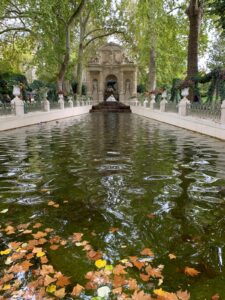
One of the most romantic spots in Paris is the Medici Fountain in the Luxembourg Gardens. Photo credit: Janara’s personal archieve
She explained that comfort in France is not always about size, but about quality, including good lighting, beautiful tableware, fresh flowers, and a well-prepared meal. Even modest apartments often reflect a cultivated sense of taste and a deliberate approach to living.
Janara also noted that perceptions of Paris vary by visitors’ country of origin. For many Europeans, a weekend in the French capital is routine, a short flight or train ride away. For Kazakh tourists, however, the journey often feels transformative.
“Kazakh tourists are highly motivated. They overcome visa processes, expensive flights and long travel times. They want to see everything, including museums, restaurants, and Disneyland. They try to embrace the entire experience,” she said.
At the same time, Janara draws a careful distinction between tourist Paris and residential Paris. According to her, tourists encounter what Ernest Hemingway famously called a “movable feast,” a city of grand architecture, world-class museums and cinematic beauty. Residents, however, experience another layer: high rent, taxes, crowded metro lines, gray winters and the daily discipline of urban life.
“Locals appreciate the city’s beauty, but they are also thinking about everyday tasks, such as laundry, an evening run or a missed delivery. Tourists, by contrast, can fully disconnect from routine,” Janara said.
She added that residents can easily reclaim a sense of wonder with a weekend walk along the Seine or a visit to a new exhibition. For visitors, however, it is far more difficult to feel like true Parisians without understanding the subtleties of daily life in the French capital.
Staying Kazakh in Paris
Despite nearly two decades abroad, Janara maintains strong ties with Kazakhstan. She hosts relatives for extended stays, attends concerts by Kazakh musicians in France and keeps elements of home in her daily routine.
“No day passes without black tea with milk. And there is always a strategic supply of Kazakh chocolate in my refrigerator, generously brought by tourists from Kazakhstan,” Janara said.
