
ASTANA — Kazakhstan convened a high-level meeting on Feb. 12 to push forward a regional climate education initiative, as preparations continue for the Regional Ecological Summit 2026 (RES), scheduled for April 22–24 in Astana.
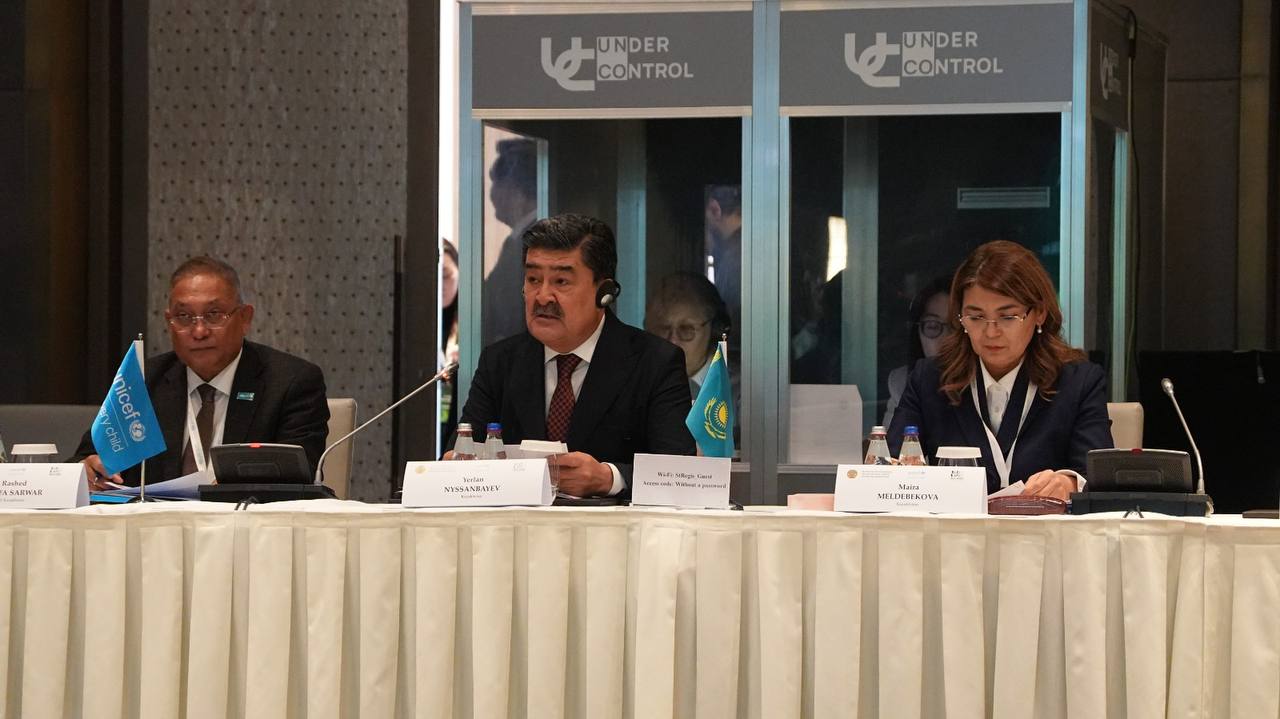
From L to R: Rashed Mustafa Sarwar, Yerlan Nyssanbayev, Mayra Meldebekova. Photo credit: gov.kz
Discussions focused on establishing the Regional Green School Platform under the auspices of the Kazakh government and UNICEF, with regional coordination to support the transition toward environmentally sustainable education systems. The platform is expected to be formally endorsed at the summit in April.
It will serve as a voluntary regional cooperation mechanism linking knowledge exchange with national policies and investment decisions, including the implementation of countries’ Nationally Determined Contributions (NDCs 3.0). The initiative aims to promote climate education, climate-resilient school infrastructure, youth engagement, and stronger governance and financing in the education sector.
Opening the meeting, Kazakh Minister of Ecology and Natural Resources Yerlan Nyssanbayev emphasized the country’s commitment to advancing the climate and environmental agenda.
“Kazakhstan views education as a key pillar of sustainable development and long-term climate solutions. We are ready to host the Regional Green School Platform at RES 2026 and contribute to its development for the benefit of the entire region,” he said.
UNICEF Representative in Kazakhstan Rashed Mustafa Sarwar highlighted that Kazakhstan has incorporated climate education and youth participation into its updated NDCs submitted under the UN Framework Convention on Climate Change.
“This demonstrates that Kazakhstan’s climate policy is oriented toward future generations. The Regional Green School Platform will help translate these commitments into tangible changes in schools and in children’s lives,” he noted.
Sarwar stressed that schools play a critical role in shaping children’s knowledge, values, and environmental responsibility. He underscored the importance of coordinated regional action, proposing the creation of a regular coordination mechanism to review progress and share best practices on a quarterly basis.
“With 23 million children in Central Asia, we have a shared responsibility and opportunity. The region has much in common, and this initiative reflects our collective commitment to work together,” he said.
Sarwar also highlighted the potential of youth engagement through volunteer programs. UNICEF currently supports a global volunteer network operating in 36 countries and involving 11 million young people.
In Kazakhstan alone, 10,000 trained volunteers are active, supported by six regional hubs. UNICEF expressed readiness to collaborate with governments to expand environmental volunteering initiatives across the region.
First Deputy Minister of Education Mayra Meldebekova emphasized the importance of integrating environmental culture into the nation’s education system.
“Under the Taza [Clean] Kazakhstan concept, fostering environmental awareness among the younger generation is one of our key priorities. For us, every school should be not only a space for quality education but also a territory of cleanliness, safety, and sustainable development,” she said.
The meeting participants shared national priorities and effective practices in developing green schools and climate education, and discussed cooperation and financing mechanisms, including partnerships with international organizations and multilateral development banks.
The outcomes of the preparatory meeting will inform the final agenda of RES 2026, where regional leaders are expected to endorse the platform and strengthen collective efforts to protect children’s futures in the face of climate change.
