
ASTANA — Kazakhstan enters the Berlin International Film Festival on Feb. 12 with two films in the Forum Special program: the world premiere of “River Dreams,” directed by Kristina Mikhailova, the country’s first feature-length documentary selected at the Berlinale, and “Qantar 2022,” an animated short by artist Almagul Menlibayeva.
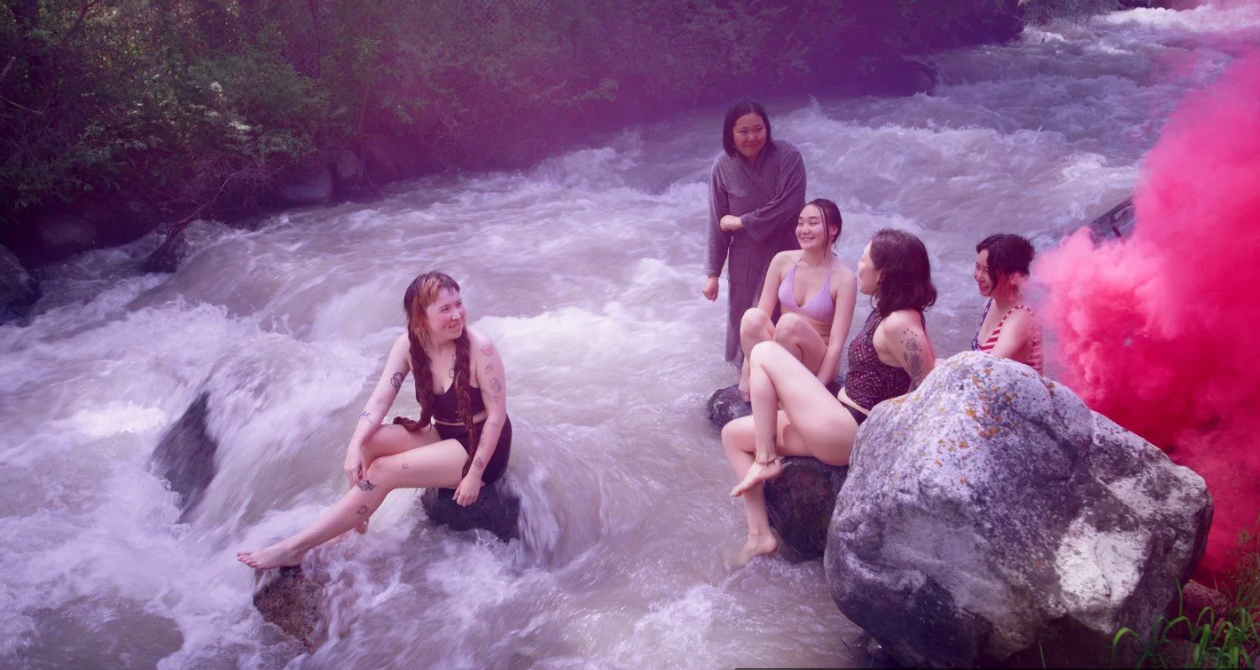
A scene from “River Dreams,” directed by Kristina Mikhailova, the country’s first feature-length documentary selected at the Berlinale. Photo credit: Orda.kz
“River Dreams” will premiere in Berlinale’s Forum Special, a curator-led section known for formally bold and politically engaged films. The program rarely includes debut features, making the selection notable for both its format and Mikhailova’s first full-length work.
Mikhailova becomes the second Kazakh woman director to appear in Berlinale’s official programs. More than 15 years ago, Zhanna Isabayeva competed in the main competition with “Nagima.” Since then, Kazakhstan’s films at Berlinale have been limited to fiction works directed by men.
Forum Special sits outside the main competition but often serves as a launchpad for films entering international circulation through festivals, arthouse cinemas and digital platforms.
Following a river, mapping a country
According to the film’s synopsis, “River Dreams” uses rivers as a metaphor to explore the emotional lives of young women in Kazakhstan, placing personal experience within the pressures of contemporary social and political reality.
Rather than observe from a distance, Mikhailova structures the film through sustained listening and proximity. The documentary links individual vulnerability with broader structural forces, keeping the personal and political inseparable.
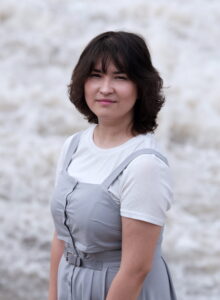
Dana Sabitova. Photo credit: 98Mag
Produced by Dana Sabitova, the project was developed over several years in cooperation among Kazakhstan, Switzerland, and the United Kingdom.
“It is an open, very sincere and, at times, desperate statement, shaped not only by the film’s team but also by all the girls-rivers and everyone we encountered during filming,” said Sabitova as quoted by 98Mag.
Speaking after the selection was announced, Mikhailova said Berlinale offers a decisive starting point for a debut film.
“I am very happy to present my debut film at Berlinale, because this platform gives a film the chance to be seen globally: at festivals, in cinemas and on online platforms. ‘River Dreams’ is a film about Kazakh women, strong and unbreakable, whose voices fill the screen through the metaphor of a river,” Mikhailova told the Orda news agency.
“For me, it is important for Kazakh viewers. It reflects the emotional and political landscape of today’s Kazakhstan, which is why I am especially looking forward to its domestic premiere and release,” she added.
From physical journey to film language
In an interview with 98Mag, Mikhailova said the project began as a personal and physical journey long before it became a film. She followed one river from glaciers to desert, a route of approximately 130 kilometers, first alone, on foot, by bicycle and motorbike, and later with a crew and camera.

Kristina Mikhailova. Photo credit: 98Mag
“It was the adventure of a lifetime,” said Mikhailova, highlighting that the project first appeared at a pitching forum eight years ago, and eventually became a multi-year journey and feature debut.
She noted that the central image of “girls-rivers” emerged gradually through observation rather than as a predetermined artistic concept.
“I wanted to understand at least one river, to hear its voice. I observed it, studied it, and one day I simply fell in love with it,” said Mikhailova.
Mikhailova said she began to see parallels between the river and her own experience, an observation that later extended to the women whose voices shape the film. Their stories form what she describes as a “long, tender yet desperate monologue” that is personal, social and political, built around the idea of radical tenderness.
“I know my film is ambiguous, and I am completely open to any reaction. I like provocation. Inside the film, there is a great deal of love for Kazakhstan, for my home, for my girls-rivers, but also boldness, anger, irony and protest against what hurts me in this country,” she said.
Animation, technology and memory
The second Kazakh film in the Forum Special program is “Qantar 2022” by multidisciplinary artist Almagul Menlibayeva.
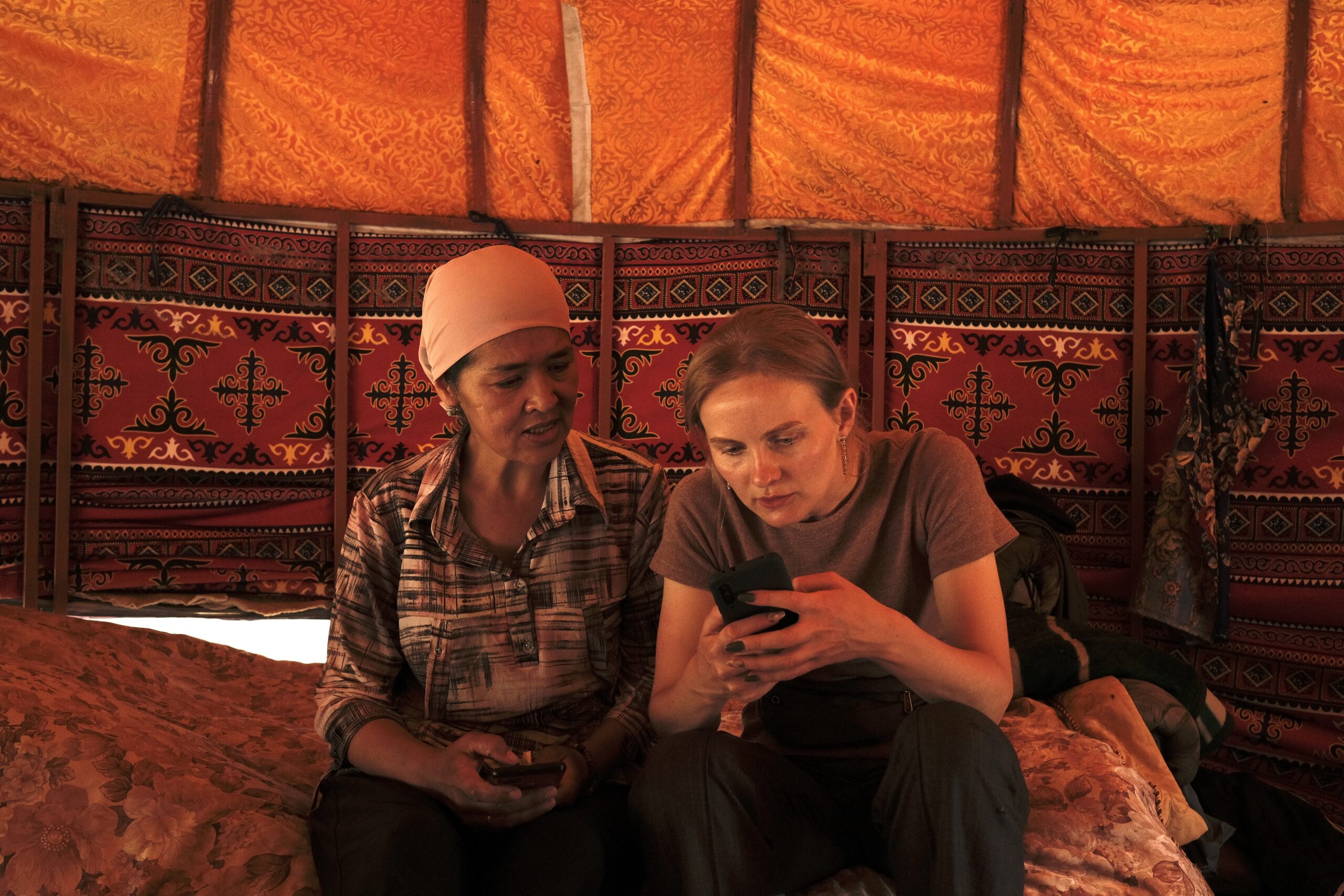
“River Dreams” backstage. Photo credit: 98Mag
Created using artificial intelligence technologies, the animated short explores how political violence, media narratives and collective memory intersect in contemporary Kazakhstan. Through fragmented imagery and algorithmically generated visuals, Menlibayeva examines both the power and the limitations of AI as a tool for representation.
Festival materials describe the work as moving “from fragments toward counter-memory,” positioning the film as an artistic response to how recent events are recorded, distorted or forgotten.
