
ASTANA – Kazakhstan aims to make manufacturing the main driver of economic growth this year, with metallurgy, mechanical engineering, chemicals, and construction materials leading the expansion.
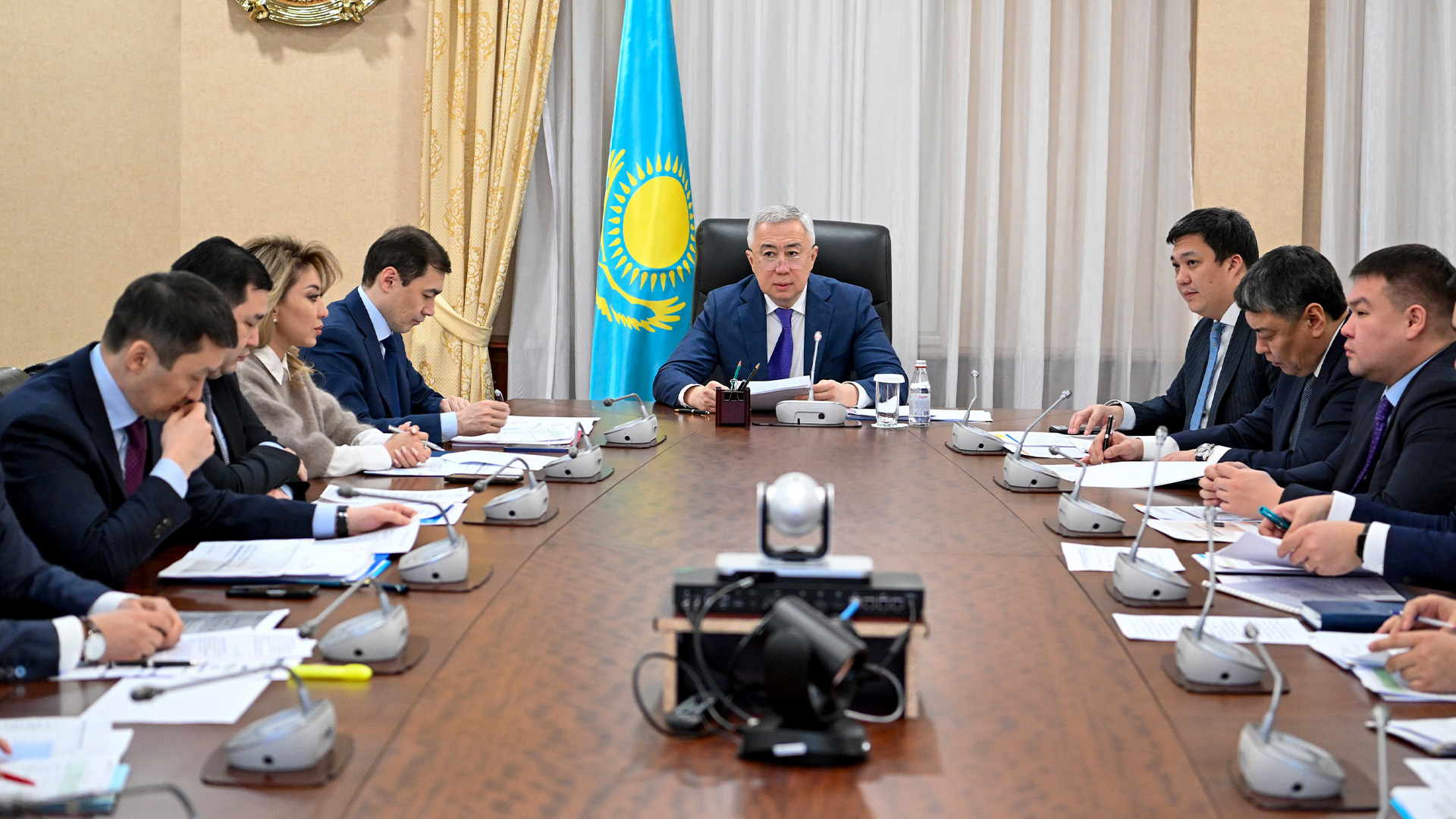
The government held its first meeting this year of the economic growth task force, chaired by Deputy Prime Minister and Minister of National Economy Serik Zhumangarin. The discussion focused on measures to sustain strong economic growth in 2026. Photo credit: primeminister.kz
The government’s economic growth task force held its first meeting of the year on Jan. 13, chaired by Deputy Prime Minister and Minister of National Economy Serik Zhumangarin. The discussion focused on measures to maintain strong economic growth this year, the Prime Minister’s press service said.
The Ministry of Industry and Construction has prepared a detailed roadmap for each sector, and the task force will review sub-sectors separately, analyzing weaknesses, constraints, and barriers to growth. Industry associations and major market participants will be involved in these discussions.
Metallurgy, which accounts for 40% of the manufacturing industry, remains a major focus. The physical volume index in metallurgy is projected to reach 103% this year, driven by growth in both ferrous and non-ferrous metallurgy. Metallurgy also accounts for approximately 5% of trade turnover, supporting overall trade growth.
Mechanical engineering is expected to grow 13.4%, driven by increased production of passenger cars, trucks, special-purpose vehicles, agricultural machinery, railway cars, and household appliances. Growth in the chemical industry is projected at 7%, driven by existing and new investment projects, while construction materials production is expected to rise 6%, including Portland cement, ceramic slabs, reinforced concrete products, and ready-mix concrete.
The construction industry reached record levels in 2025, with 20.1 million square meters of housing commissioned, and is expected to maintain this pace.
Trade volume is expected to grow by at least 6.5% this year, driven by increased exports of agricultural products and higher domestic production of food and non-food goods. The launch of wholesale B2B electronic trading platforms will enable direct deliveries from producers to domestic trade entities, while new wholesale purchasing standards will improve pricing transparency and reduce unnecessary intermediaries. Updated domestic trade regulations now require at least 30% of retail space to be allocated to products made in Kazakhstan, supported by measures to license and regulate markets, digitalization, and supply chain traceability.
The transportation and warehousing sectors are projected to grow 6.1% in the first quarter and 9.6% by year-end. Growth will be supported by freight transport of 305.3 million tons (+13.3%) and passenger transport of 496.6 million passengers (+12.2%). Infrastructure projects include repairing 11,000 kilometers of roads, completing the Kyzylzhar-Moiynty and Darbaza-Maktaaral railway lines, opening Zaysan, Katon-Karagay, and Kenderli airports, modernizing railway and air terminals, and renewing the transport fleet.
