
ALMATY — Kazakhstan is considering the creation of a large-scale industrial park valued at $15 billion, as First Deputy Prime Minister Roman Sklyar met on Jan. 8 with Zhao Tingyun, vice chairman of the board of China’s Xinfa Group, to discuss investment cooperation and the practical aspects of project implementation.
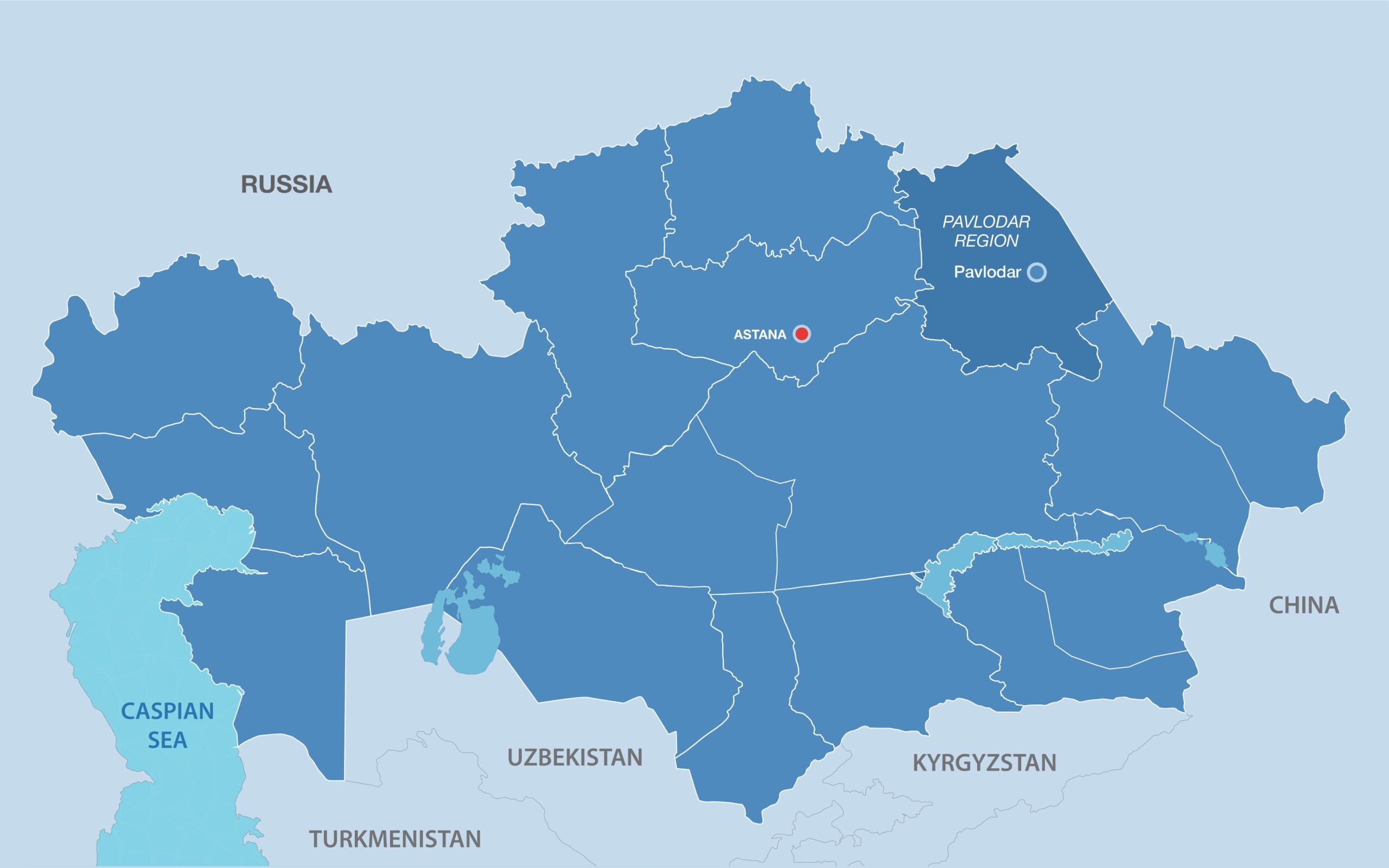
First Deputy Prime Minister Roman Sklyar met on Jan. 8 with Zhao Tingyun, vice chairman of the board of China’s Xinfa Group, to discuss investment cooperation and the practical aspects of project implementation. Photo credit: Prime Minister’s press service. Click to see the map in full size. The map is designed by The Astana Times.
The talks focused on plans to build a modern, full-cycle industrial park in the Pavlodar Region, aimed at deep processing of raw materials and the production of high value-added industrial goods, reported the Prime Minister’s press service.
Deep processing and high value-added production
According to the project concept, the proposed industrial park would cover more than 3,000 hectares and focus on advanced processing of Kazakhstan’s natural resources, including coal, bauxite, copper, fluorite, and limestone. Plans include constructing metallurgical facilities to produce alumina, aluminum, and copper, as well as developing energy infrastructure, including renewable energy sources.
The project also envisions launching production facilities for soda ash, carbon materials, and eco-friendly construction solutions. If implemented, the industrial park is expected to create more than 10,000 jobs and significantly strengthen Kazakhstan’s industrial base.
Zhao noted that Xinfa Group has already conducted a preliminary assessment of Kazakhstan’s resource potential, including bauxite, coal, and copper deposits, and expressed confidence in their suitability for building deep-processing value chains and manufacturing high value-added products.
Government support for strategic investments
Sklyar noted that Kazakhstan views industrial modernization, attracting strategic investors, and developing a technology-driven industry as key priorities of state economic policy.
He noted that the government has established a stable legal and institutional framework to support major investment projects, including mechanisms for long-term partnerships with international industrial groups. These conditions, he said, are designed to ensure predictability, transparency, and effective project implementation for large-scale investors.
Following the meeting, both sides confirmed their mutual interest in further developing the project, expanding industrial cooperation, and strengthening long-term investment ties. Officials emphasized that continued dialogue and technical consultations will be key to moving the initiative toward implementation.
