
ASTANA — Abai is widely regarded as the founder of modern Kazakh written literature and one of the country’s most influential thinkers. His poetry and “Words of Edification,” a collection of philosophical reflections on morality, education, human nature and society, continue to shape how generations of Kazakhs understand their cultural heritage.
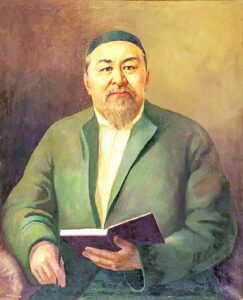
Abai Qunanbaiuly. 1981. Pastel on toned paper by Leonid Leontyev (1913–1983). Photo credit: A. Kasteyev National Museum of Arts
Yet to understand Abai, it is also necessary to understand the world that shaped him. This is what Mukhtar Auezov set out to capture in “Abai Zholy” (The Path of Abai), a four-volume epic novel that tells the story of the poet’s life while offering a sweeping portrait of Kazakh society in the 19th century. Through Abai’s experiences, Auezov brought to life the traditions, social structures, cultural practices and everyday struggles of the Kazakh steppe. The novel is not simply a literary biography. It is an account of a society negotiating the relationship between inherited customs and the search for change.
The writer behind the epic
Born in 1897 near Semipalatinsk, in what is now Abai Region, Auezov grew up in a family with close ties to the poet. His grandfather, Auez, was a storyteller who introduced him to literature and helped nurture his interest in Abai’s work. This early exposure would become central to Auezov’s literary and scholarly career. Auezov studied at the Semipalatinsk Teachers’ Seminary before continuing his education at Leningrad State University, where he studied philology.
He became a prolific writer, playwright and literary scholar, researching Kazakh folklore, oral literature and the development of national literature. His interest in Abai began long before the novel appeared. In 1918, Auezov published an essay on the poet’s works and literary significance. He then devoted years to studying Abai’s legacy and the cultural traditions of his era.
The first book of the novel, published under the title “Abai,” appeared in 1942. A second volume followed in 1947, and the larger work developed over the following decade. The completed four-volume epic became Auezov’s defining achievement and brought his writing to readers far beyond Kazakhstan. In 1959, he received the Lenin Prize for the work.
A society brought to life
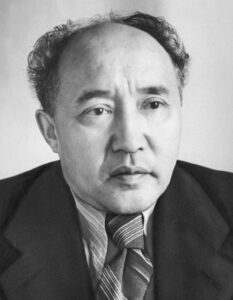
Mukhtar Auezov (1897–1961), Kazakh writer, playwright and literary scholar, author of a four-volume epic about the life of Abai Qunanbaiuly and Kazakh society in the 19th century. Photo credit: Adebiportal.kz
The historical setting of “The Path of Abai” is as important as its central character. Auezov reconstructs a world in which family ties, clan relationships, customary law and the authority of influential elders shaped much of public and private life.
The steppe is not merely a backdrop. Seasonal migration, access to pastures, livestock and the demands of a harsh climate influence the fortunes of families and the relationships between communities. Environmental hardship could threaten livelihoods, while disputes over land and resources could deepen existing divisions. Through the relationship between Abai and his father, Qunanbai, Auezov explores the tensions between authority and conscience. Qunanbai represents an established order in which power, status and family interests carry considerable weight. Abai increasingly questions injustice and the treatment of vulnerable members of society.
The novel also examines the position of women, marriage arrangements and the expectations imposed by family and community. These themes reveal the restrictions and inequalities embedded in the social order, while the experiences of individual characters show how people negotiated, resisted or suffered under those expectations. The work of Auezov is therefore neither an idealization of the past nor a simple catalog of customs. It presents a society with a rich cultural identity and strong communal bonds, but also with conflicts, hierarchies and human suffering.
The voices of the steppe
One of the novel’s most significant dimensions is its treatment of Kazakh oral culture. Poetry, songs, storytelling and the performances of akyns, poets who traditionally composed and performed verse, occupy an important place in the narrative. These were not simply forms of entertainment. They could preserve collective memory, express grief, criticize those in power and articulate concerns that might otherwise remain unheard.
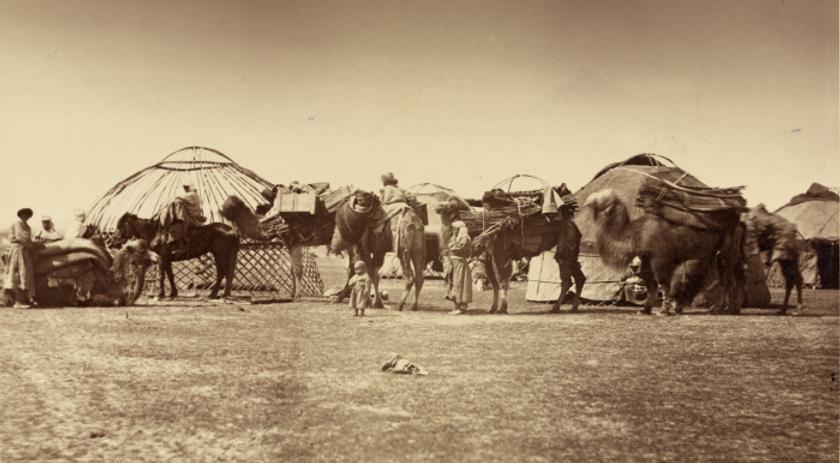
Kazakh steppe Photo credit: Peripheralhistories.co.uk
In his 2018 research article, “Aqyn agha? Abai Zholy as Socialist Realism and as Literary History,” scholar Gabriel McGuire examines how Auezov connected Abai’s literary development with the broader history of Kazakh oral literature. McGuire notes that Auezov had studied earlier poets and their works before incorporating fictionalized versions of historical akyns into the novel. Their encounters with Abai help explain how the poet’s voice emerged from an existing cultural tradition. Abai listens, questions and reflects, drawing on the poetic language and social observations of those who came before him.
This connection is important because it places Abai within a continuing literary history rather than presenting him as an isolated genius. His intellectual contribution becomes more meaningful when viewed against the songs, debates and storytelling traditions of the society around him. Through these voices, Auezov also preserves the concerns of ordinary people: hardship, injustice, loss, love and the search for dignity. The novel becomes a literary record of a culture in which much knowledge and collective experience passed from one generation to another through spoken words.
From Abai’s world to universal questions
Abai’s enduring significance lies partly in the questions he raised about his own society. In his poetry and “Words of Edification,” he reflected on education, moral responsibility, work, ignorance, envy and the need for personal development. Auezov’s novel places these ideas within the circumstances of Abai’s life. Readers see the social relationships and conflicts that informed his thinking, including his growing dissatisfaction with cruelty, arbitrary authority and indifference to the suffering of others.
This historical context does not limit Abai’s ideas to Kazakhstan. Questions about how people should live, what makes a society just and why education matters remain relevant across cultures. The novel offers a way to approach those questions through the particular experiences of the Kazakh steppe.
At the same time, its significance extends beyond Abai himself. Auezov captures a world of family histories, oral traditions, music, customs and social change, giving readers a fuller understanding of the cultural environment from which one of Kazakhstan’s greatest literary figures emerged.
“The Path of Abai” endures because it connects an individual life to the experience of a people. By reconstructing the world around Abai, Auezov created a work that preserves not only the memory of a major thinker but also a richly detailed literary portrait of Kazakh life and its place in the country’s cultural history.
