
ALMATY – Kazakhstan is marking the legacy of Akzhan Mashanov (1906–1997) on the 120th anniversary of his birth on Sept. 2, one of the country’s prominent scientists and an important figure in the development of Kazakh scientific thought.
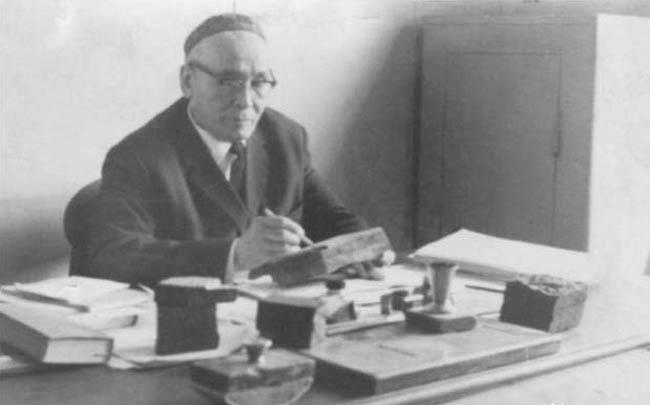
Mashanov’s research also became part of a wider scholarly discussion in Central Asia about the heritage of medieval scientists whose lives predated modern national borders.
A geologist, engineer, educator, translator and researcher, Mashanov made significant contributions to the development of geomechanics and technical education in Kazakhstan. His name is perhaps most closely associated with a decades-long effort to research the life and legacy of Abu Nasr Al-Farabi and establish his connection with the ancient city of Farab, now Otrar in South Kazakhstan.
His work ultimately helped bring international attention to Al-Farabi’s roots and contributed to the organization of an international conference in Almaty marking the 1,100th anniversary of the medieval scholar.
From geology to the history of science
Born in 1906 in the Karkaraly district of the Karagandy Region, Mashanov came from a family with deep roots in Kazakh history. His grandfather was the prominent bi Mashan, whose reputation was reflected in Kazakh oral tradition and who is considered one of the prototypes for the character Masanbi in Ilyas Yessenberlin’s historical novel “The Nomads.”
Mashanov received his early education at the Karkaraly technical school before entering the mining institute in Almaty, which later became the Kazakh Polytechnic Institute.
He began his scientific career at a time when technical literature in the Kazakh language was scarce. While still a student, he translated geological works into Kazakh. Translation remained an important part of his work throughout his life. He later translated works by such figures as Al-Farabi, Mikhail Lomonosov and Vladimir Obruchev and contributed to the development of technical terminology in Kazakh.
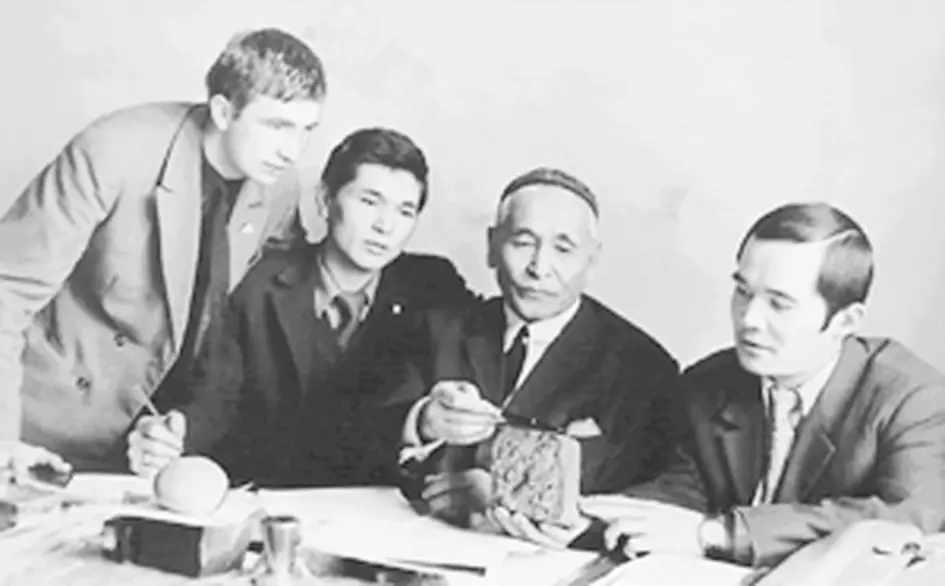
His research gradually expanded into an international investigation. Photo credit: aqiqat.kazgazeta.kz.
His textbook “Crystallography, Mineralogy and Petrography” became an important contribution to scientific education in the Kazakh language. At the same time, Mashani was developing his own scientific approach to geology and mining.
In 1940, while pursuing postgraduate studies, he used his methodology to identify the Akbastau-Kosmuryn and Zhartas deposits. His approaches were subsequently applied by other researchers, including in studies of the Zhezkazgan deposit.
His subsequent works helped establish geomechanics as an important field of scientific research in Kazakhstan. His work attracted attention abroad, with several of his studies translated into German.
The question that changed his life
Mashanov’s scientific career took an unexpected turn in the 1940s. In 1943, while in Almaty, he learned from Czech scientist Ernest Kolman about Al-Farabi, a medieval philosopher and polymath whose name had long been known throughout the Islamic world. The connection between Al-Farabi and Farab immediately caught Mashanov’s attention.
As a geologist familiar with the historical geography of Central Asia, he began examining the evidence linking the ancient city of Farab with Otrar and searching for information about the scholar who took his name from the city.
His research gradually expanded into an international investigation. Mashanov sent inquiries to major libraries and research institutions in Berlin, Lisbon, Paris, Cairo, Madrid and other cities. In Ufa, he discovered three works by Al-Farabi in the library of the Galiya Madrasah. Other materials were obtained from Istanbul, Canada and European research centres.
Some of Al-Farabi’s works that had long been considered lost were eventually traced to libraries in different countries. Mashanov also recognized that studying Al-Farabi required access to his original texts. He therefore began learning Arabic and Persian himself. By the age of more than 50, he had acquired the languages necessary to study the philosopher’s works in their original form.
His research increasingly became a personal intellectual mission: to demonstrate that Kazakhstan’s scientific and cultural history was connected to a much older intellectual tradition that flourished across Central Asia.
A difficult search in the Soviet era
Mashanov pursued his research into Islamic intellectual history during the Soviet era, when religion and religious scholarship were officially discouraged. Biographical accounts indicate that he nevertheless began practicing Islam, performing daily prayers and studying Arabic and the Islamic intellectual tradition.
His religious convictions became closely intertwined with his scholarly work. He sought to understand Al-Farabi not simply as a philosopher of the medieval world, but as a representative of a sophisticated scientific civilization that had developed across Central Asia.
His research took him beyond libraries and archives. In 1968, Mashanov travelled to Damascus, Syria, where he located Al-Farabi’s grave at the Bab Al-Saghir cemetery. The journey symbolized the personal nature of his decades-long research.
Defending Al-Farabi’s connection to Kazakhstan
Mashanov’s research also became part of a wider scholarly discussion in Central Asia about the heritage of medieval scientists whose lives predated modern national borders. Once, during a visit to Tashkent, he met Muzafar Khayrullayev, deputy director of the Institute of Oriental Studies named after Abu Rayhan Al-Biruni. Mashanov introduced him to his findings on Al-Farabi.
The two scholars discussed whether Al-Farabi could be regarded as a shared heritage of the peoples of Central Asia. Mashanov agreed that the medieval scholar’s legacy belonged to the broader region, but argued that if Al-Farabi was to be considered a shared figure, the same principle should apply to other major scholars such as Al-Biruni, Ibn Sina and Al-Khwarizmi.
The debate reflected a larger historical reality: the intellectual networks of medieval Central Asia existed long before the modern borders of Kazakhstan, Uzbekistan and other states. For Mashanov, however, historical evidence remained central. He continued searching for sources that could establish Farab and Otrar’s place in Al-Farabi’s biography. His efforts eventually reached the international scientific community.
The 1,100th anniversary of Al-Farabi
In 1971, discussions at a UNESCO congress in Moscow considered plans to commemorate the 1100th anniversary of Al-Farabi. There were competing proposals over where the international conference should be held. Mashanov advocated for Almaty and presented his arguments. The conference was ultimately held in Almaty in 1975 with UNESCO support, bringing international scholars together to examine the legacy of Al-Farabi.
For Mashanov, it was the culmination of decades of research. His work had helped ensure that Kazakhstan became a major venue for international discussion of Al-Farabi’s intellectual heritage. Arab scholars began referring to him as “Al-Mashani” in recognition of his research into Al-Farabi. He later adopted the name and used it in his own scientific works.
A scholar who refused to stay within one discipline
Al-Mashani’s intellectual interests extended far beyond geology and the history of Al-Farabi. He studied the history of science in the Islamic world, Turkic cultural heritage, astronomy, philosophy and the relationship between scientific knowledge and religion.
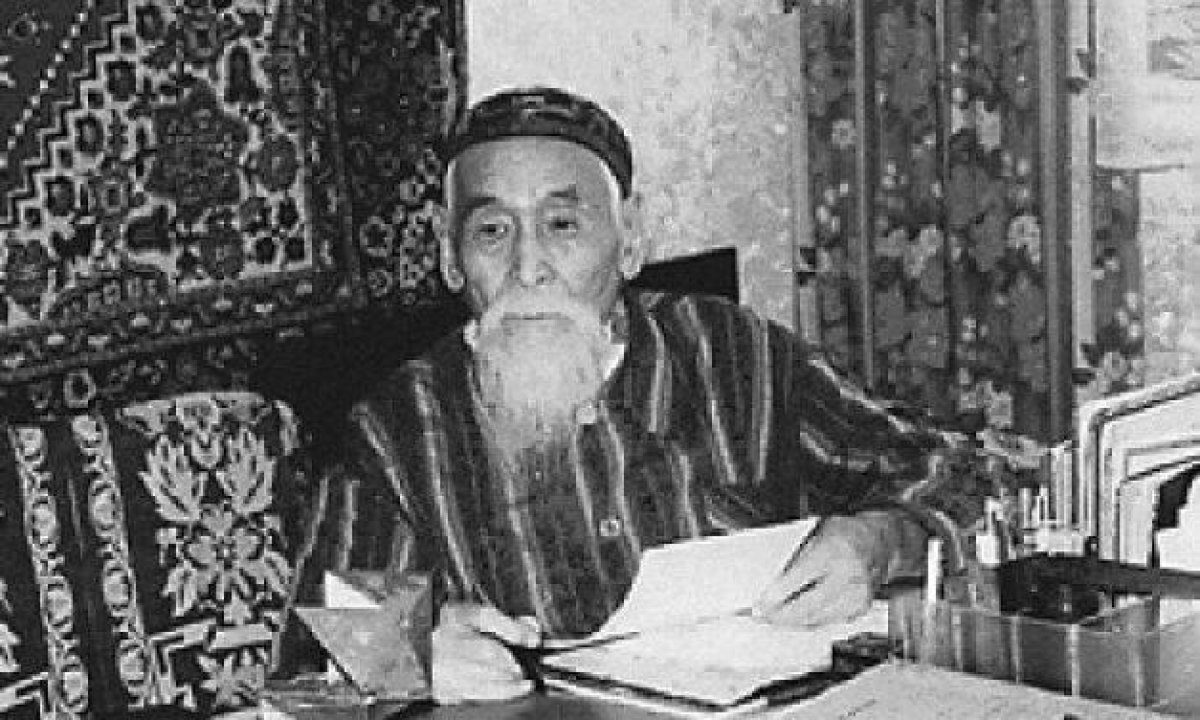
Mashanov later adopted the name Al-Mashani and used it in his own scientific works. Photo credit: liter.kz.
He also explored the intellectual links between Al-Farabi and the Kazakh poet and philosopher Abai, arguing that the intellectual foundations of Abai’s worldview could be traced through the broader philosophical tradition of the East.
His approach was unusually interdisciplinary for his time. He combined geology, archaeology, astronomy, history, folklore, philosophy and religious scholarship in his attempts to understand the development of knowledge in Central Asia.
He authored more than 350 scientific works, which his students later compiled into 16 volumes. Alongside Kanysh Satpayev, Mashani helped lay the foundations of the Academy of Sciences of the Kazakh Soviet Socialist Republic and became its first corresponding member.
Despite his contribution to the country’s scientific institutions, he never became an academician. His independence was reflected in his approach to both science and personal convictions.
Why his legacy remains relevant
Al-Mashani’s contribution is difficult to define through a single discipline. He was a geologist who helped establish geomechanics in Kazakhstan, an educator who expanded technical literature in the Kazakh language, a translator, a researcher of Islamic science and a historian of Central Asian intellectual traditions. He was also among the pioneers of Kazakh science fiction.
But his most distinctive contribution may have been the bridge he built between Kazakhstan’s modern scientific institutions and the region’s medieval intellectual heritage. Al-Mashani believed that the history of science should be studied as an interconnected process rather than divided into isolated national traditions.
His own life reflected that philosophy. He moved between geology and philosophy, mathematics and astronomy, Arabic manuscripts and Kazakh folklore, modern scientific methods and the history of Islamic scholarship.
“The measure of humanity is comprehensive education, therefore it is necessary to know and study the history of all sciences,” Al-Mashani wrote.
Recognition and remembrance
Al-Mashani’s contribution was recognized both in Kazakhstan and internationally. UNESCO marked his centenary, and in 2006, Kazpost issued a commemorative stamp dedicated to the scientist. His name has been given to a street in Almaty and an educational institution at the Satpayev Kazakh National Technical University.
At a ceremony unveiling a bust of Al-Mashani in 2020, former state secretary of Kazakhstan Krymbek Kusherbayev highlighted his role in promoting Al-Farabi’s heritage.
“Thanks to him, the return of Al-Farabi to Kazakh soil took place,” Kusherbayev said.
Mashani died in 1997, but the questions he devoted his life to continue to shape discussions about Kazakhstan’s scientific and cultural heritage.
