
ASTANA – The ruins of Djend, a medieval city in Kazakhstan’s Kyzylorda Region, offer a glimpse into a once-thriving center of trade, politics and Islamic culture that played a significant role in the history of the Golden Horde.
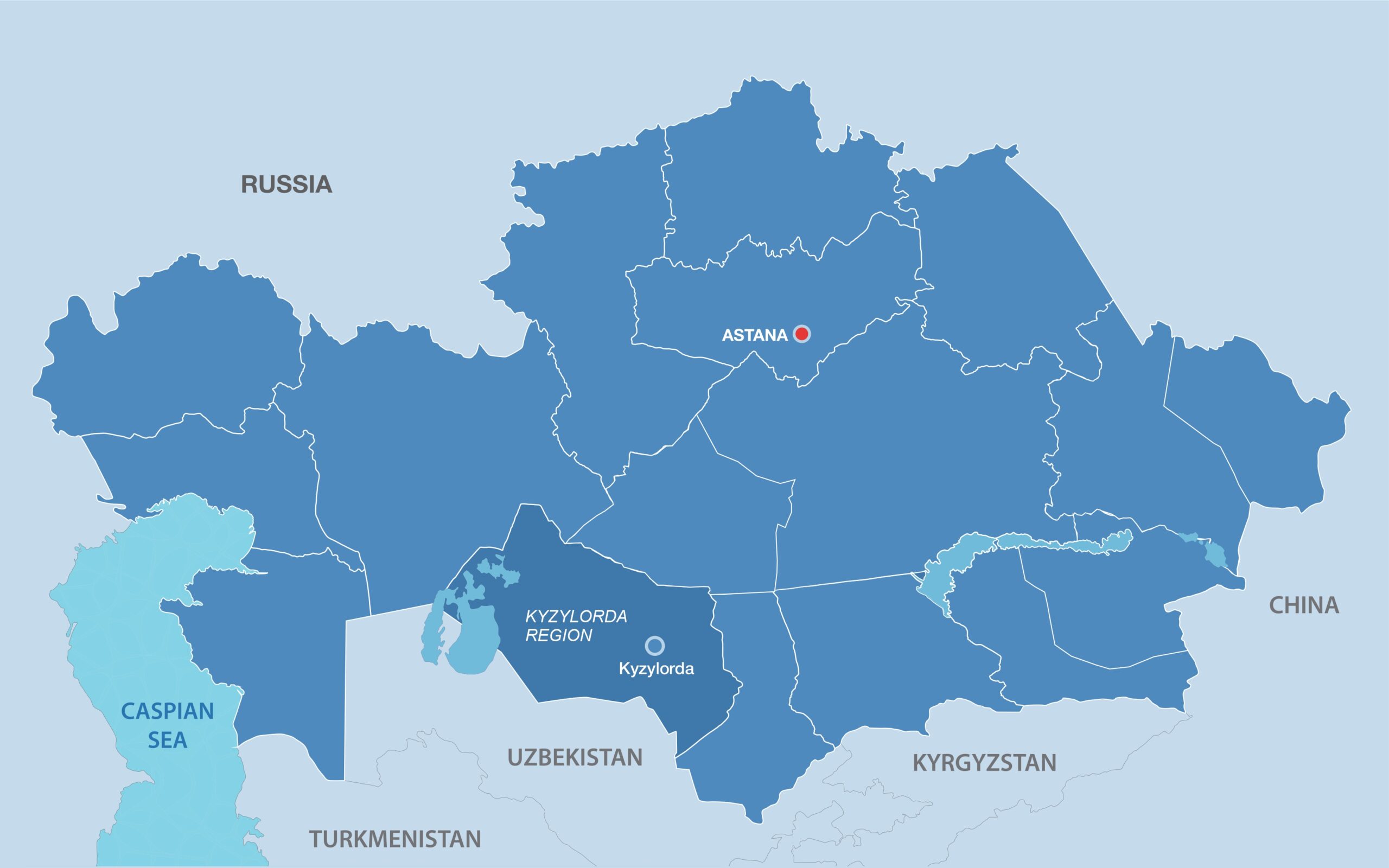
Located south of the village of Akkyr in the Zhalagash district of Kazakhstan’s Kyzylorda Region lie the ruins of Djend. Photo credit: Ilyasov’s personal archieve
Located south of the village of Akkyr in the Zhalagash district near the lower reaches of the Syr Darya River, Djend was one of the most important cities along the Silk Road, according to historian Darkhan Ilyasov.
He noted that written sources first mention Djend in the 10th century. Situated at the crossroads of caravan routes linking Khorezm with central Kazakhstan and western Siberia, the city developed into a major commercial and strategic hub.
“Initially, Djend was a large fortress and trading center within the Oghuz Khaganate. Its history is closely connected with the rise of the Seljuk Empire. Seljuk Beg, founder of the Seljuk dynasty, is believed to have embraced Islam in Djend, making the religion a cornerstone of his future state. Historical accounts also suggest that Suleiman Shah, one of the founders of the Seljuk state, may have been buried there,” Ilyasov said.
Coins found during the excavations of the Djend site. Photo credit: silkadv.com
Unlike many cities along the Syr Darya, Djend escaped widespread destruction during the Mongol invasions of 1220. Jochi Khan, the eldest son of Genghis Khan, reportedly brought the city under Mongol rule peacefully and later used it as one of his headquarters.
During the 13th and 14th centuries, Djend became one of the largest administrative and economic centers of the Golden Horde in the Syr Darya Region. The city operated a mint that produced coins bearing the names of Golden Horde rulers.
“This demonstrates the city’s financial and strategic importance within the state,” Ilyasov said.
He noted that medieval travelers and geographers described Djend as a prosperous city surrounded by fertile lands and vibrant markets. Merchants from Central Asia, Iran, China and Europe traded textiles, ceramics, silk and agricultural products there.
Archaeological discoveries indicate a highly developed urban culture, including pottery production, metallurgy, jewelry making and bone carving.
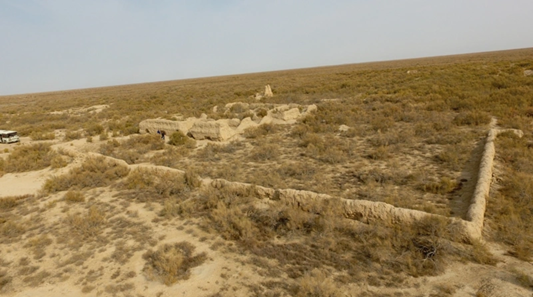
Djend was also a major center of Islamic learning and culture. Photo credit: Ilyasov’s personal archieve
Djend was also a major center of Islamic learning and culture.
“The city was home to magnificent mosques, madrasas and large libraries. Scholars originating from Djend often added the nisba ‘al-Jandi’ to their names,” Ilyasov said.
The city’s decline began in the late 14th and early 15th centuries, when the campaigns of Amir Temir and falling water levels in the Syr Darya weakened its economy. Following the collapse of the Golden Horde and a period of internal conflicts, Djend was eventually abandoned and ceased to exist by the 16th century.
In the 20th century, the Khorezm Archaeological and Ethnographic Expedition led by Soviet archaeologist Sergei Tolstov conducted extensive research at the site. Excavations uncovered the remains of defensive walls and towers, irrigation canals, coins and ceramics dating to the Golden Horde era.
“All this proves that Djend is not merely a collection of ruins. It is an important historical monument that reflects the political and cultural influence of the Syr Darya region during the formation of Kazakh statehood,” Ilyasov said.
The article was originally published in Kazinform.
