
ASTANA – Syrmak, a traditional Kazakh felt rug handcrafted from natural sheep’s wool, has been the centerpiece of nomadic life on the steppe.
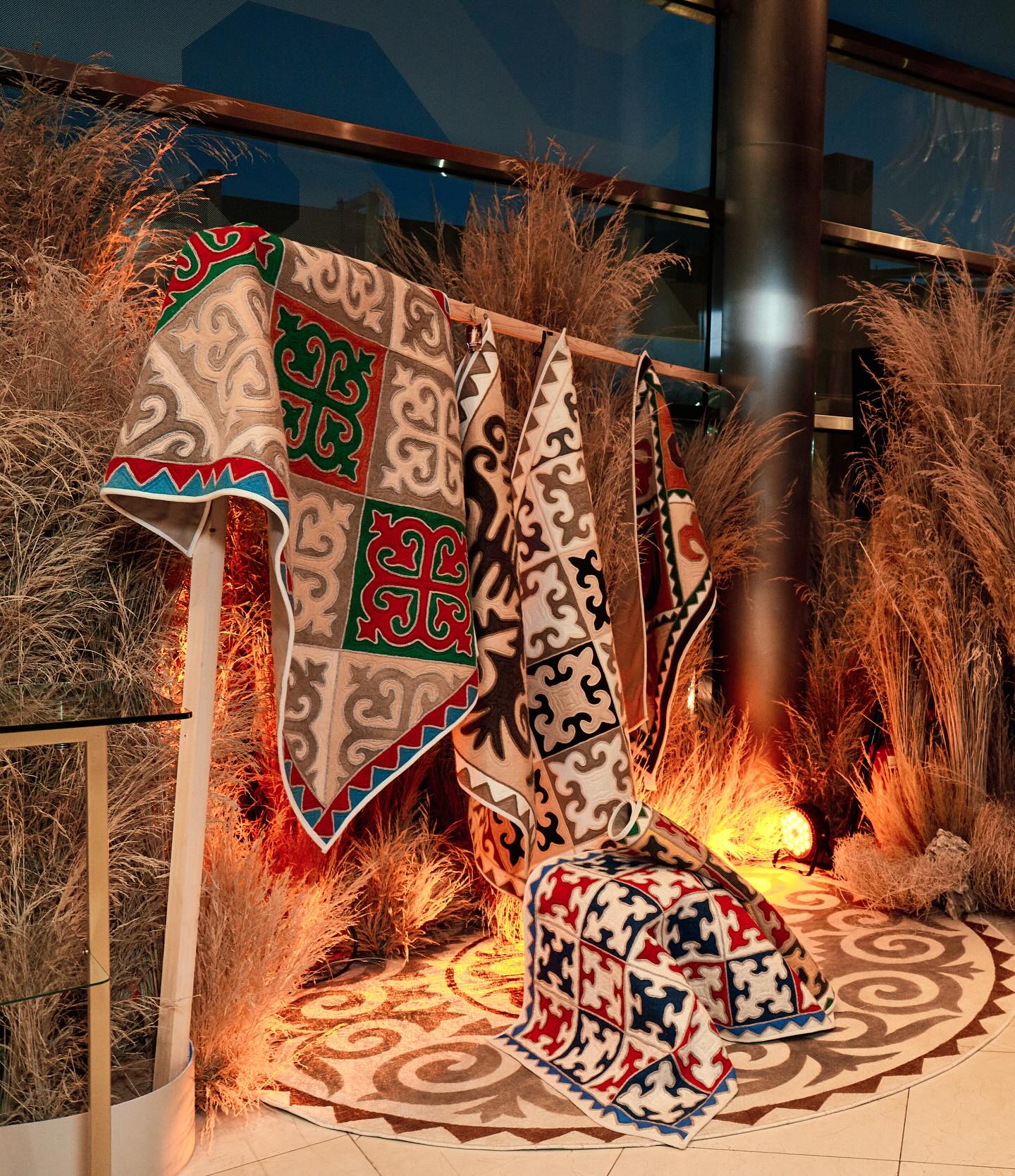
Photo credit: Tekemet_syrmak Facebook page
The name derives from an ancient Turkic verb meaning “to stitch” or “to sew tightly,” reflecting the rug’s distinctive quilting and stitching technique.
Inside the yurt, it was insulated against winter frost and summer heat, covered floors and walls, and signaled the artistic taste and skill of the household’s women. Durable and carefully crafted, many syrmaks were passed down from generation to generation, becoming both heirloom and history.
Craft and technique
According to Aizhan Kurbanova, a junior researcher at the National Central State Museum in Almaty, syrmak requires greater skill than tekemet, which is another type of felt carpet.
“Tekemet is made by felting one color of wool into another. Syrmak, however, is created by sewing together two prepared sheets of felt. It demands more precision and craftsmanship,” Kurbanova said in an interview with The Astana Times.
She explained that the wool undergoes an intensive preparation process. After shearing, it is cleaned, beaten with special wooden tools called sabau, laid out on reed mats and rolled repeatedly under pressure.
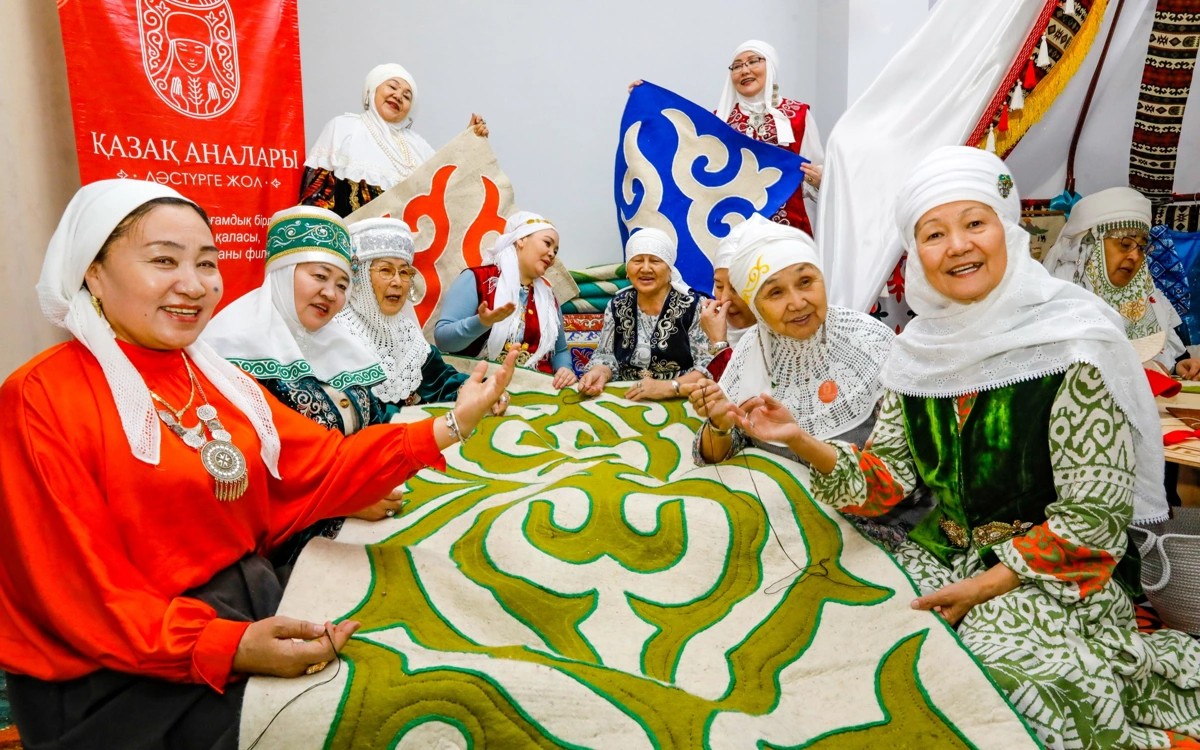
In Almaty, artisans from Kazakh Mothers – Path to Traditions are creating a 112-meter syrmak for Nauryz. Photo credit: Alexander Pavsky
“Artisans switch places while rolling to ensure even compression, as each person applies a different force. Once fully felted, the fabric is dyed in various colors,” Kurbanova said.
The signature mosaic technique begins by layering one sheet atop the other. An ornament is drawn onto the surface using charcoal, soap, or a salt solution. Then, with a sharp knife or scissors, the design is cut through both layers simultaneously.
The cut pieces are swapped and sewn back together. The result: two mirrored compositions – one the positive image, the other its negative twin. The stitched ornament lies flush with the background, creating a flat, durable surface that resists wear while producing striking graphic contrast.
Cultural significance
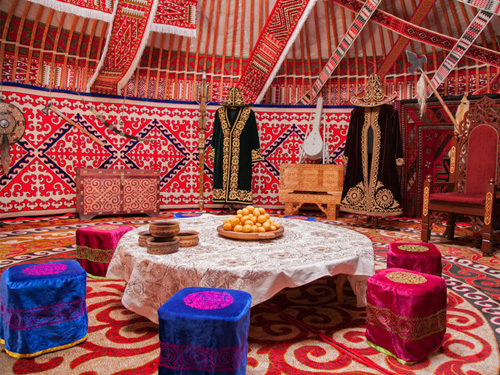
Long a central element of nomadic life, the syrmak served both practical and decorative purposes inside the yurt. Photo credit: fetr.org
Syrmak patterns are more than decoration. They are visual narratives. Among the most common motifs is the “koshkhar-muyiz” (ram’s horns), symbolizing strength and prosperity. Geometric forms such as diamonds, squares, spirals echo harmony, continuity and the cyclical nature of life.
Kurbanova highlighted that various types of syrmak served specific functions. “Kosh syrmak” covered camels during long migrations. The more ceremonial “tor syrmak,” often measuring up to five meters, occupied the place of honor in the yurt.
“The widespread presence of the syrmak across the steppe attests to the remarkable mastery of felt-making among Kazakh women. Artisans often gathered in groups, working side by side, singing, laughing, exchanging advice and stories. Each rug absorbed this shared spirit, carrying within it the warmth, energy and emotions of the hands that created it,” Kurbanova said.
A 112-meter syrmak for Nauryz
In Almaty, artisans from a local public association are currently creating a giant syrmak measuring 112 meters in length to mark the Nauryz holiday.
The artistic concept symbolizes the four seasons. Blue tones represent winter, green reflects spring renewal, red signifies summer heat, and golden hues evoke autumn. Each section incorporates distinct traditional ornaments.
Every element of the carpet is handmade using classical felting and sewing techniques.
“Now, as we sew this syrmak, I feel joy seeing our traditions revived. It is a happiness to continue the work of our ancestors and pass knowledge to the young. Syrmak symbolizes our culture, the warmth of home and family values,” educator Maira Madiyeva told Kazinform.
Project participant Gulnur Akhmetkyzy described the rug as a symbol of unity and craftsmanship.
“In the past, grandmothers and women gathered together to work with joy and respect, creating a special energy in the art. Each detail preserves the memory of our ancestors,” she said.
The authors plan to complete two large works, such as “Sacred Shanyrak” and “Syrmak Representing the Four Seasons” by March 21, when the finished carpet will be presented to the public during Nauryz celebrations. Organizers also intend to register the project in the Global Best of Records international record book.
