
ALMATY – Kazakhstan marks the 155th anniversary of Kazhymukan Munaitpasov, a legendary Kazakh wrestler, on April 7, more than a century after he first stepped onto the wrestling mat. Munaitpasov remains one of Kazakhstan’s most enduring figures, a man whose life took him from a childhood in poverty to arenas across the world, and whose legacy still resonates far beyond sport.
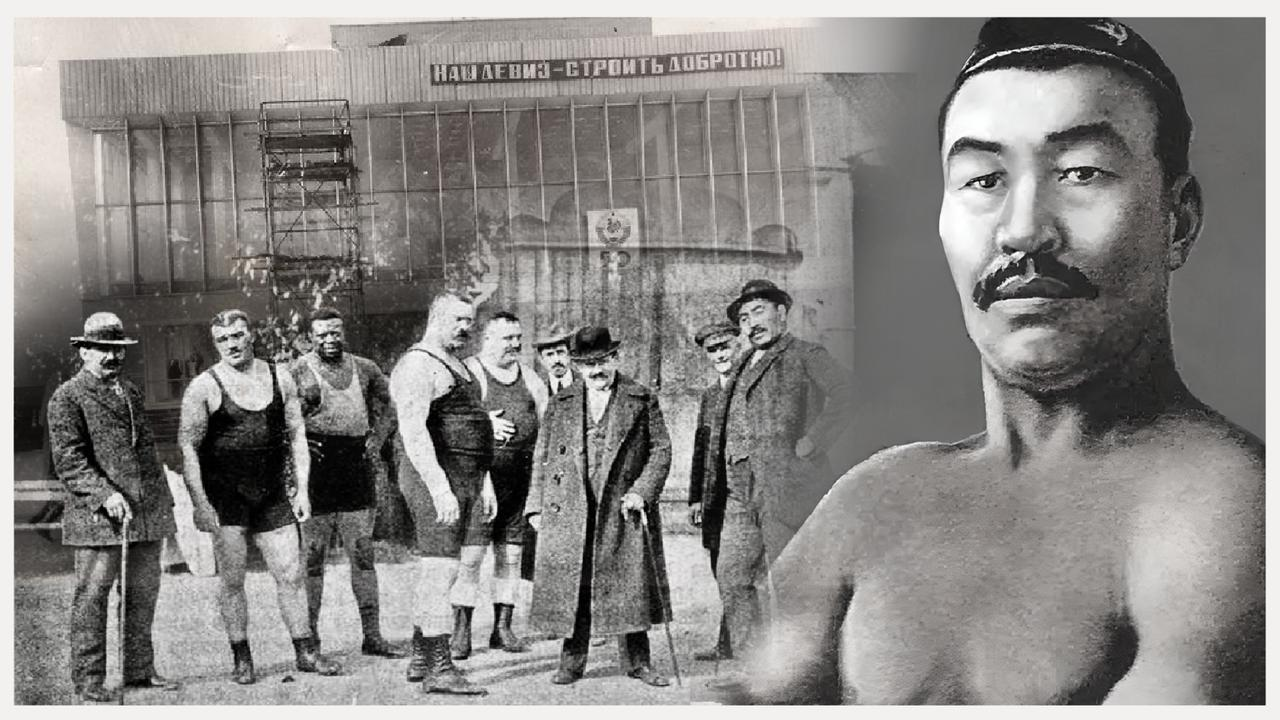
Kazhymukan Munaitpasov, a legendary Kazakh wrestler.
A childhood of hardship and strength
According to archival records and family accounts, Munaitpasov, born Mukhan, was born on April 7, 1871. While official documents list his birthplace as the Akmola Region, his descendants say he was born in the village of Aktobe in the Otyrar district in southern Kazakhstan.
“He himself always told his children that he was born here,” said Kazhymukan Regional Sports Museum’s curator Gulzhakhan Sagymbekova, noting that the family later moved north, where his birth was formally registered.
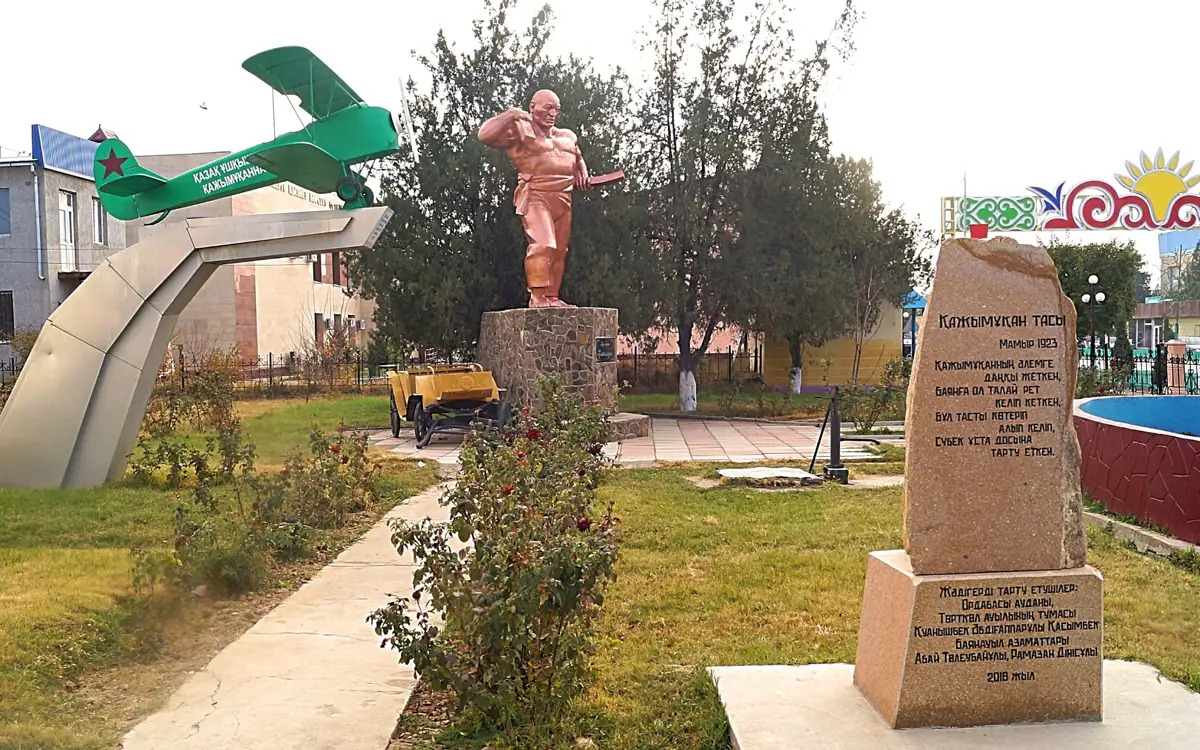
From different corners of Kazakhstan, people travel to revere the spirit of the wrestler. Photo credit: kazinform
His mother died during childbirth. Raised by his father and grandmother, Mukhan grew up in poverty, working from an early age. By six, he was helping herd livestock; by 12, he was laboring for local merchants. That physical work shaped his extraordinary strength, which soon became the subject of local legend.
“One day, when Mukhan was just 14, ten men tried to lift a half-ton container of butter but failed. Mukhan came in, lifted it alone and placed it onto the sled,” Sagymbekova said.
Another widely told story describes how, caught in a blizzard, he carried his injured horse on a sled and dragged it home himself after the animal broke its leg.
When a natural talent was discovered
Munaitpasov’s wrestling journey began in his early 20s. At a local competition in Petropavl, visiting wrestler Ivan Zlobin noticed his raw strength and endurance during a lengthy match.
“I found you a natural talent, a real natural talent,” Zlobin wrote in a recommendation letter, sending Mukhan to study at Ivan Lebedev’s wrestling school in St. Petersburg.
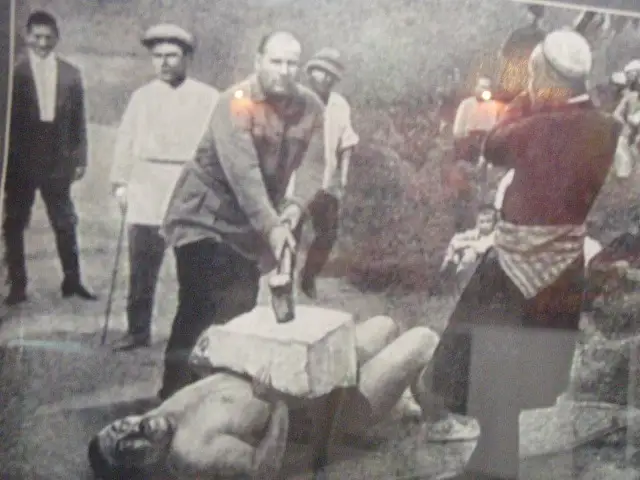
Photo from the museum’s archive, depicting the abstract Munaitpasov’s circus shows. Photo credit: Kazinform.
Between 1905 and 1907, Munaitpasov trained in classical wrestling, quickly mastering techniques that complemented his natural power. He later joined international circus troupes, including that of world champion Georg Lurich.
According to historical accounts, he developed close ties with prominent wrestlers, including legendary Ivan Poddubny, who helped him refine his skills.
Reinvented identities and global fame
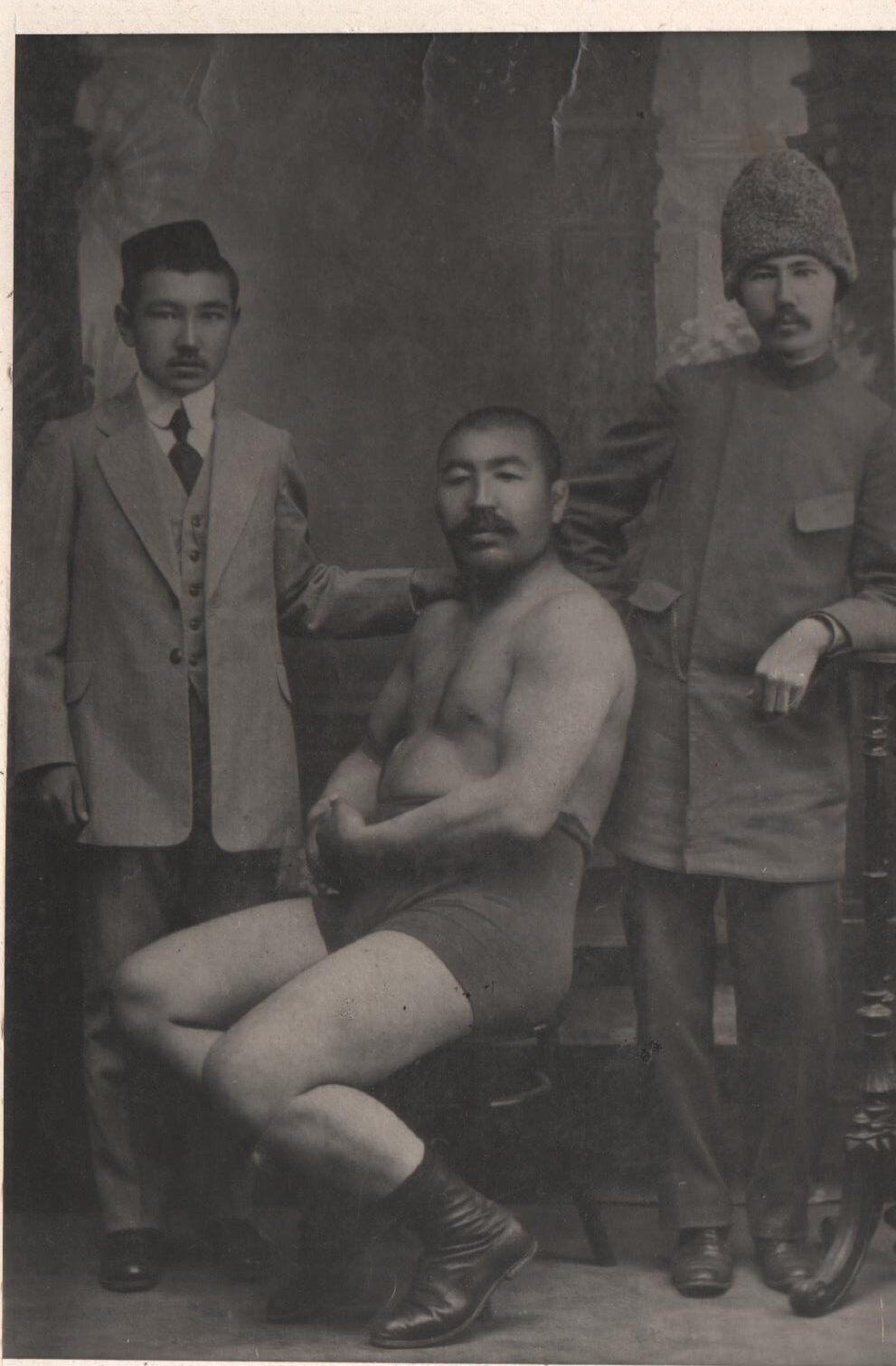
Photo credit: gov.kz
As part of circus promotions, Munaitpasov often performed under pseudonyms such as Yamagata Mukhanura, Kara-Mustafa and Mahmut. Promoters sometimes presented him as a Japanese or Manchurian fighter to attract audiences. Despite this, he consistently sought recognition under his real name and Kazakh identity.
His career took him across more than 50 countries, including tours in Europe, South America, the Middle East and Asia. He competed in major tournaments across Russia, becoming a frequent winner and prizeholder.
Between 1909 and 1911, Munaitpasov toured Türkiye, defeating some of the strongest wrestlers of the time. The victories proved pivotal.
Following a pilgrimage to Mecca, he was given the honorific “Kazhy” (Haji), meaning one who has completed a holy journey, after which he became known worldwide as Kazhymukan.
He went on to win dozens of medals, gold, silver and bronze, and was awarded the prestigious Sigismund’s Belt between 1913 and 1915. Under the name Kara Ivan Munaitpasov, he also represented the Russian Empire in international competitions in Kabul, Tehran, and Harbin, among other cities.
Fame without fortune
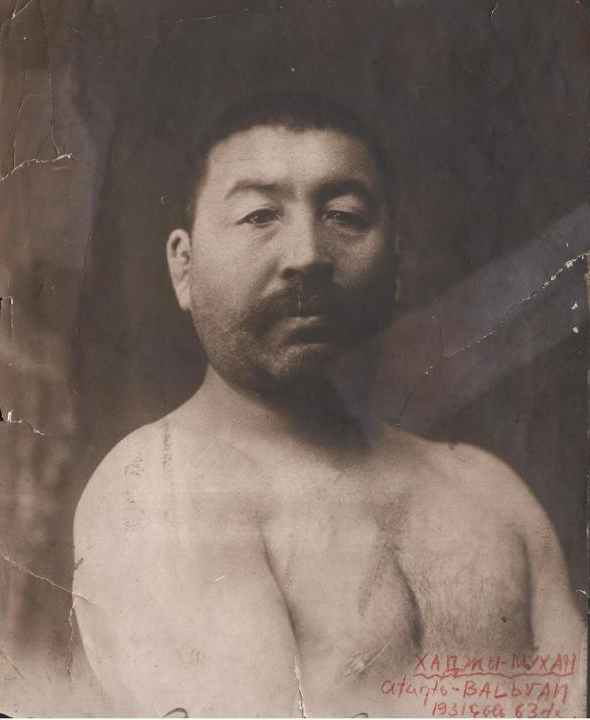
Kazhymukan Munaitpasov, 1931. Photo credit: Kazinform.
“To be honest, our ancestor did not amass any riches. In his final years, he lived very modestly. By old age, he had neither money nor awards left. His greatest wealth was his children,” said his great-grandson Kuanyshbek Eskermesov.
Many of his medals were lost over time, some given away, others destroyed in a circus fire, and several left as collateral when he urgently needed money to return home after his father’s death.
In 1927, he was awarded the honorary title Hero of the Kazakh Steppes by the then-Kazakh Autonomous Soviet Socialist Republic.
Munaitpasov returned to Kazakhstan in the early 1920s, continuing to perform and organize wrestling events. He used much of his earnings not for himself, but to support communities, funding schools and hospitals.
During the repressions and famine of the 1930s, he used his authority to help relatives and fellow villagers avoid deportation, an act remembered in local histories.
Wartime sacrifice: building a plane
During World War II, at over 70, Munaitpasov once again stepped forward. He created a traveling circus that performed feats of strength to raise money for the war effort. Among his famous performances were feats such as bending metal plates around his neck and supporting heavy loads while vehicles passed over him.
Over three years, he raised enough to fund the construction of a military aircraft. He requested that it be named after Kazakh hero Amangeldy Imanov. In 1944, he received a telegram confirming that the aircraft had been built.
The plane, bearing the inscriptions “Amangeldy” and “Haji Mukhan,” went on to complete 217 combat missions on the Baltic and Leningrad fronts.
Final years and enduring reverence
Munaitpasov spent his final years in southern Kazakhstan, in the village now named after him in the Turkistan Region. He died in 1948 at the age of 77. Today, his grave in the Ordabasy district is a place of pilgrimage.
“People come to honor the spirit of the wrestler. The sick ask for health, the childless for children, and athletes for blessings before major competitions,” said Eskermesov.
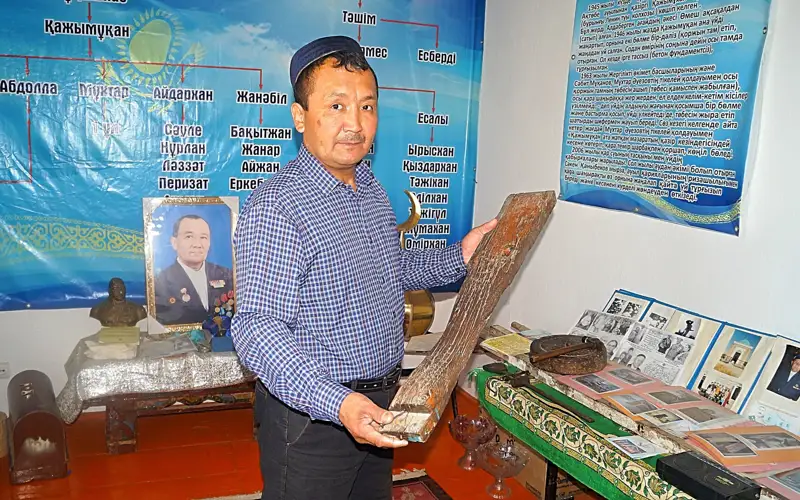
Munaitpasov’s great-grandson Kuanyshbek Eskermesov in a home-museum named after the wrestlet. Photo credit: Kazinform.
Munaitpasov’s descendants still live in the village and preserve his legacy. His great-grandson has created a home museum displaying personal belongings.
“From the old house, we kept the wooden threshold, the one our ancestor once stepped on,” Eskermesov said.
Many original artifacts are also preserved in a state museum dedicated to Munaitpasov, opened in 1980. Since 1986, international wrestling tournaments have been held in his honor.
According to historians and family accounts, from a boy in the steppe to a world-renowned champion, he stressed his Kazakh identity and carried it across continents.
