
ASTANA – Senior officials and international experts convened this week at the Regional Ecological Summit with a clear and unified message: the global community has a sufficient understanding of its environmental challenges. What is now required is a decisive shift toward results.
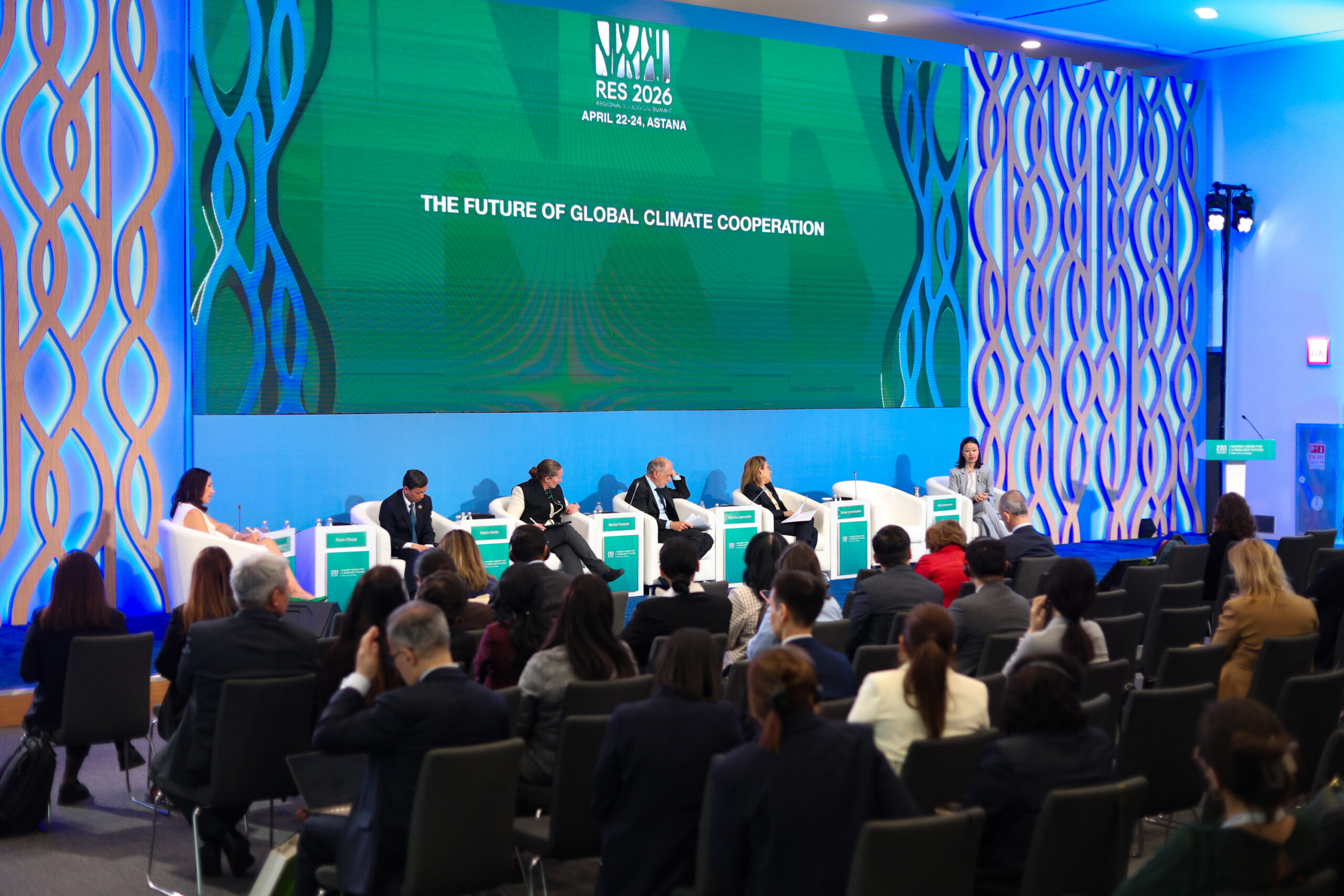
Panel session on the future of global climate cooperation. Photo credit: RES
Central Asia as emerging climate actor
“We don’t want to discuss the problems – we know what the problems are. We want to discuss the solutions,” said Zulfiya Suleimenova, Kazakhstan’s ambassador-at-large for the Foreign Ministry, setting the tone for the panel session on the future of global climate cooperation.
She argued that when people see tangible improvements in their quality of life through climate, water and biodiversity action, public engagement with the environmental agenda will deepen rather than diminish.
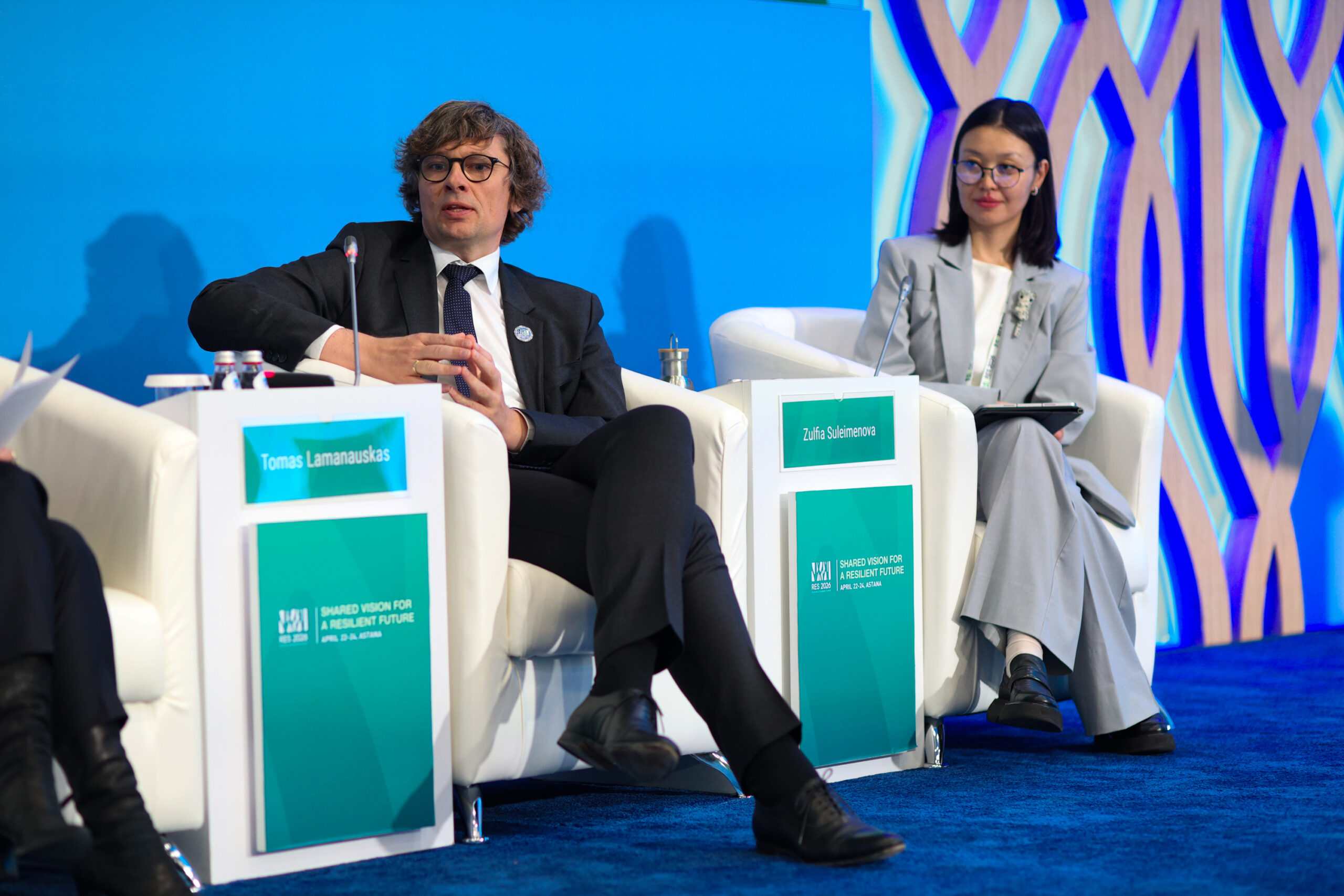
Tomas Lamanauskas, deputy secretary-general of the International Telecommunication Union and Zulfiya Suleimenova, Kazakhstan’s ambassador-at-large for the Foreign Ministry. Photo credit: RES
“When we speak about the environment, it is not only about climate. It is one part of a much broader set of challenges,” she said, noting that recent research suggests humanity has already crossed seven of nine planetary boundaries.
Suleimenova said Kazakhstan’s approach focuses on both mitigation and adaptation, as well as addressing loss and damage. She pointed to the country’s efforts to transition toward cleaner energy and reduce methane emissions in the oil and gas sector.
She highlighted Kazakhstan’s 2012 legislation banning routine gas flaring as a model for rapid emissions reduction. Since the law took effect, the country reduced flaring more than fourfold, from over 4 billion cubic meters to under 1 billion cubic meters.
“This is a very concrete example of what you can do in a pretty short period of time,” she said. Kazakhstan is now pursuing similar regulations to curb routine venting, with legislation currently under review in the Kazakh Parliament. She noted that the International Energy Agency estimates the country could generate an additional $300 million annually by capturing gas currently flared or vented.
Water security is emerging as another central issue. Suleimenova said even countries not traditionally considered water-scarce are now facing shortages, underscoring the need for stronger global coordination. Kazakhstan is preparing for the upcoming UN Water Conference and has proposed establishing an international water organization within the UN.
“Water has become a unifying factor for Central Asia. It highlights the need for coordinated approaches to water security, climate adaptation and economic modernization,” she said.
Suleimenova expressed optimism about Central Asia’s growing role in shaping the global environmental agenda, pointing to a wave of upcoming regional events, including 8th GEF Assembly (Global Environment Facility) in Uzbekistan, a World Urban Forum in Azerbaijan and a biodiversity conference in Armenia.
“The goal is not another summit. The goal is to deliver outcomes that improve people’s quality of life. There are so many things happening related to the environment in this part of the world, and I cannot help but be very proud,” she said.
Climate as an economic opportunity
Valerie Hickey, director for environment at the World Bank Group, echoed that solution-first framing, saying people are inspired by answers, not problems, and that climate governance has already done its job setting aspirations and sharing lessons.
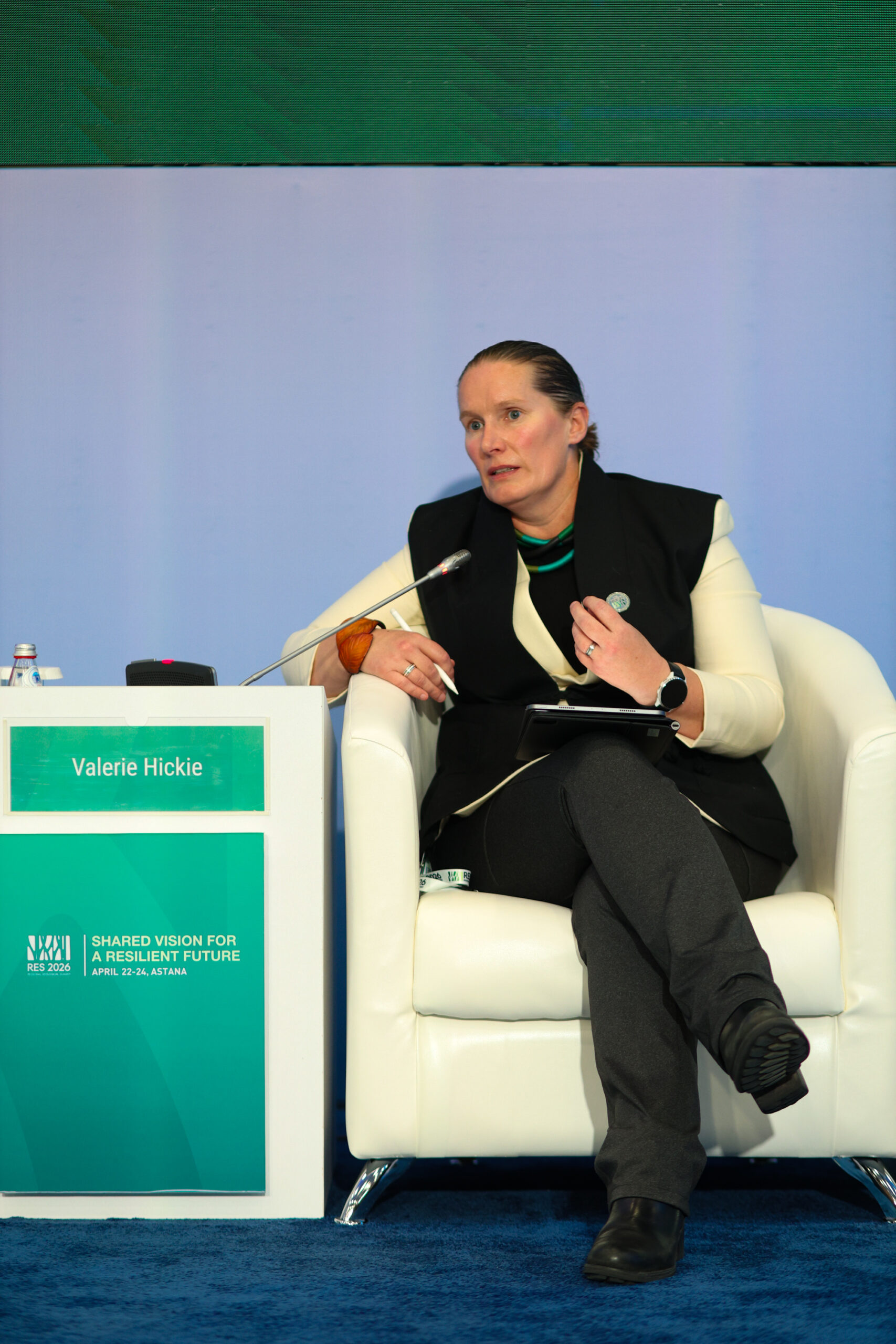
Valerie Hickey, director for environment at the World Bank Group. Photo credit: RES
“We need to think about climate as an opportunity. We’re in the midst of a new industrial revolution, driven by new climate technologies, which are shifting how we think about energy and water as foundational infrastructure in a way that is sustainable not just environmentally, but financially and economically,” Hickey said.
She noted that this shift is visible at the highest levels, with heads of state and business leaders increasingly integrating climate into economic agendas. Hickey expects a period of consolidation in climate governance, with greater emphasis on scaling effective initiatives and phasing out those that do not deliver results.
“It is time to move away from platforms that are not delivering results and scale those that are working,” she said, adding that most climate action is already financed domestically through public budgets, capital markets and private investment.
Hickey highlighted the scale of ongoing investments in the region, noting that the World Bank has committed around $1 billion across Central Asia to modernize energy and electricity markets, improve regional trade and ensure reliable, affordable and climate-resilient power supply.
“You cannot attract private investment or develop industries without access to energy. Energy systems are fundamental to economic growth,” she said.
Hickey also pointed to nature-based solutions as a key investment priority, describing them as one of the most cost-effective tools for climate action and economic development.
The World Bank is investing $300 million in the Program for Restoration of Sustainable Landscapes in Central Asia (RESILAND CA+), aimed at building new value chains, strengthening resilience and leveraging natural ecosystems.
“This is about using nature not only to address environmental challenges, but also to create economic opportunities,” she said.
Hickey said the broader shift from aid-based approaches to investment-driven models is critical to delivering measurable outcomes.
Going green while staying online
Tomas Lamanauskas, deputy secretary-general of the International Telecommunication Union, said digital technologies play a central and often underappreciated role in climate solutions, from AI-assisted sensors and harmonized radio spectrum used to monitor environmental shifts, to smart grids and cities that reduce emissions.
“Digital technologies mitigate eight to 10 times more emissions than the tech sector itself emits,” he said.
He also acknowledged the sector’s own environmental footprint, noting that computing power doubles roughly every 100 days while the industry’s energy demand grows about 30% annually.
“We need to help the world become greener, but we also need to be greener ourselves,” Lamanauskas said.
The Regional Environmental Summit 2026, running through April 24, has drawn international attention for its focus on coordinated climate action.
In a letter addressed to President Kassym-Jomart Tokayev and summit participants, His Grace The Duke of Richmond and Gordon CBE DL praised the initiative, saying Kazakhstan has brought globally relevant issues to the forefront and that such platforms are essential for building understanding, strengthening commitment and advancing joint solutions.
